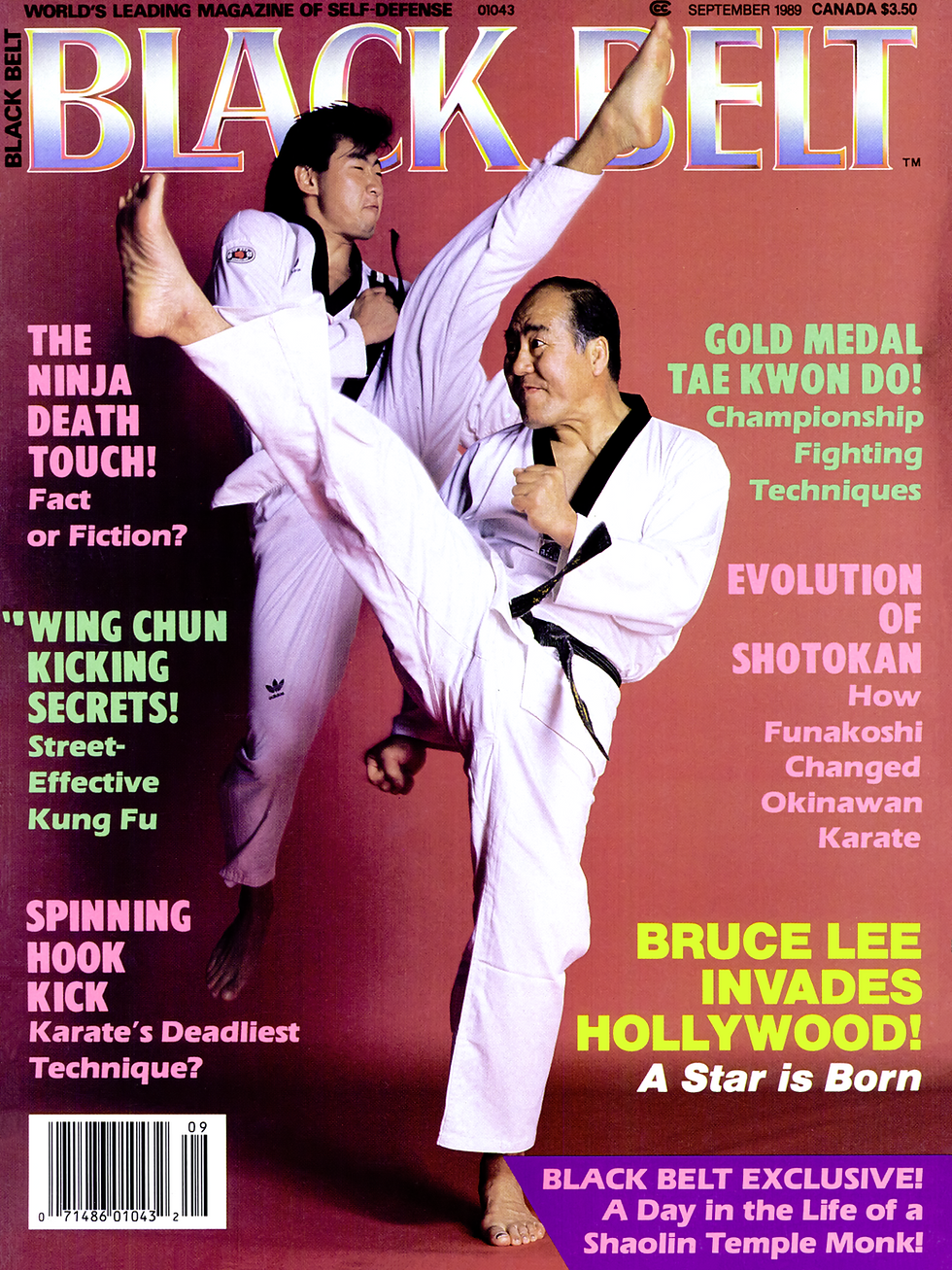
More than a century after Gichin Funakoshi helped introduce Okinawan karate to mainland Japan, his influence extends far beyond the techniques and traditions of Shotokan. His teachings helped establish karate not simply as a method of combat, but as a lifelong discipline devoted to character, awareness, and self-improvement.
Among his most enduring contributions are the Niju Kun, or Twenty Precepts of Karate.
These twenty principles offer a philosophical framework for martial arts training, addressing everything from courtesy and restraint to strategy, adaptability, and the relationship between physical technique and mental development.
Although written for karate practitioners, their lessons reach well beyond the dojo. They challenge martial artists to examine not only how they train and fight, but how they think, behave, and approach the world.
More Than a Set of Rules
Funakoshi believed that technical proficiency alone was insufficient to define a complete martial artist.
A powerful punch, precise kata, or impressive display of athleticism might demonstrate physical ability, but none necessarily reveals the character of the person performing it.
The Twenty Precepts reflect this distinction.
Rather than providing detailed technical instruction, they encourage practitioners to consider the purpose behind their training. They address the ethical responsibilities of martial artists, the importance of continuous practice, and the need to develop sound judgment under pressure.
Some concern personal conduct. Others explore practical combat strategy. Together, they present karate as an integrated discipline in which physical ability and personal development reinforce one another.

The Twenty Precepts of Gichin Funakoshi
The following are concise English interpretations of Funakoshi's twenty principles. Wording varies among translations, but their central teachings remain recognizable.
1. Karate Begins and Ends With Respect
Courtesy is the foundation of karate-do. Bowing before and after training is more than a formality; it represents humility, gratitude, and recognition of others.
A martial artist's conduct should reflect these values both inside and outside the dojo.
2. There Is No First Attack in Karate
Perhaps Funakoshi's most recognizable teaching, Karate ni sente nashi, emphasizes restraint and the defensive purpose of martial arts.
The principle does not eliminate the need for decisive action in self-defense. Instead, it challenges practitioners to avoid becoming the aggressor and to recognize that possessing fighting ability does not justify unnecessary violence.
3. Karate Supports Justice
Martial ability carries responsibility.
Funakoshi's third principle connects karate with righteousness, suggesting that strength should serve ethical purposes rather than personal intimidation or domination.
The challenge lies in exercising judgment and recognizing that physical power does not automatically grant moral authority.
4. Know Yourself Before Knowing Others
Understanding an opponent begins with understanding oneself.
A practitioner who cannot recognize personal weaknesses, emotional triggers, or limitations may struggle to assess a confrontation accurately.
Self-awareness becomes the foundation of effective strategy and meaningful improvement.
5. Spirit Comes Before Technique
Physical techniques are essential, but the mind directing them is equally important.
Courage, composure, determination, and judgment influence how effectively a martial artist applies their training.
Funakoshi's teaching reminds practitioners that sophisticated techniques have limited value without the mental qualities necessary to use them responsibly.
6. Free the Mind
Rigid thinking can be as limiting as rigid movement.
In training and confrontation, excessive attachment to a particular outcome or technique may prevent a practitioner from responding naturally.
An open, adaptable mind allows martial artists to recognize opportunities, adjust to changing circumstances, and act without unnecessary hesitation.
7. Trouble Arises From Negligence
Carelessness creates unnecessary risk.
Whether practicing with a partner, preparing for competition, or navigating everyday situations, attention and responsibility matter.
This principle encourages preparation, awareness, and respect for the consequences of one's actions.
8. Karate Extends Beyond the Dojo
Training should influence everyday behavior.
Patience during conflict, discipline in personal responsibilities, and respect toward others are all opportunities to apply karate's principles.
If the lessons learned in the dojo disappear when training ends, the practitioner has overlooked an essential part of karate-do.
9. Karate Is a Lifelong Pursuit
There is no final destination in martial arts mastery.
Earning a black belt or achieving competitive success does not eliminate the need to continue learning.
Funakoshi viewed karate as an ongoing process of refinement, one in which even experienced practitioners remain students.
10. Apply Karate to Everything
The principles of karate can inform how a person approaches challenges outside martial arts.
Balance, timing, perseverance, adaptability, and self-control have applications in work, relationships, and personal development.
The deeper value of training emerges when its lessons become part of daily life.
11. Karate Is Like Boiling Water
Without continued heat, boiling water eventually cools.
Funakoshi used this comparison to emphasize the importance of consistent practice.
Physical conditioning, technical precision, and mental discipline require maintenance. Progress depends not only on occasional periods of intense effort, but on sustained commitment over time.
12. Think Not of Winning, but of Avoiding Defeat
The desire to win can encourage unnecessary risks.
Funakoshi's teaching invites practitioners to reconsider the meaning of success, particularly in situations involving personal safety.
In self-defense, escaping danger without injury may be a far greater achievement than defeating an opponent.
13. Adapt According to Your Opponent
No two opponents present exactly the same challenges.
Differences in size, reach, speed, skill, and temperament require different responses.
Rather than forcing a preferred technique into every situation, effective martial artists learn to observe, adapt, and select appropriate actions.
14. Understand Strength and Weakness
Combat is not determined by strength alone.
Timing, positioning, balance, distance, and the ability to recognize openings can influence an encounter.
Funakoshi's principle encourages practitioners to understand the changing relationship between advantage and vulnerability rather than relying exclusively on physical power.
15. Regard an Opponent's Limbs as Swords
An opponent's hands and feet should never be underestimated.
This principle emphasizes the seriousness of physical confrontation and the importance of maintaining awareness.
Even a seemingly minor lapse in attention can have significant consequences.
16. Remain Aware Beyond Your Own Door
Leaving the safety of familiar surroundings introduces uncertainty.
Funakoshi's imagery of encountering numerous potential opponents encourages vigilance, not paranoia.
For modern practitioners, the lesson is to maintain situational awareness, recognize potential hazards, and avoid preventable confrontations.
17. Formal Stances Give Way to Natural Movement
Structured positions are valuable tools for developing balance, alignment, strength, and coordination.
Yet advanced martial ability requires more than reproducing formal postures.
With experience, foundational training should support efficient, adaptable movement rather than restrict it.
18. Kata and Actual Combat Are Different
Kata preserves technical principles, movement patterns, and training methods, but real confrontations are unpredictable.
Understanding the difference between formal practice and practical application is essential.
The challenge for practitioners is to study kata carefully while recognizing that timing, distance, resistance, and circumstances change in live encounters.
19. Control Power, Speed, and Movement
Effective technique requires more than maximum effort.
Martial artists must learn when to apply force, when to relax, when to accelerate, and when to conserve movement.
The intelligent coordination of these elements distinguishes refined technique from uncontrolled exertion.
20. Remain Thoughtful and Resourceful
Funakoshi's final precept emphasizes continual reflection and ingenuity.
Training should never become an entirely mechanical process.
Practitioners must question, evaluate, and refine their understanding, seeking new ways to apply the lessons they have learned.
In this sense, karate is not merely something to practice. It is something to study throughout life.
What the Twenty Precepts Teach Modern Martial Artists
Although Funakoshi's teachings emerged from a different historical and cultural environment, many of their underlying ideas remain relevant to contemporary martial arts.
Modern practitioners have access to training methods, competitive opportunities, and technical resources that earlier generations could scarcely have imagined. Video analysis, sports science, international competition, and cross-disciplinary training have expanded the possibilities for martial arts development.
Yet these advances do not replace the need for judgment, discipline, or self-awareness.
A competitor must learn to manage emotions under pressure. A self-defense practitioner must distinguish between necessary action and avoidable conflict. An instructor must balance technical development with responsibility for students' well-being.
Even the relationship between kata and practical application remains a subject of discussion among karate practitioners.
Funakoshi's precepts offer a framework for approaching these questions without reducing karate to any single method of training.
They also challenge the assumption that progress is measured only through visible achievement.
Rank, medals, and technical demonstrations can recognize important accomplishments, but they do not necessarily measure humility, perseverance, or maturity.
Those qualities are developed through consistent choices, often away from the attention of instructors, judges, and spectators.
The Meaning of Karate-Do
The distinction between karate as a fighting method and karate-do as a lifelong path lies at the center of Funakoshi's philosophy.
The Japanese term do, commonly translated as "way" or "path," reflects an understanding of martial practice as a process of continuing personal development.
Within this framework, training becomes both physical and philosophical.
The practitioner develops strength while learning restraint, cultivates confidence while practicing humility, and pursues technical excellence without assuming that mastery has been completed.
The Twenty Precepts do not promise that these qualities will emerge automatically.
Instead, they establish standards against which martial artists can continually examine their own conduct.
A Philosophy That Endures
Gichin Funakoshi died in 1957, but his teachings continue to influence karate practitioners across generations and national boundaries.
The Twenty Precepts remain a reminder that the deepest lessons of martial arts cannot always be measured by the power of a strike, the precision of a kata, or the color of a belt.
They are reflected in the decisions practitioners make, the respect they show others, and the discipline they maintain when no one is watching.
For Funakoshi, karate was never intended to end at the dojo door.
The ultimate challenge was to carry its lessons into everyday life—and to continue refining oneself long after the training session was over.