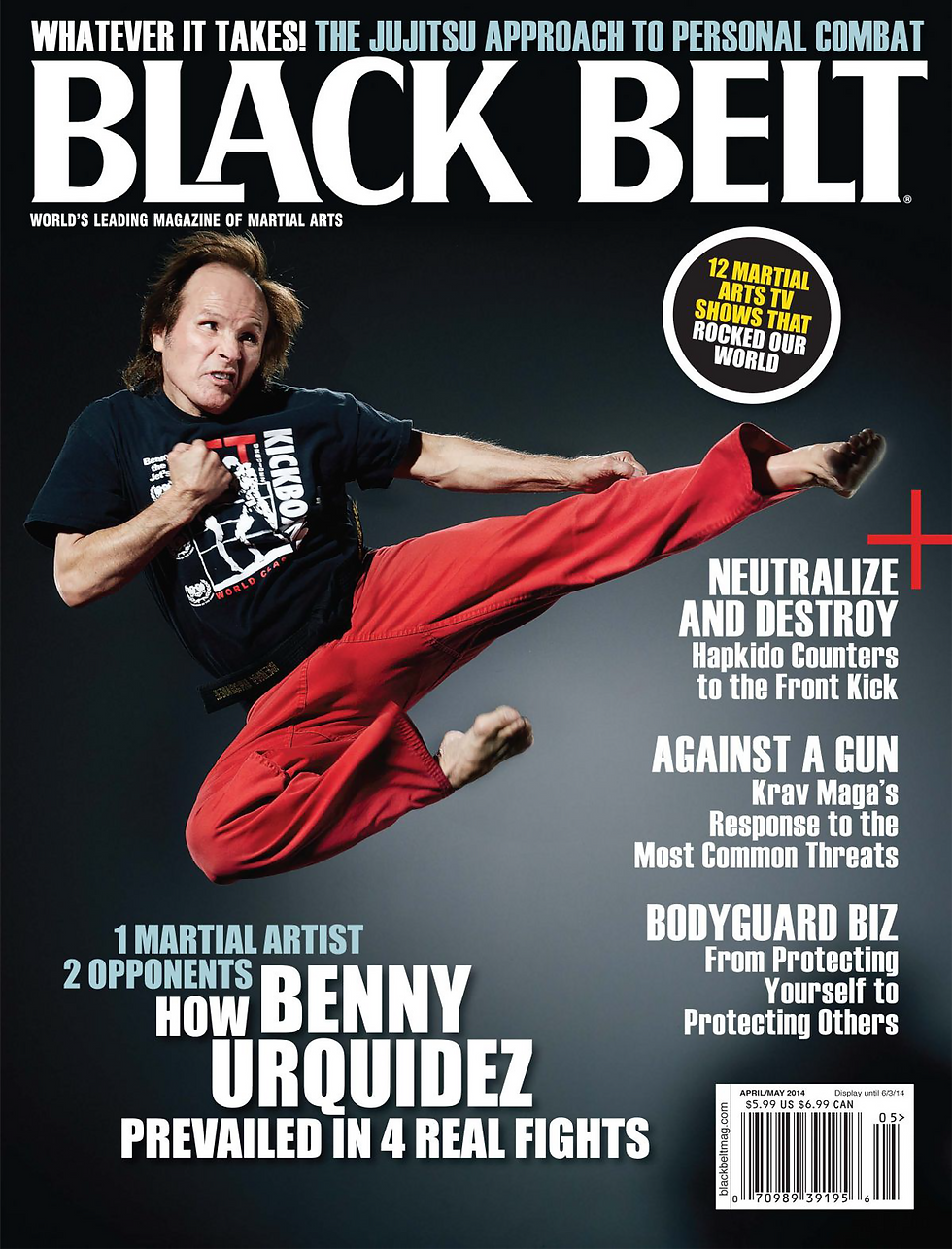
Editor's Note: Did you miss the Spring 2025 issue of Black Belt? Here's a look at one of the cover stories that ran in the special issue. Even better, you can check out the WHOLE issue with Black Belt Plus!
With this story, we honor not just a martial artist or movie star, but a man whose life touched the hearts of generations.
Richard Norton was a legend, one whose journey we were all fortunate enough to witness. Long before Russell Crowe or Hugh Jackman ever dreamed of Hollywood, Richard was carving a path from Croydon, Australia, with nothing more than determination, humility, and an unwavering love for the martial arts.
This isn’t just a tribute; It’s a celebration of a life lived with quiet strength, fierce discipline, and a spirit that never stopped giving. It’s a journey that crosses continents, disciplines, film sets, and friendships—and ultimately results in a lasting legacy.
We don’t begin this story with an ending, but with a reflection on a man whose impact stretched far beyond the screen or the ring. Richard was a mentor, a friend, a husband—and a beacon of what it means to live with honor. In a final act of grace, Richard stepped aside from his own Black Belt Hall of Fame induction in 2024 so that he could present to the Machado family instead. That was Richard: always lifting others up, even at his own expense.
As you read this, I invite you to remember not just the fights, the films, or the accolades—but the man himself.
Because Richard Norton was more than the sum of his accomplishments.

From Croydon to the Dojo
Born in Croydon, Richard began his martial arts journey with judo and Goju karate under the guidance of the revered Tino Ceberano—a direct student of Gogen Yamaguchi, one of the founding figures of modern karate.
This marked the beginning of Richard's lifelong commitment to martial arts, something he would later describe simply as:
“Everything good that's happened in my life has been through martial arts.” - Richard Norton

A New Path: Zen Do Kai
Richard found mentorship in Bob Jones, and their journey began in 1965 at Tino Cebrano’s dojo, where a 15-year-old “skinny beanstork” Richard trained alongside 25-year-old Bob. Inspired by Bob’s dedication and work in security, Richard eventually joined him on the doors. As Bob branched out to develop a martial art tailored for Australians, Richard followed loyally, diving deep into the craft—studying from books, falling in love with the Sai, Sword, and Bo.
In 1970, Soke Bob Jones invited a young Richard Norton to help co-create Zen Do Kai—a groundbreaking martial art blending traditional Goju with real-world application, designed for bouncers and security professionals. As Chief Instructor and Bob’s right-hand man, Richard helped shape Australia’s first eclectic martial arts system, grounded in both tradition and street-smart realism.
By 1972, Richard had earned his 2nd Degree black belt. As Zen Do Kai exploded across Australia, their reputation soared after serving as bodyguards on the Rolling Stones' tour, launching high-profile security work for stars like ABBA, Bowie, and Joe Cocker. In time, Bob brought Chuck Norris to Australia—who recognized Richard’s screen presence and urged him to reach out if ever in the U.S.

Bodyguard to Rock Royalty
Norton’s martial discipline opened unexpected doors. He found himself working backstage during the Rolling Stones’ Australian tour, training with Mick Jagger at 4 AM after concerts. It was his first taste of global celebrity—but far from the last.
Soon, his clientele glittered with music royalty: ABBA, Fleetwood Mac, David Bowie, James Taylor—and most impactfully, Linda Ronstadt, who brought him to California as her personal bodyguard.

From Muscle to Movies
California opened a new chapter. Norton reunited with Chuck Norris, and the two became instant friends and collaborators. Norris cast Norton as Kyo in The Octagon (1980)—his first Hollywood role, and the beginning of a lifelong bond.
In a 1994 interview, Richard reflected: “Chuck is the greatest. When we met in Australia, we hit it off immediately. The thing everyone finds with Chuck is he’s so approachable, so open, and so ego-less.”
Chuck later said: “Richard, you made me not only a better martial artist but a better person… Your legacy will live on for generations to come.”

Norton’s transition from stunt performer and security expert to action star began with a breakout role in Force: Five (1981), directed by Enter the Dragon’s Robert Clouse. Cast alongside martial arts legends Joe Lewis and Benny "The Jet" Urquidez, Norton stood out with his screen presence and authentic combat skills.
His real-life experience in high-stakes security and martial arts gave his performance a grounded intensity that set him apart from other up-and-coming action stars of the time. The film was a pivotal moment, showcasing that Norton wasn’t just stunt talent—he had the charisma, discipline, and presence of a leading man.
From that point on, Norton steadily built a name for himself in the world of action cinema. Throughout the 1980s and ‘90s, he headlined a string of martial arts and action films, often playing both heroes and memorable villains. More than just physical ability, Norton brought a quiet authority and professionalism to his roles that made him a favorite among directors and co-stars alike.
He was a profound warrior, a beautiful soul, and will be deeply missed….Benny the Jet Urquidez

A Life of Learning
Fame never dulled Norton’s hunger to learn. He trained in Brazilian jiu-jitsu under the Machado brothers, Ukidokan with Benny “The Jet” Urquidez, kickboxing with Pete Cunningham, and weapons arts under Tadashi Yamashita, Fumio Demura, and Bill "Superfoot" Wallace.
“Many of the friends I’ve made through training have turned out to be some of the most influential people in my life,” Norton once said. “They’re just like family.”
In fact, it was Norton who introduced the Machado brothers to Chuck Norris—a meeting that helped bring Brazilian jiu-jitsu to the U.S. mainstream.

“He was the man who introduced our family to Chuck Norris and that was a game changer. From that moment we remained friends, true martial artist.” - Rigan Machado
Hong Kong Stardom
While Hollywood gave Richard Norton his start, it was Hong Kong that transformed him into a martial arts cinema icon. Directors like Sammo Hung and Jackie Chan quickly recognized Norton’s unique screen presence—he had the poise, power, and precision that made him the ultimate on-screen villain.
In Twinkle Twinkle Lucky Stars (1985), Norton brought a sharp intensity to his role, and in Millionaires’ Express (1986), he cemented his status as a fan-favorite baddie, blending physical dominance with a touch of swagger that made audiences love to hate him.
His collaborations with Hong Kong’s action elite continued through the late '80s and '90s. Norton appeared in Eastern Condors (1987), showcasing his agility and tactical finesse in Sammo Hung’s gritty war-time action epic. In City Hunter (1993), he faced off against Jackie Chan in a hilariously stylized Street Fighter parody that highlighted both actors' agility and comic timing.
Jackie famously referred to Richard as “the maestro of martial arts movies,” while Richard affectionately called Jackie “a genius and a gentleman.” One of Norton’s most memorable roles came in Mr. Nice Guy (1997), where he played an eccentric and unpredictable gangster—encouraged by Hung to push the limits of the character’s madness.
These films didn’t just expand Norton’s international fame; they solidified him as a vital bridge between East and West in the golden era of martial arts cinema.

“Richard could do it all, comedy, drama but his fighting was something he could do like no other. He was fast and his timing was perfect, that rhythm means everything. We will miss him.” - Jackie Chan
The Leading Man
Richard Norton’s evolution from on-screen villain to leading man wasn’t a sudden pivot—it was a natural progression born of presence, skill, and depth. Even in modest productions like Not Another Mistake (1988) and Sword of Bushido (1989), Norton refused to coast on martial arts alone.
He brought emotional complexity to roles that could’ve easily been one-note. His characters didn’t just fight—they wrestled with loyalty, honor, and inner demons. That authenticity, paired with his athleticism, elevated every project he touched.
This era marked a pivotal shift: Norton was no longer just the imposing opponent or sidekick—he was the main attraction. Producers noticed his growing fan base and the credibility he brought to action roles, especially in a time when physical realism and screen charisma were everything.
Films like Equalizer 2000 (1987), directed by cult favorite Cirio H. Santiago and shot in the Philippines, captured Norton in full command—leading ragtag resistance fighters through post-apocalyptic chaos with a quiet intensity. These roles cemented his reputation as more than just a fighter; he was a thinking man’s action hero, capable of holding the screen with presence and purpose.
As the late '80s rolled into the '90s, Norton’s ascent as a leading man became unstoppable. He brought gravitas to the genre during a time when sincerity in action films was rare, proving that heart, not just muscle, makes a true star.

The On-Screen Partnership of Legends
If Jackie Chan was Richard Norton's Hong Kong brother, then Cynthia Rothrock was undoubtedly his cinematic soulmate. Together, they formed one of the most iconic duos in martial arts film history. Their on-screen chemistry was undeniable—rooted in mutual respect, impeccable timing, and a shared love for precision and power.
Films like China O’Brien (1990), Rage and Honor (1992), and Lady Dragon (1990) weren’t just action-packed—they were showcases of trust and synchronicity. Norton and Rothrock matched each other beat for beat, kick for kick, delivering complex fight scenes with the fluidity and grace of a dance.
Dubbed the “Fred Astaire and Ginger Rogers of martial arts movies,” Norton and Rothrock didn’t just perform action—they elevated it. Their characters often fought side by side or squared off against each other, blurring traditional gender roles and setting a new standard for what on-screen fight partnerships could look like.
Beyond the punches and spin kicks was a palpable bond that made their collaborations feel authentic and dynamic. Off-screen, they developed a deep friendship that further enriched their work. Together, they helped shape the landscape of '90s martial arts cinema, inspiring a generation of fans and proving that true screen magic comes from connection, not just choreography.

“Richard and I captured magic on screen from day one. From Millionaires’ Express in 1986 to Black Creek in 2024, our friendship lasted over 40 years.” - Cynthia Rothrock

Behind the Camera
As his career evolved, Richard Norton made a seamless and respected transition from in-front-of-camera action star to behind-the-scenes powerhouse. Drawing from decades of hands-on martial arts experience and cinematic combat, Norton became a sought-after fight choreographer and action coordinator.
His work on films like New Adventures of Robin Hood, Dream Warriors and Amazons and Gladiators showed that he wasn’t just performing the action—he was designing it. His sequences were marked by clarity, realism, and impact.
More than just choreography, Norton brought a teacher’s heart to his work. He trained and mentored a new generation of Hollywood stars, including Ben Affleck, Margot Robbie, Scarlett Johansson, and Liam Neeson—preparing them for roles that demanded authenticity and intensity.
Whether shaping a gritty brawl or refining a complex weapon sequence, Norton’s input made scenes more believable, more visceral, and more emotionally grounded. His approach was always character-first, ensuring that action served the story—not the other way around. In doing so, he quietly influenced the tone and quality of modern action cinema, proving that his artistry extended well beyond his own performances.

The Final Film
Black Creek marked a powerful full-circle moment in Richard Norton’s storied career. Reuniting with longtime friend and collaborator Cynthia Rothrock, the film served as his final starring role—a fitting farewell that honored both his legacy and the enduring bond between two of martial arts cinema’s most beloved figures.
Set against a gritty Western backdrop, Black Creek blended old-school action with emotional depth, giving Richard a role that showcased not only his still-formidable physical presence but also his gravitas as a seasoned actor. As two warriors confronting their pasts and battling for justice, Norton and Rothrock brought a maturity and authenticity to the screen that only decades of shared experience could deliver.
For fans, Black Creek was more than just a film—it was a tribute. A celebration of two legends who helped shape an entire genre, coming together one last time to remind the world what made them so magnetic in the first place.

An Unselfish Final Act
In 2024, Richard was selected to present to the Machado family for their induction into the Black Belt Hall of Fame. He was also on the shortlist for induction himself.

Tragically, Richard passed before he could receive the honor himself. But no award could ever encapsulate the life he lived—or the hearts he touched.
“I met Richard in 1987, and from day one, he was a class act. Over the next 38 years, he remained humble, genuine, and always made time for his friends. He never stopped giving back to the martial arts community, especially through teaching.
In 2024, Richard was being considered for induction into the Hall of Fame the same year as Machado brothers, who he introduced to Chuck Norris and the world.
When given the choice to either accept the honor himself or present the award to the Machados, he graciously stepped aside, saying, ‘This moment belongs to them.’
That was classic Richard—always putting others first.” - George Chung

The Final Days
In his final days, Richard spent hours in thoughtful interviews with producer and publisher Graham Slater and martial arts legend Mike Stone, sharing insights into the spiritual dimensions of martial arts—offering wisdom not just about fighting, but about life. He was impossible to define in simple terms: complex, multi-dimensional, and deeply respected in every arena he entered.
What stood out most was his attention to detail, his relentless pursuit of excellence, and his uncanny ability to make everyone feel seen and valued. He wore many titles—actor, choreographer, teacher, friend—but carried them all with grace.
We miss you, Richard. Thank you for everything. —Graham Slater, Australia

More Than a Master
Richard Norton was more than a master of martial arts—he was an artist, a mentor, and above all, a kind and gracious human being. At the heart of his life stood his unwavering partnership with his beloved wife, Judy.
Their bond was one of quiet strength and enduring love, built not just on shared experiences, but on mutual respect and support. Judy was his anchor through the highs and lows of a remarkable life, accompanying him around the world, from red carpets to remote training grounds, always by his side—not just as a partner, but as his greatest ally and friend.
Richard didn’t live for the spotlight. He lived with intention, humility, and purpose. Whether he was choreographing a complex fight scene, offering a word of encouragement to a student, or simply sharing a quiet moment with Judy, he gave his full attention.
His presence was calm but commanding, always grounded in sincerity. Together, he and Judy created a life rich in love, laughter, and legacy—one that inspired those around them to seek not only success, but balance, connection, and authenticity. In everything he did, Richard brought heart. And in Judy, he found his home.

His proudest role wasn’t on screen, but in life—as a devoted husband to Judy, his true off-screen love story.
Life Well Lived Respected and Loved by All
In the end, Richard Norton’s life was not only defined by the power of his punches, the precision of his kicks, or the depth of his filmography—it was defined by the lives he touched, the people he lifted, and the respect he earned around the world. From the dojos of Australia to the soundstages of Hollywood and the action sets of Hong Kong, Richard left behind more than a body of work—he left a legacy of excellence, humility, and heart.
And perhaps no words capture that better than those from his dear friend and longtime brother-in-arms, Chuck Norris:
“I long for more time together… but I take comfort in the fact that we will meet again. Rest well, Richard. Your fists made history—but your heart made you immortal.” – Chuck Norris
Richard Norton was a warrior, a teacher, a pioneer, and a gentleman.
Though we say goodbye to his physical presence, his spirit lives on in every life he touched—and every story still to be told.