OK, here’s the scene: you’re driving your car with the music cranked. You’re navigating just fine while singing along—until you come to a busy intersection. While you’re pondering how you’ll cross the lanes to make a left turn, you lower the volume of the music.
Does this ring any bells? If so, why might this be? Why would you need to reduce the aural stimulus to execute a function that's almost all about visual awareness? Why would one sense interfere with another? I mean, you use your eyes and ears at the same time every day. You can walk and look where you're going while carrying on a conversation and not trip over your own feet. Why should the described instance be any different?
The answer involves complexity of task and familiarity of task—with a little bit of multitasking debunking thrown in. Let's hit each one and then examine the implications for combat training.
Complexity of task: Driving a familiar route with few obstacles doesn't place many demands on the brain. As soon as you introduce complexity—the aforementioned intersection, for example—you've got to up your game.
Familiarity: Remember back to when you learned to drive. There were probably tasks that you take for granted now but that had you white-knuckling the steering wheel then. Every new task you confront requires attention input; once you've applied your shortcuts to navigating the new task, you raise the bar for complexity because of this newly acquired familiarity.
Multitasking: Human beings don't multitask. We aren't really walking while talking, or texting while driving, or answering emails while talking to our spouse. We're set up to pay attention to only one thing at a time, and when we engage in multiple tasks, we actually switch back and forth between them at a rapid rate. The switch is so quick we have the illusion we're doing more than a few things well. You don't recognize this defect in multitasking—unless you think about why you turn down the radio for the intersection and close your eyes to "hear."
If you apply this realization to your combat training, you'll enjoy better results. The best way to begin is with "present moment" training procedures.
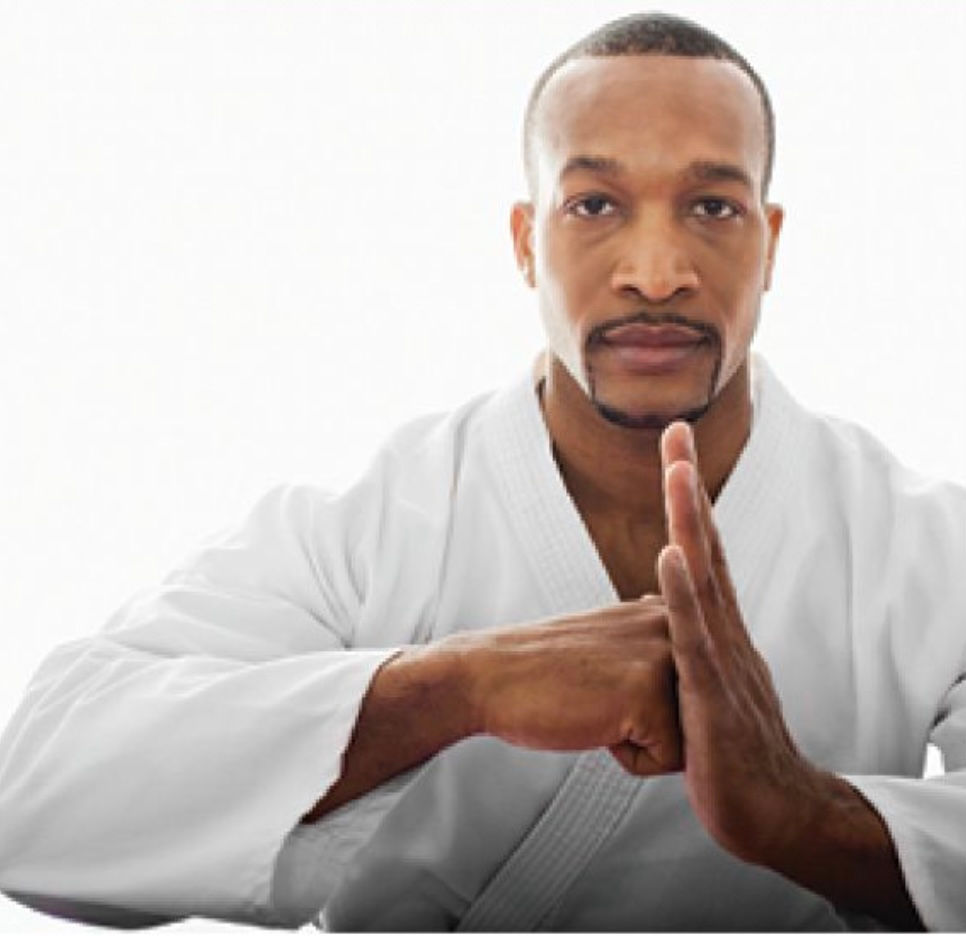
Present-moment training is usually approached through vehicles such as Zen or mindfulness training. Those esoteric methods work for some, but they can split your focus. (To learn to be mindful or present in your training, you must first devote time to learning meditation or another contemplative process.)
I prefer a more pragmatic way to stay grounded in training and avoid wheel spinning and false multitasking: engage in active training rather than passive training.
Active martial arts training requires you to be present by force of complexity or some other outside restriction. Rather than simply working rounds on the bag, you can use external constraints to stay present and focused. Here are two options:
• Compete against a partner or yourself for the highest strike rate. Example: If your partner got 235 strikes in his first round, you strive to top that number.
• Beat the clock. Decide that you'll execute a certain number of thigh kicks on the banana bag in a certain number of minutes. If you reach that goal, up the ante in your next session.
Practically any piece of solo gear can be used in this manner, but partner drilling is when active training really shines because contact is the ultimate stay-in-the-present tool. Partner drills should always involve the threat of contact. If your partner never hits back, you could just as well be training on a heavy bag. Don't get me wrong: I'm not advocating all-out, no-holds-barred donnybrooks in the middle of a double-leg drill. I'm talking about agreeing on contact levels to keep both parties in the game while ensuring there's a little spice.
That spice can be as simple as, "Hey, we're both going to shoot double-legs on each other at 80 percent for the next three five-minute rounds, but if the head is open for a jab at any point, can we take that, too?"
You both get to work the double-leg with contact to keep you awake, and you've got a wild card to remind you that many folks drop those hands when they switch to grappling mode. It keeps you engaged, and engagement leads to immediate correction of errors and, ultimately, to growth.