Updated: May 10, 2024
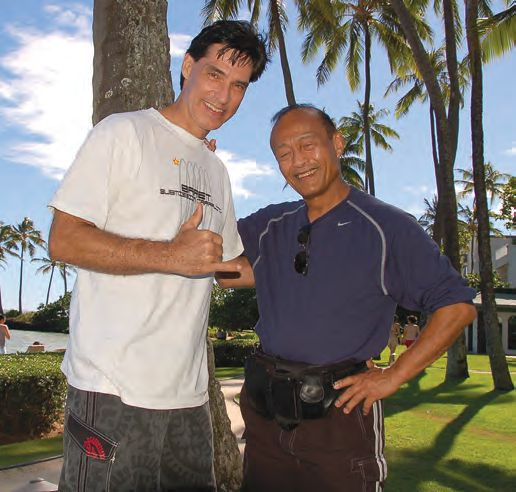

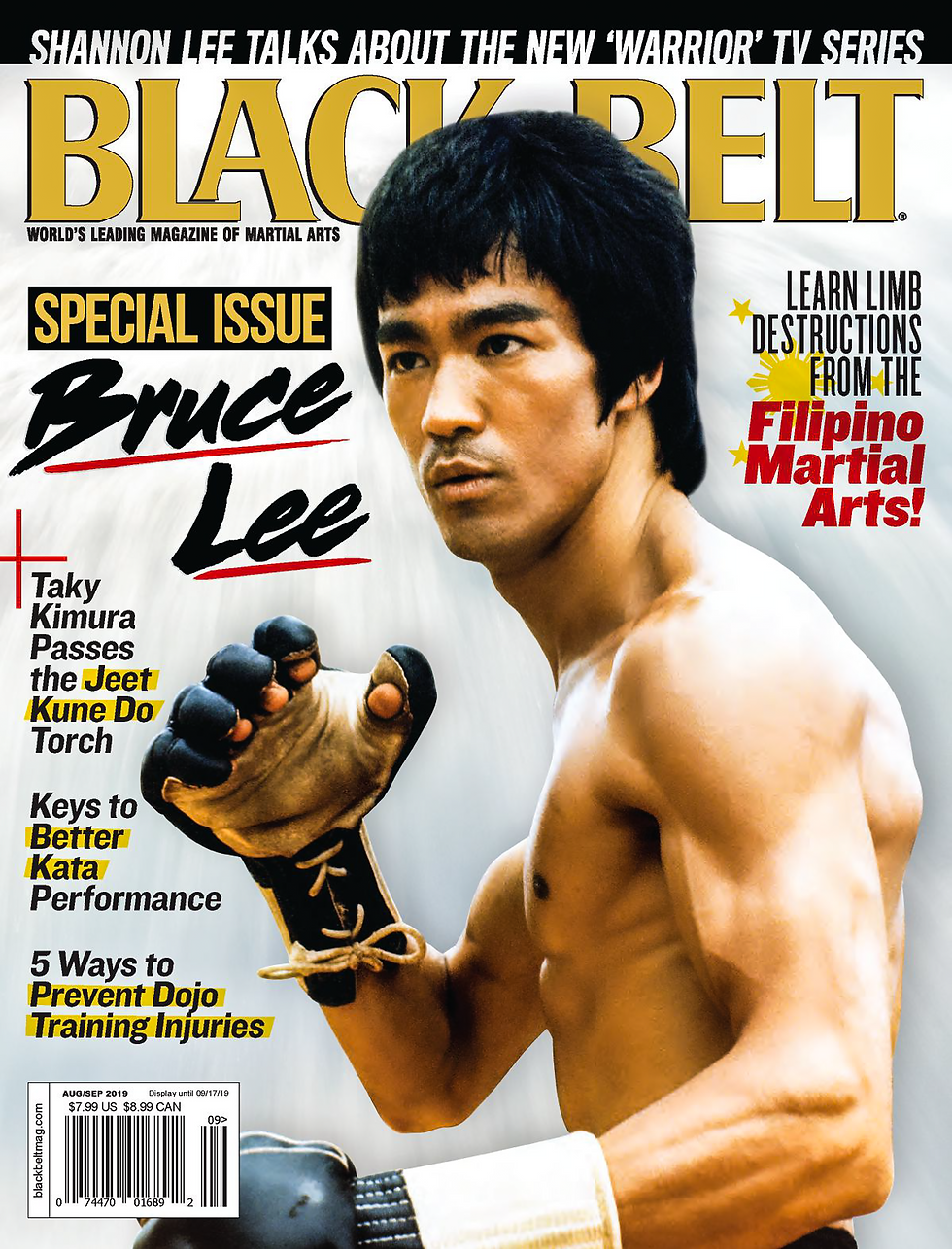
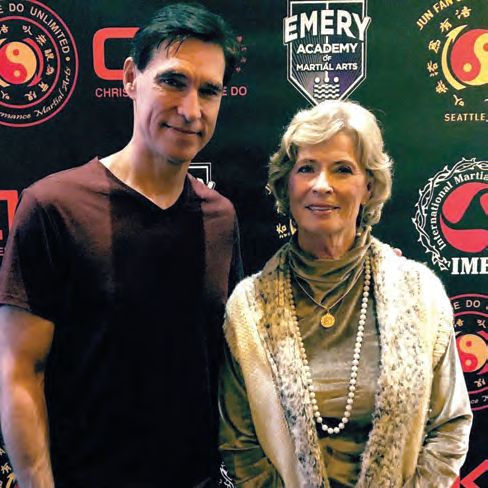
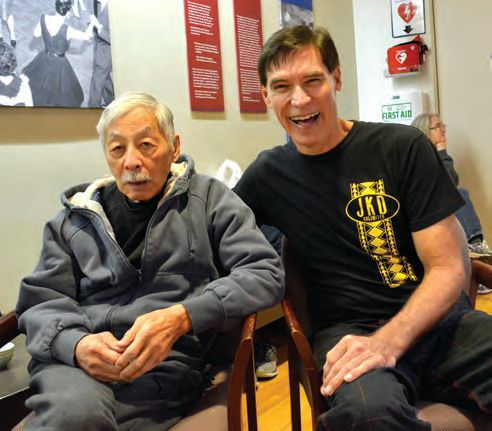
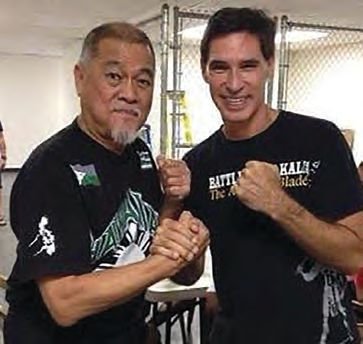
I had the privilege of teaching several sessions at Taky Kimura’s Jun Fan Gung Fu Institute of Seattle Instructors Conference in Washington. One topic I discussed was a question that garnered much interest: When did Bruce Lee actually create jeet kune do?
Does the answer have any bearing on our JKD training all these decades later?
It’s my opinion that understanding when and why JKD was born is extremely important if we are to master the art and then pass it on to the next generation. That’s why I decided to write this article. So when was JKD born? I’ve spoken with hundreds of authorities about this, and most agree that it happened when Lee fought Wong Jak Man in Oakland, California. Their reasoning is that because the fight was far more difficult than Lee had expected, he was inspired to change his ways. His Jun Fan gung fu, which could be classified as modified wing chun, did not hold up well against the kung fu master.
There’s solid evidence that the Oakland fight was where Lee altered his opinions on his previous modifications and, therefore, was where JKD really started. But consider this: Was that truly the birth of jeet kune do, or did it just mark the conceptualization of JKD?
I believe that the Wong Jak Man fight was when the seed that grew into JKD was planted. But mere belief is not scientific. Let’s look for evidence.
Evidence
Lee left behind a lot of writings that are preserved in various sources. We can look to those statements to determine when JKD was born. But when we examine his quotes, we run into a problem: They’re rarely dated. That means it’s unclear where on the timeline of JKD evolution they should be placed.
Furthermore, many of the quotes seem to contradict one another. Should we just choose the line that’s most convenient for our particular type of JKD training? Or would it be better to know at what point on Lee’s timeline a particular statement was made? I think the answer is obvious.
Let’s look at a few well-known Bruce Lee quotes to get a feel for when and, more important, why JKD was created. First up is an excerpt from Linda Lee Cadwell’s book concerning the 1964 Oakland fight.
“Until this battle, he had largely been content to improvise and expand on his original wing chun style, but then he suddenly realized that although he had won comparatively easily, his performance had been neither crisp or efficient. The fight, he realized, ought to have ended within a few seconds of him striking the first blows — instead of which it had dragged on for three minutes. … So he began to dissect the fight, analyzing where he had gone wrong and seeking to find ways where he could have improved his performance. It did not take him long to realize that the basis of his fighting art, the wing chun style, was insufficient.”
We might take Cadwell’s statements as confirmation that the Wong Jak Man fight was the birth of JKD. After all, the fight prompted Lee to change his ways and become more efficient. The following is an excerpt from a letter Lee wrote to Taky Kimura: “My mind is made up to start a system of my own — I mean, a system of totality, embracing all but yet guided with simplicity. It will concentrate on the root of things — rhythm, timing, distance — and embrace the five ways of attack. Wing chun is the starting point, chi sa[o] is the nucleus and they are supplemented by the FIVE WAYS. The whole system will concentrate on irregular rhythm and how to disturb and intercept the opponent’s rhythm the fastest and most efficient way.”
Clearly, wing chun was extremely important when the letter was written. But Lee also wrote this famous line in a letter to his former wing chun classmate William Cheung: “William, I’ve lost faith in the Chinese classical arts — though I still call mine Chinese — because basically all styles are [a] product of land swimming, even the wing chun school.”
Hmm. Those two don’t seem to match up well. Why? Because the letter to Kimura was written in February 1967. The one to Cheung was written two years later. Lee was evolving rapidly.
Support
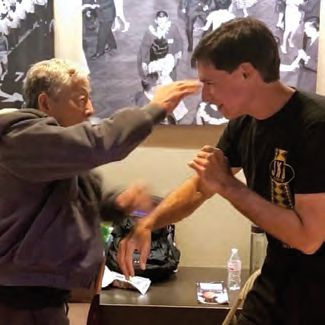
And then there’s this from Ted Wong: “When I was training with him privately, there was a gradual diminishing of wing chun until, at the end, it was completely different than wing chun. Pretty much the only wing chun element that he applied was chi sao, or ‘sticking hands,’ and also some simplified trapping.”
So wing chun was diminished, but chi sao remained, possibly still as the nucleus. Was that the new JKD? Well, this is how Wong continued to describe Lee’s evolution:
“He thought that it was pretty unique, but then later, say, in 1969, he had pretty much discarded that, as well. Taky [Kimura] told me that Bruce had called him in 1969 and told him that ‘chi sao is out.’”
That’s a radical departure from the “wing chun is the starting point, chi sa[o] is the nucleus” quote. So when was the actual birth of JKD — the Wong Jak Man fight or later? Instead of speculating, let’s look at another one of Bruce Lee’s letters to get the answer directly from the founder. This one was written to Wong Shun Leung, the man who taught Lee at Ip Man’s school in Hong Kong. It dates from 1970:
“Since I started to practice realistically in 1966 (protectors, gloves, etc.), I feel that I had many prejudices before, and they are wrong. So I changed the name of the gist of my study to jeet kune do.” So there you go. I believe that the Oakland fight marked the conceptualization of JKD but that the birth occurred in Los Angeles after Lee started using the body protectors to spar hard. The baby grew up over the next several years, becoming a robust method of practical self-defense.
But is this timeline evaluation just a waste of time? Is it important to us now, more than 50 years later? I would argue that it’s vital to the future of JKD.
Sparring
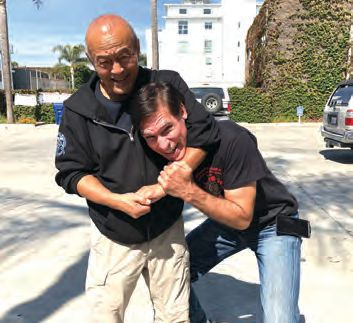
This information is essential for those who want to keep JKD students from becoming dry-land swimmers. A skilled jeet kune do practitioner should be able to easily navigate the open ocean of vigorous sparring with a variety of martial artists. According to Lee, sparring in a realistic manner was what revealed his incorrect prejudices. Likewise, logging our time sparring against an uncooperative partner is essential if we are to understand how Lee developed his effective approach to the questions of combat. This is what takes a technician into the realm of being a fighter. And isn’t that what makes JKD great — that practitioners can actually fight? Then we need to do what Lee did and spar often to discover our mistaken assumptions.
I’ve spent a lot of time in boxing gyms, sparring with skilled boxers. I’ve spent a lot of time training with high-level MMA fighters. I’m one of the original Dog Brothers, the group that shook up the Filipino martial arts by engaging in limited-protection, full-contact stick fighting. And I was blessed to be trained by Dan Inosanto, Richard Bustillo, Larry Hartsell, Chris Kent and Tim Tackett in JKD. But as Inosanto often says, each individual has to gain his or her own experience. I knew the techniques and did the sparring, but it took years of light (and occasionally intense) fighting to gain a deep understanding of jeet kune do. Now, with decades of such training under my belt, I have a greater appreciation than ever for the wisdom of Bruce Lee. But even though he emphasized the importance of sparring, many JKD instructors have let this vital training method fall by the wayside.
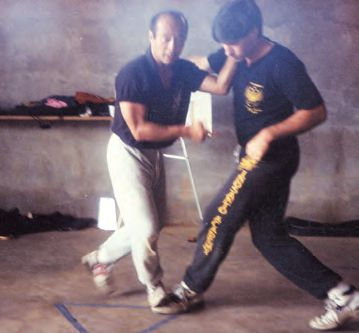
At the Jun Fan Gung Fu Institute conference, I spoke a lot about sparring. Chris Kent, who taught fantastic sessions, also spoke about the importance of sparring. The big concern all teachers have is that hard sparring will chase away students. I know for a fact that this can be true because of the group I started with at the Kali/Jun Fan Gung Fu Academy in Torrance, California.
There, our “beginner class” (many people had black belts in other arts) progressed from zero sparring for two months to heavy sparring one memorable night. There were bloody noses, black eyes and bruised egos. The class went from more than 30 students to eight after that first session of sparring.
So allow me to mention here what I emphasized at the instructor conference: Sparring should be safe and, for most people most of the time, fun. Sparring is not fighting. In fighting, you do your best to inflict pain and injury on the opponent. In sparring, there should be no injury and minimal pain, if any. The key is to spar in a way that has no cooperation from your partner, just like in a real fight, but in which everything is kept safe. Of course, those of us who want to reach higher levels of understanding need to spar hard sometimes, and that isn’t always fun. But being in a fight environment is where we learn the most. And that allows a person to appreciate the genius of Lee’s advice and approach.
Gear
Around 1966, Dan Inosanto bought six Navy boxing helmets from a military-surplus store in Los Angeles. He gave two of them to Lee. Those helmets, along with the old kempo gloves, chest protectors, groin protectors and baseball shinguards, enabled Lee to spar hard while retaining some level of safety. This training was so radical and so important to the nascent JKD that Lee geared up and sparred live at the 1967 Long Beach International Karate Championships. The seasoned martial artists in the audience were shocked at what they saw: full-contact fighting, head-to-toe targets, nimble movement and impeccable application of efficient technique. Why would Lee choose to spar at such an important demonstration? He did it to highlight his unique and realistic approach to martial arts training. Now everyone could clearly see that JKD was made for real fighting.
Those Navy head protectors were designed to keep pilots from sustaining eye damage while boxing — after all, a pilot with impaired eyesight is useless. But according to Inosanto, the helmets really torqued the neck because of the bar that protruded to protect the fighter’s face. Today, we’re fortunate to have modern headgear with face cages, as well as gloves and other pads that allow anyone to engage in light sparring in a manner that can be kept fun and safe.
Meanwhile, those few who have progressed far enough can go hard with minimal damage. We can engage in heavy sparring and survive the training. But hard sparring is for the few who are ready for it and who want to do it. In my classes, nobody ever has to spar hard. But everyone enjoys the sparring. It’s so much fun to play the game. I often remind students to heed Bruce Lee’s advice: “Turn your sparring into play — but play seriously.”
Realization
To me, the aforementioned Oakland match was clearly the spark that led Lee to explore better ways of fighting. And according to his letter to Wong Shun Leung, donning the protective gear and then sparring hard was how JKD was born. The Bruce Lee Foundation website states, “The term ‘jeet kune do’ was coined and put into use in 1967 by Bruce Lee in an attempt to put a name to his martial expression.” That was after he’d gained a lot of hard-sparring experience.
Concerning when JKD was actually born, I understand that you may have a different opinion, and maybe you’re right. But the one thing we must not omit from our JKD training, if we are to call it JKD, is live sparring with an uncooperative partner. Take it from Bruce Lee himself:
“The best way to learn how to swim is to get in the water and swim. The best way to learn jeet kune do is to spar.” If you really want to experience, understand and pass on the essence of JKD, you can’t be a dry-land swimmer. Do yourself — and your students, if you have any — a favor and follow the path of the original followers of Bruce Lee. Get in the water and relive the experiences that prompted Lee to create his magnificently effective system of jeet kune do.
Burton Richardson is respected as a master of jeet kune do, but he’s also certified as an instructor of silat and Brazilian jiu-jitsu. That’s why Black Belt teamed up with him to produce a comprehensive online course called Silat for the Street. The Black Belt Hall of Famer also wrote Brazilian Jiu-Jitsu for the Street.
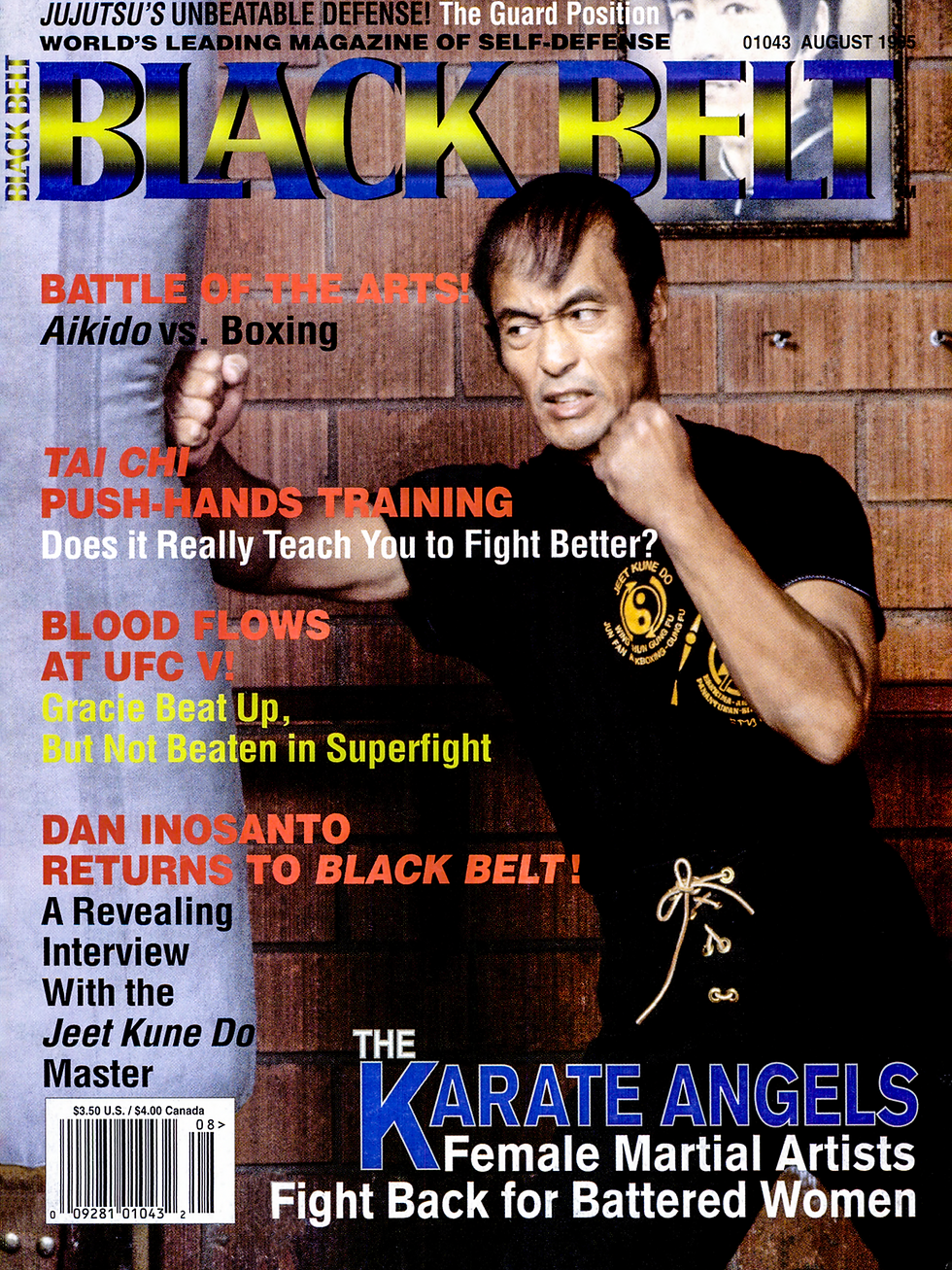
This article originally appeared in a 2021 edition of Black Belt Magazine