When violence erupts, decisions must often be made in seconds. Yet lawful and ethical use of force does not depend on emotion or fear—it depends on the presence of specific conditions. Understanding how capability, intent, and immediacy intersect is essential for martial artists, professionals, and anyone serious about responsible self-protection.
If you are a martial artist, a police officer, a security professional, or simply someone concerned with protecting yourself and your family, there may come a moment when events turn serious very quickly. Training, preparation, and mindset exist for that violent possibility. In those moments, decisions must be made under pressure, with incomplete information and very little time.
For those who carry responsibility—whether through profession, training, or circumstance—the question is not simply whether force can be used, but when it is truly justified.
Understanding that distinction is one of the most important aspects of responsible self-protection.
“Force is not justified by fear. It is justified by facts.”
We live in a time when almost every serious incident involving violence is instantly transformed into a story. Headlines, social media commentary, and political rhetoric compete to define events before facts are fully known. In this environment, emotional reactions often replace disciplined analysis, and outrage frequently overwhelms understanding.
Recognizing Threat vs. Feeling Threatened
Yet across legal systems, professional standards, and international frameworks, the lawful use of force—particularly lethal force—rests on a far more demanding foundation. Whether viewed through common law, civil law, United Nations guidelines, or modern policing doctrine, the same principle emerges: deadly force is justified only when specific, observable conditions are present.
These conditions are commonly understood as means, intent, and delivery system.
If one of these elements is missing, the justification for lethal force becomes fragile. If more than one is absent, it often collapses entirely. The professional obligation is not to feel threatened, but to recognize threat accurately. Actions taken under pressure must reflect disciplined assessment rather than emotional reaction.
Under United States Supreme Court precedent, deadly force is considered reasonable only when, at the moment it is used, an officer can reasonably believe that a subject poses a significant threat of death or serious physical injury. This belief must be based on an objective assessment of what the individual can do, intends to do, and is capable of doing immediately. This standard originates in Tennessee v. Garner and was refined through Graham v. Connor. Similar principles appear in other jurisdictions under different language, but with the same underlying logic.
At the foundation of this framework is the concept of means, or capability. The first question is straightforward: does this person possess the ability to cause death or grievous bodily harm? This may involve firearms, knives, impact weapons, improvised tools, physical disparities in size or strength, numerical advantage, or environmental factors.
A weapon is not limited to what is held in the hand. It includes anything that can reasonably be used to produce lethal effect. Capability establishes possibility, not danger. Many people possess the means to cause harm and never use them.
The second condition is intent. Intent concerns whether an individual is demonstrating a willingness to use their capability against others. It is revealed through behavior rather than attitude. Indicators may include verbal threats, target fixation, aggressive movement, escalation patterns, refusal to disengage, prior conduct, and situational context.
Intent is not determined by emotion, appearance, or reputation. Someone may be angry without being dangerous. Someone may be calm and extremely dangerous. Professional assessment focuses on observable actions rather than assumptions or narratives.
The third and most frequently misunderstood element is the delivery system, or immediacy. This refers to whether an individual can apply harmful force at that moment. Distance, positioning, access to weapons, speed, mobility, obstacles, terrain, and the defender’s own position all shape this assessment.
A knife at thirty metres presents a fundamentally different threat than a knife at three metres. A firearm concealed in a waistband differs greatly from one held in a firing position. Capability combined with intent but lacking immediacy represents potential danger. Capability, intent, and immediacy together represent immediate threat.
These three elements form what is often described as the lethal force triangle. Means, intent, and delivery system must align to create a justifiable lethal threat. When only capability is present, risk remains low. When capability and intent are present, risk is elevated. When all three are present simultaneously, lethal danger exists. Courts, investigators, and review boards consistently evaluate force through this structure, even when they employ different terminology.
Importantly, these elements are not static. They shift continuously. Distance changes. Intent escalates or diminishes. Weapons appear or disappear. Barriers emerge and vanish. Situations evolve moment by moment. Force decisions are therefore judgments of moving circumstances, not frozen snapshots. This is why training, experience, and disciplined observation are indispensable.
After any serious use-of-force incident, three questions inevitably arise: What did you see? What did you believe? Why was that belief reasonable? The framework of means, intent, and delivery provides structured, defensible answers. Statements grounded in specific observations carry far more credibility than generalized expressions of fear.
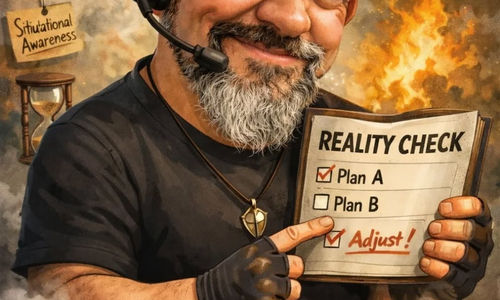
Within the Reality Check philosophy, violence is understood as mechanical rather than emotional. Threat is evaluated through function, not feeling. Can this person cause serious harm? Do they appear willing to do so? Can they act immediately? These questions form the operational equation.
A crucial aspect of this analysis is often overlooked: past actions and offenses do not, by themselves, justify lethal force. Individuals may commit crimes, behave aggressively, or act irresponsibly without presenting an immediate lethal threat. Force is justified by present conditions, not prior misconduct. The relevant question is not what someone did earlier, but what is happening now.
Equally important is the issue of provocation and responsibility. When professionals unnecessarily escalate situations—through crowding, humiliation, aggressive posturing, poor communication, or the removal of reasonable alternatives—they increase the likelihood of violence. When danger is manufactured through avoidable choices, later claims of necessity become deeply problematic. One cannot create jeopardy and then rely on it for justification.
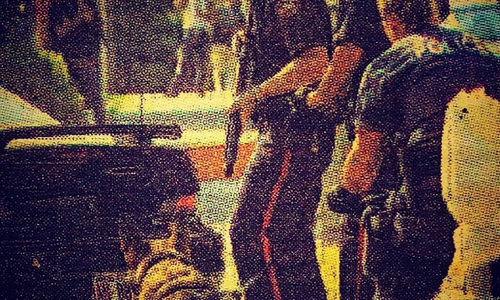
In professional standards worldwide, this concept is often referred to as officer-created jeopardy or self-generated risk. In practical terms, it means individuals are accountable for decisions that make situations more dangerous rather than safer. Force is meant to be a last resort. It is not a shortcut, a punishment, or an escape from poor judgment.
Reality Check emphasizes responsibility before reaction. Positioning, tone, timing, and restraint all shape outcomes. Once a situation is pushed beyond certain thresholds, control is lost and harm becomes more likely for everyone involved.
Ultimately, lethal force is not about winning. It is about stopping an immediate, unlawful threat when no reasonable alternative remains. When means, intent, and delivery align, time compresses, options narrow, and responsibility becomes absolute. The professional obligation is to recognize that moment accurately—and only that moment.
In a world increasingly driven by fear and rhetoric, disciplined evaluation remains the foundation of justice, safety, and trust.
Force without fear is not weakness.
It is professionalism.
It is restraint.
It is leadership.
This framework forms part of the broader Reality Check approach to self-protection—an ongoing exploration of how martial artists and professionals can think clearly, act responsibly, and maintain discipline under pressure.