Updated: Dec 23, 2025
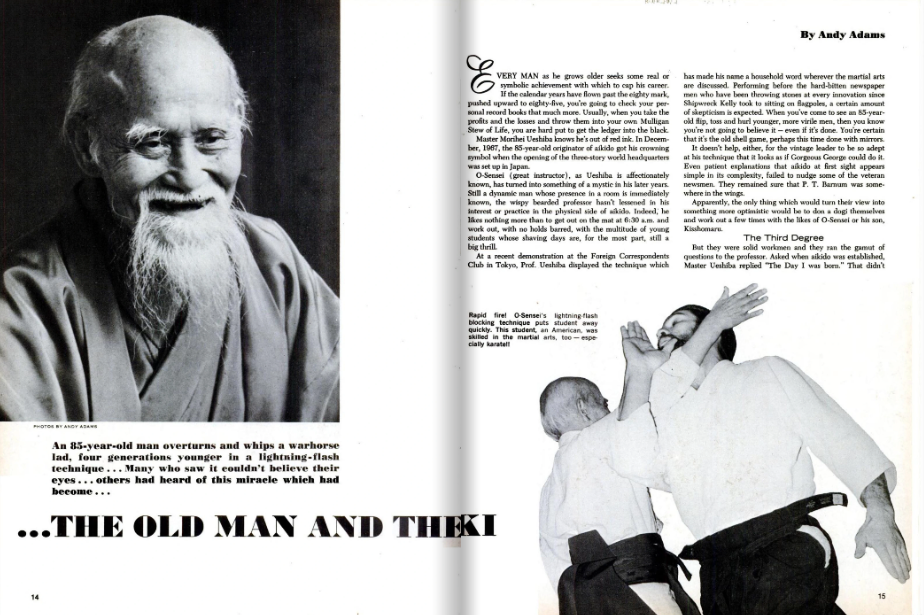
More than half a century after his passing, Morihei Ueshiba (1883–1969)—revered worldwide as O-Sensei—continues to shape the lives of millions of martial artists across the globe. As the visionary founder of Aikido, Ueshiba forged a martial discipline unlike any other: one built not on domination, but on harmony, balance, redirection, and spiritual development.

At a time when modern society grapples daily with conflict—both physical and psychological—Ueshiba’s teachings have only grown more relevant, not less. His philosophy offers practitioners a way to resolve confrontation without aggression, to cultivate strength without brutality, and to find power through calm presence.
A Martial Art Built for a Modern World
Aikido does not rely on brute force. Instead, it teaches practitioners to:
Blend with an opponent’s energy
Redirect aggression without meeting it head-on
Maintain balance—physically, mentally, and emotionally
Resolve conflict rather than escalate it
In an era defined by stress, violence, and division, these principles resonate deeply. Today, Aikido is practiced in:
Military and law enforcement training
Corporate leadership and stress management programs
Youth development and character-building systems
Traditional dojos across more than 140 countries
What Ueshiba created was not just a fighting method—it was a blueprint for conflict resolution through awareness and control.

From the Dojo to Hollywood
Aikido’s influence extends far beyond the mat and into popular culture. Among the many high-profile figures inspired by Ueshiba’s art is Steven Seagal, whose early films brought Aikido’s flowing throws, joint locks, and circular movement to global audiences.
Through cinema, millions were introduced to the effectiveness—and elegance—of Ueshiba’s system.
Legendary fighters from other disciplines, including Mike Stone, have also acknowledged the initial Aikido principles in his early career.

The Black Belt Connection
From its earliest days, Black Belt Magazine has been a global ambassador of martial arts education. Its founder, Mitoshi Uyehara, trained extensively in Japan and was deeply influenced by the postwar Japanese martial arts movement that Ueshiba helped define. Through Black Belt’s pages, films, and instructional materials, Aikido and Ueshiba’s philosophy reached generations of Western practitioners.
Through coverage, historical documentation, and technical instruction, Black Belt helped ensure that Ueshiba’s teachings were not confined to Japan—but became a living, evolving global tradition.

Why Ueshiba’s Teachings Matter More Today
In a world saturated with competition, confrontation, and online conflict, Aikido offers something rare:
Strength without cruelty
Victory without domination
Defense without hatred
Ueshiba believed the true purpose of martial arts was not destruction—but the reconciliation of the world. Today, his art is practiced by:
Children learning confidence
Adults seeking balance and wellness
Professionals managing stress and leadership
Martial artists searching for deeper meaning beyond competition
Each generation that steps onto the mat keeps that vision alive.
An Eternal Legacy in Motion
Morihei Ueshiba did not just leave behind a martial art—he left behind a living philosophy, carried forward by millions of practitioners in dojos, film, education, and personal transformation worldwide.
More than ever, his message speaks clearly across time:
True victory is victory over oneself.
And that is why, in today’s uncertain world, Morihei Ueshiba is not just remembered—he is needed.