
Young people who grew up in the age of the internet will find it difficult to grasp just how hard it used to be to track down information about rare martial arts.
Case in point: hisardut.
I first heard about the Israeli self-defense system in 1990 while attending college on the East Coast. I was part of a small group of die-hards who kept their eyes and ears open for leads on events that featured styles that were new to us. A campus flyer indicated that a hisardut seminar would take place within driving distance of the college.
None of us made it to the clinic, but the name hisardut became lodged in my brain — I’m not sure why. Jump ahead 28 years. While browsing the web, I happened across a hisardut academy just 40 miles from my home. When I learned that it was run by an eminently qualified instructor, I made arrangements to connect.
You’re reading the result of that meeting.
HISARDUT HISTORY
Hisardut owes its existence to one man named Dennis Hanover. He was born in 1937 in Johannesburg, South Africa, where his Jewish parents had fled as mounting tensions in Europe steered planet Earth toward its Second World War.
For the child, however, life in South Africa was no luxury cruise. “It was a hard time for Dennis and his family,” said Hezi Sheli, the sixth-degree black belt who has run the Israeli Martial Arts Academy in Westlake Village, California, since 2010 and who trained under Hanover in Israel. “His family didn’t have much money in South Africa,” Sheli said. “Then his parents got divorced. His father wasn’t there when they needed him most. Whenever Dennis talks about his childhood, he talks about feeling like a stray cat on the street. Then when he was 17 years old, his dad died.”
The comparison to a stray cat on the street is an apt one because Hanover spent so much of his time there. One of the first lessons he learned was that the person who fights back is the one who survives. “That was the beginning of hisardut, which means ‘survival’ in Hebrew,” Sheli said. “Dennis realized that when he fought back, people gave him respect and left him alone.”
Knowing he needed to acquire some formal self-defense skills, Hanover tried several martial arts schools, but the owners refused to accept him. Finally, he found a judo gym that consented — under one condition.
“They said, ‘We’ll let you train here, but you need to clean the toilets and the rest of the school,’” Sheli said. Hanover agreed. When he wasn’t cleaning, he managed to pick up some effective grappling skills.
More important for the long term, though, was the fact that he learned he had the spirit and determination needed to succeed in any art or endeavor. In the dojo, Hanover set about building better technique.
On the outside, he set about building a better life. To that end, he got married, and in 1963 the couple immigrated to Israel. “Again, they had no money and no friends,” Sheli said. “So he started teaching judo, and while he was doing that, he studied kyokushin karate and ju-jitsu.”
KYOKUSHIN SPLIT
Hanover took to ju-jitsu and kyokushin as readily as he did judo. In 1975 the martial artist, at age 37, competed in the first World Full-Contact Karate Open Championships in Tokyo. His performance earned him a reputation as one of the top karate fighters in the world.
It also spawned his friendship with Mas Oyama and his relationship with the Kyokushinkaikan. However, neither was destined to last. Four years later, Hanover was prepping his best students to compete at the second kyokushin world championships.
“Mr. Oyama sent him a letter saying they couldn’t come,” Sheli said. “King Hussein of Jordan was to be a guest — and possibly a sponsor — and he told Mr. Oyama that if the Israeli delegation was coming, he wasn’t.” Hanover’s reply was diplomatic but stern. “He said, ‘This is an amazing martial art, but if you cannot put us together and give us the respect that we give you and the Jordanians, then I’m sorry, but I have to go my way,’” Sheli said.
The slamming of one more door in the face of Dennis Hanover thus served as the impetus for the creation of a self-defense system. Hanover dubbed it “Dennis hisardut ju-jitsu.”
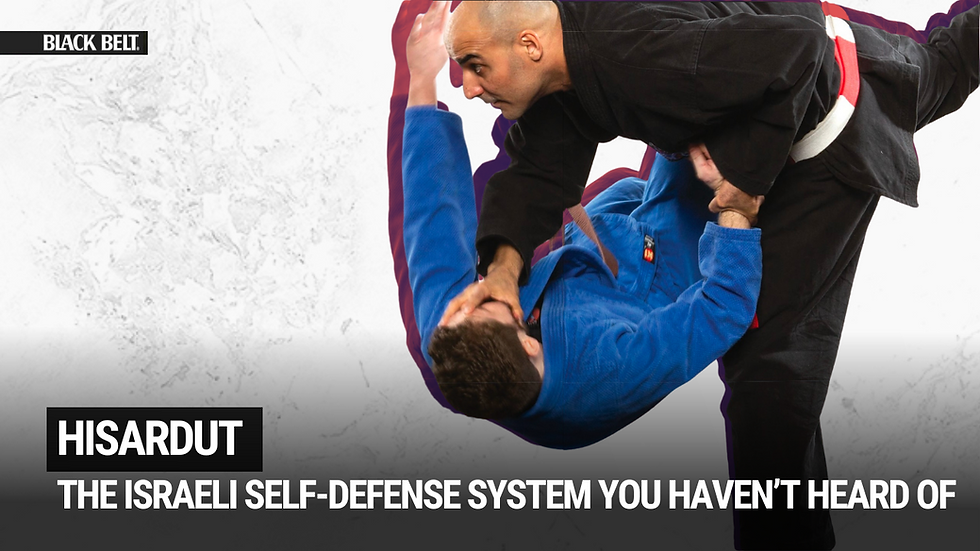
“He took karate, judo and ju-jitsu and put them together,” Sheli said. “Why? Because he had seen all these attacks on the street and knew that for self-defense, karate was good but not enough. Karate in Israel at the time was practiced as a sport. Judo also was good but not enough because it was a sport. And he added ju-jitsu, which was not a sport.”
But Hanover didn’t stop with just a collection of what he deemed viable techniques culled from three arts. From his time on the street, he knew there was still a missing ingredient. “In Israel, we face terrorism from the south, from the north and from inside,” Sheli said. “Dennis understood that to defend against that, his system had to be aggressive.
It had to be about survival. Dennis likes to say that any instructor can teach you how to punch and kick, and it’s true. He also says that what you need for survival is the spirit to pick yourself up off the ground and fight. That’s one of the unique things his system teaches.”
CURRENT STATE
“The two leading self-defense systems in Israel today are krav maga and Dennis hisardut ju-jitsu,” said Sheli, who lived in Israel until 2007. “Judo and karate are popular, but they are sports with rules. Dennis hisardut ju-jitsu and krav maga are designed for the street.
“Krav maga is a great system. The krav maga people in Israel are good friends of ours, and we give each other lots of respect. To some people, the two systems look the same, but they’re not. Krav maga was designed to have a few basic moves — blocking, punching, striking to the soft points — and then you get out of there. Every soldier in the Israel Defense Forces has some krav maga training.
“Dennis realized this can be good for some self-defense situations but not necessarily for anti-terrorism. If someone attacks you with a gun, a knife or a stick and you block and punch, it’s not enough. You have to keep going. Most special-ops units understand that it’s not enough, so they get training in Dennis hisardut.”
Sheli knows what he’s talking about. He started learning Dennis hisardut in 1992 and continued while he served in an Israeli special-ops unit. “I began training because every country has problems with bullying and crime, and I didn’t want to be a victim in school,” Sheli said. “The second reason was I knew when I was 18, I was going to join the military.”
In between those milestones came a lesser event that would have lasting repercussions. “Our gym had to send all the instructors to a convention in Europe for two weeks, and Guy Hanover, Dennis’ son, picked me and another guy to keep the gym open,” Sheli said. “For me to have this responsibility — at 16 years old — was a big moment. I realized they could see potential in me and they trusted me.”
In the ensuing years, the teaching method Sheli developed for this mixed martial art — one that’s geared for survival rather than sport — evolved as a way to perpetuate Hanover’s creation while meeting the needs of American students.
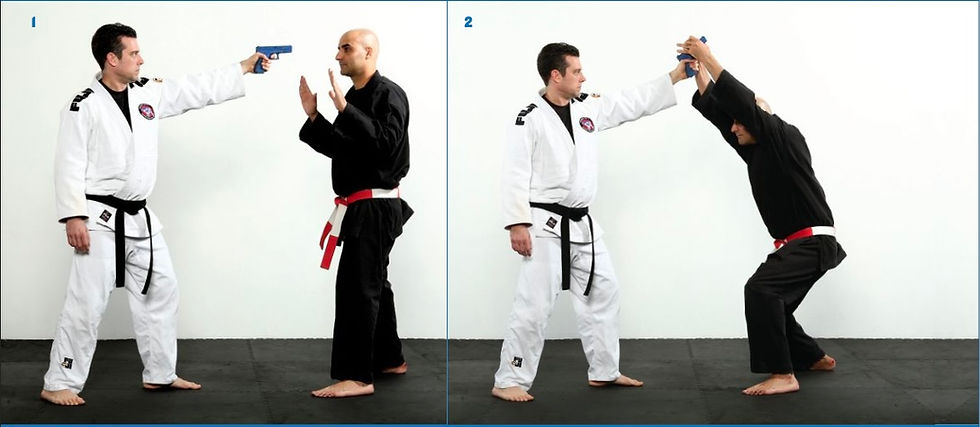
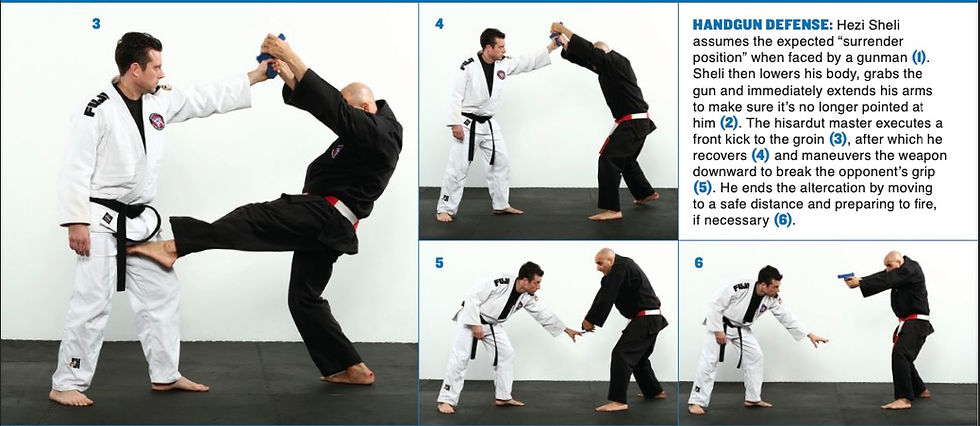
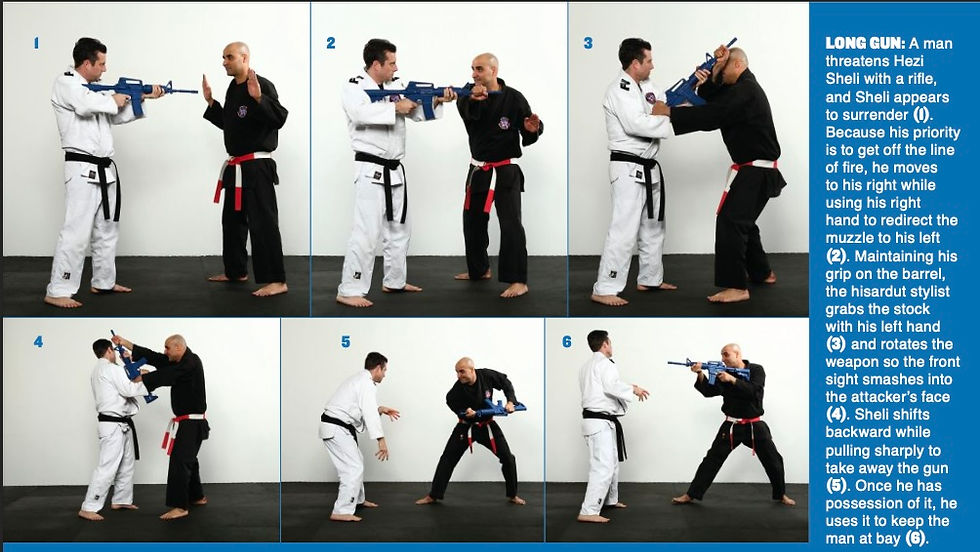
“I like to have the flexibility to fit the teaching to the people,” he said. “They never know what’s coming on any given day. Even I don’t know because I wait until I go on the mat and see the levels of the students. There is always a fitness and strength component in our training, and there is always aggression. In one class, I might do 20 minutes of karate training. In another, I might give 20 minutes to judo. In another, the focus will be on ju-jitsu or knife, gun or stick.”
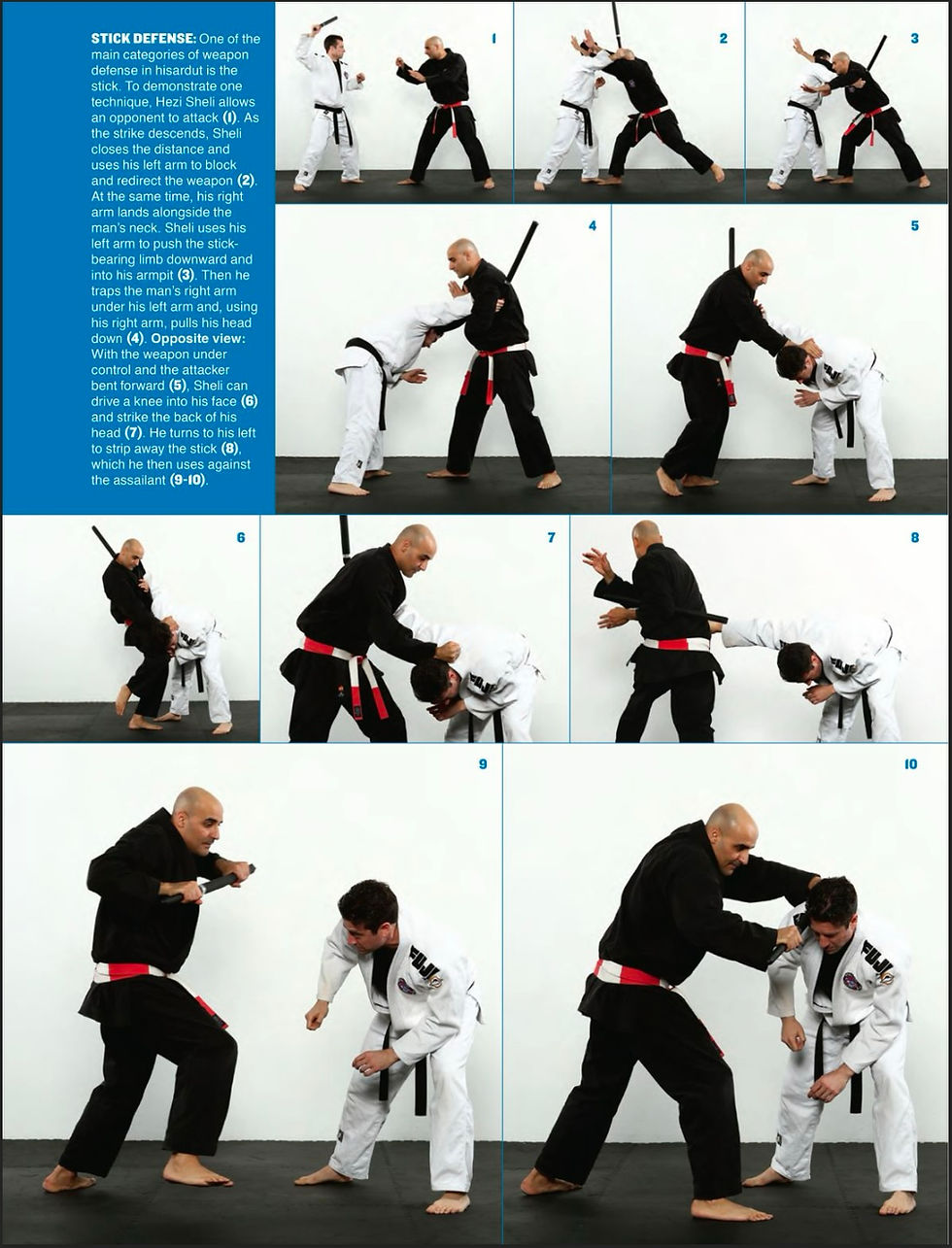
Once students get the basics down, Sheli begins to immerse them in all that Hanover incorporated into the hisardut system. “One time, I might put them in the middle to defend against knife attacks and have them use only judo defense,” he said. “Another time, I tell them they can use only karate — punch, kick, move. Or only ju-jitsu, so they have to go for the joints.
“When they’re ready, I tell them to put it all together. In the end, each student picks his or her own style. A guy who’s short might pick more judo techniques, while a guy who has long legs might go for karate techniques. If you’re a woman, you need to know good judo — but not necessarily go for a judo technique if someone who weighs 220 pounds comes after you. You can take him, but it will require lots of effort. It’s better to use your speed, your punches, your kicks — and then maybe do a takedown if you need to. But you should try to stay away from the ground.
“That’s the beauty of having different elements of different martial arts in one system. Students can take what they’re good at and what works for them.”
As for that missing ingredient of aggression?
“Many times, kids these days are not aggressive, but the parents know what’s waiting for their children and want them to be strong,” Sheli said. “In 2009 I was in Israel to train. I met a krav maga guy from Boston, and he saw the kids fighting in Israel. He said, ‘This can never happen in America because it’s too aggressive.’ I understand what he meant because there was no headgear, just shinguards, mouth guards, hand pads and groin cups.
“Then I told him this was the right method of instruction because there is a progression. In the beginning, they work on pads, improve their fitness, learn judo techniques, and start to build aggression with judo and ju-jitsu on their knees. There are lots of aggression games. Then the kids spar with older kids who have experience, who know not to break them while giving them a good session that’s empowering. I always tell students to leave their ego in the parking lot. We are here to help each other get stronger, not to defeat each other. Defeating each other is easy; building each other up is the real challenge.”
One of the main lessons Sheli imparts to build up students of all ages — and one he recommends for practitioners of all martial arts — is not to freeze in the face of danger.
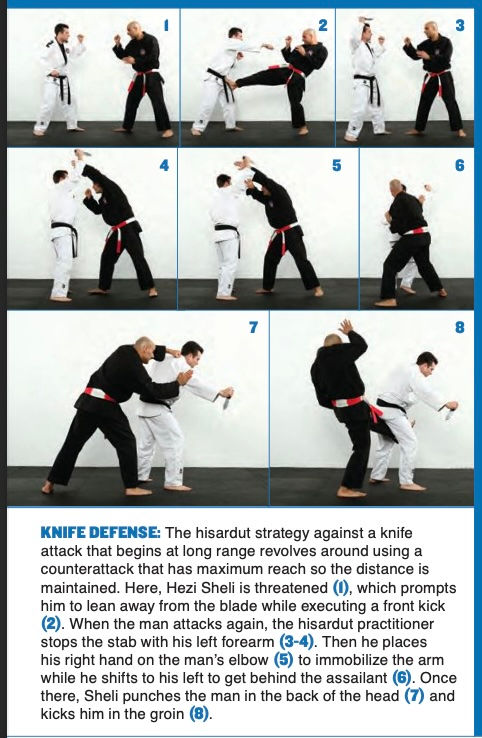
“You have to do something,” he said. “You have to refuse to be a victim. If you know your surroundings and you’re confident in your skills, most likely you will make a good decision. “In Israel when there’s an attack, most people don’t freeze because so many have served in the military. Most people will do something. Some people will run away, which is normal, but some will pick up a chair and throw it.
That’s why, when there is an attack in Israel, we have a lower number of casualties versus the same attack that happens in Europe.
More people should learn how to close the distance and fight back. Some will get hurt, yes, but not as many as when nobody fights.” It sounds like he’s saying that to create a more secure society, more people should learn hisardut.
If that’s his intent, I would agree.
Photography by Robert Reiff