Updated: Nov 5, 2024


In 1853, Commodore Matthew Perry sailed into Edo harbor (now Tokyo) with four steam-powered warships. The United States was on a mission to open Japan to the outside world, and the arrival of this fleet caused chaos to erupt. It continued until the following year when Perry returned, and a reluctant compromise was reached between East and West.
Perry's steamships offered indisputable proof of how far the rest of the world had progressed while Japan had hibernated under two and a half centuries of Tokugawa control. It became apparent that the island nation could no longer live in relative isolation as it had since the 1600s. The resulting Treaty of Kanagawa forced open the door to Japan while closing the doors to the Tokugawa.
The rejection of feudalism gained momentum in 1865, and a faction of forward-thinking Japanese sought to restore the Emperor as the supreme ruler. In 1868, the young Emperor Meiji found himself back in power, facing the arduous task of helping his country catch up with the world.
Emerging from its futile cocoon, Japan began to metamorphose into a modern nation. However, this transformation did not happen smoothly. The old ways had to be discarded, and new Western methods adopted. Before, the Shogun reigned supreme, and his daimyo controlled the fiefdoms, with samurai maintaining order among merchants and shop owners. Now, the samurai class would be abolished; no longer could they carry two swords or wear a topknot in public.
The last Shogun stepped down, and those changes precipitated regional wars across Japan. The movie The Last Samurai is a good depiction of this era of turmoil.
No Need for Martial Arts?
Despite the difficulties, Emperor Meiji stayed the course and continued to introduce ideas from the West to infuse new life into ancient Japan. To bolster his reign, he conscripted the first modern national army.
To more efficiently mobilize troops, as well as to improve commerce and build infrastructure, he had the first national railroad system constructed. To promote the advantages of these new ways, he encouraged newspapers to publish.
Another of his priorities was improving public education to ensure future generations of knowledgeable citizens. Up to this point, only the wealthy could afford an education in the classics; now, everyone would be able to obtain at least a high school diploma.
During this upheaval, martial arts were being tossed aside. The rationale was that who needed knives, lances, sickles, arrows, and swords when rifles, grenades, and bombs could ruin the enemy’s day on the battlefield?
Many arts were regarded as having outlived their usefulness. Kenjutsu, jujutsu, bojutsu, and other systems, while not outlawed, waned in popularity.
Ultimately, however, the martial arts that were to be discarded came to be regarded as integral parts of the new education system—thanks to the efforts of one man. He was trained in the Chinese classics, as well as in a Western education. He studied philosophy, political science, and English before graduating from what would become Tokyo University.
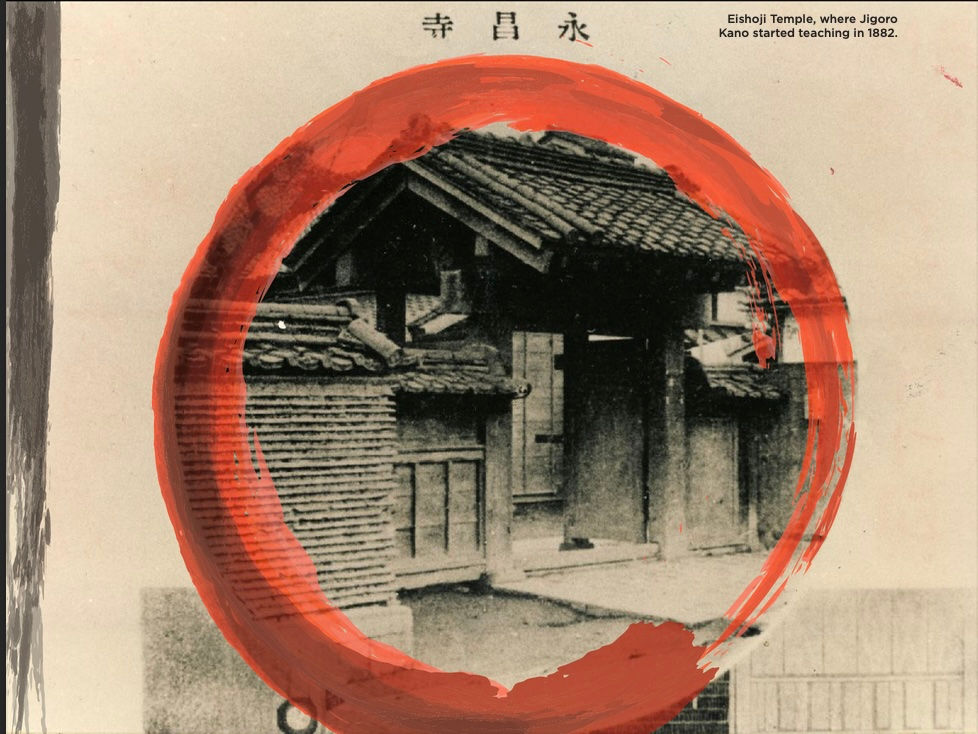
Outside college, he took up jujitsu to compensate for his small frame, quick temper, and larger adversaries. After graduation, he accepted teaching positions, first at Gakushuin University and then at a school for the children of the upper class. Later, he became president of a teacher's college.
As his career progressed, he continued to practice jiu-jitsu. He polished his skills to such a degree that he was recruited to demonstrate for U.S. President Ulysses S. Grant and other dignitaries. Perhaps just as important as his ability in jujitsu was his proficiency in English, which paid off when, because of his political context in Japanese society and growing connections with the Western world, he was invited to social functions where ideas were discussed by exponents from around the globe. He would later use those ideas to reshape Japanese society.
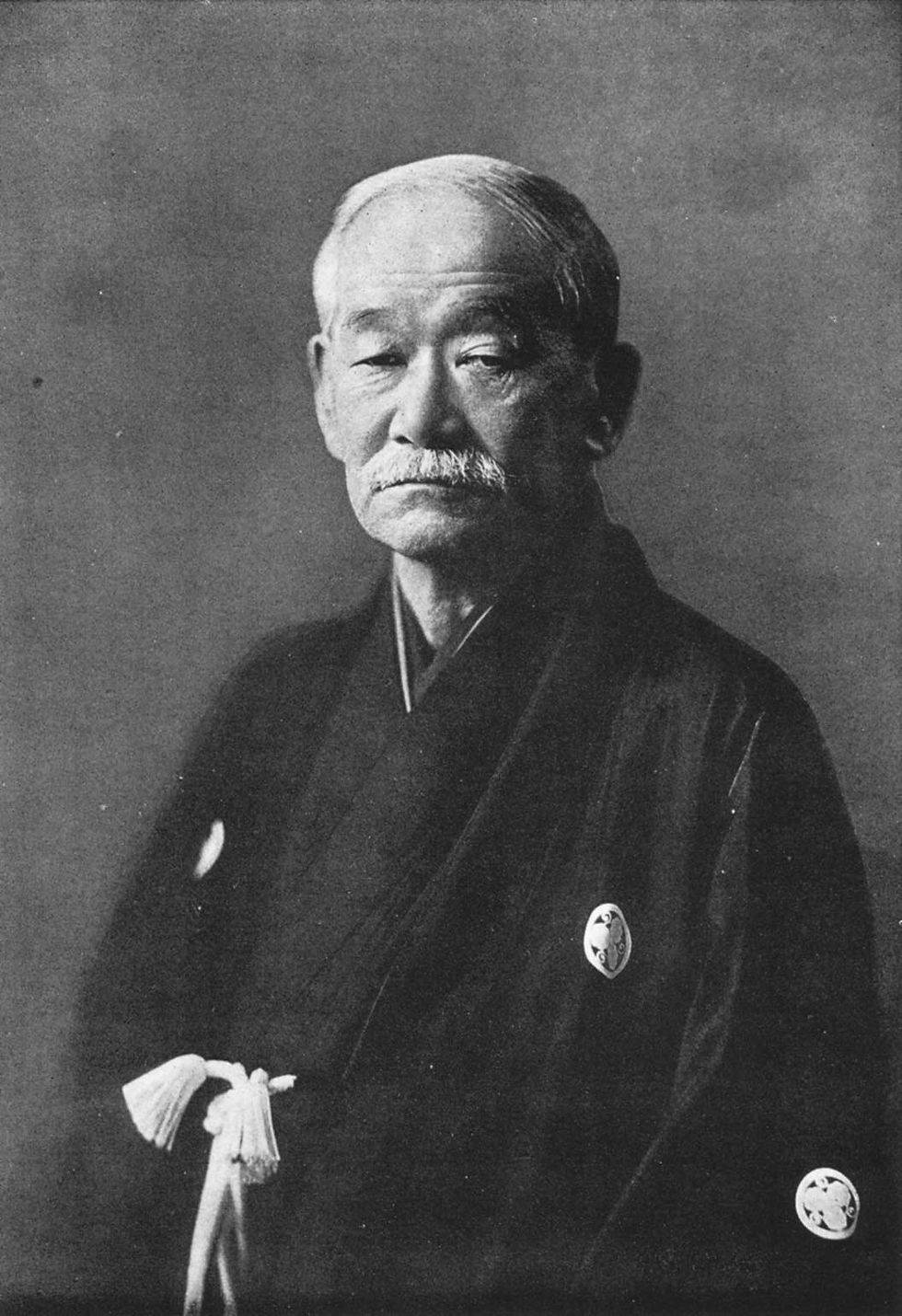
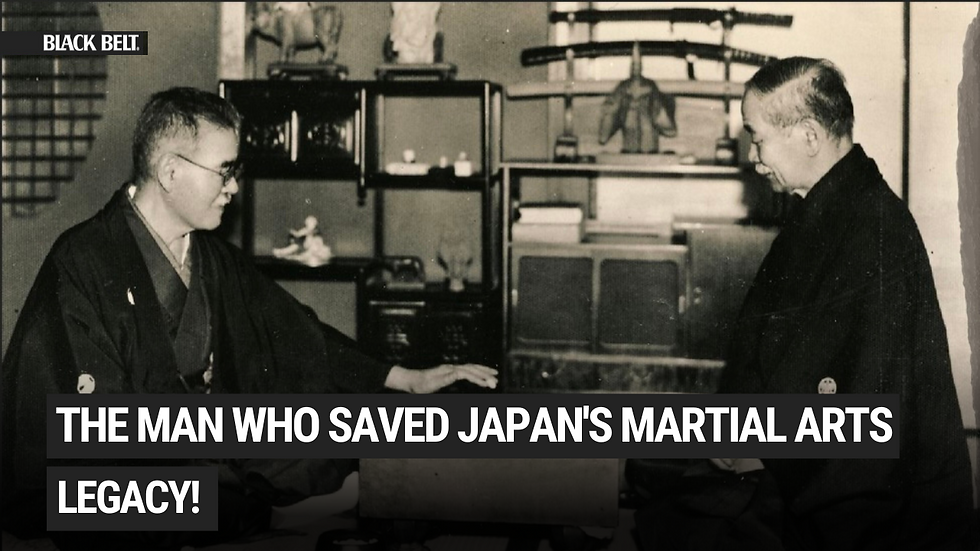
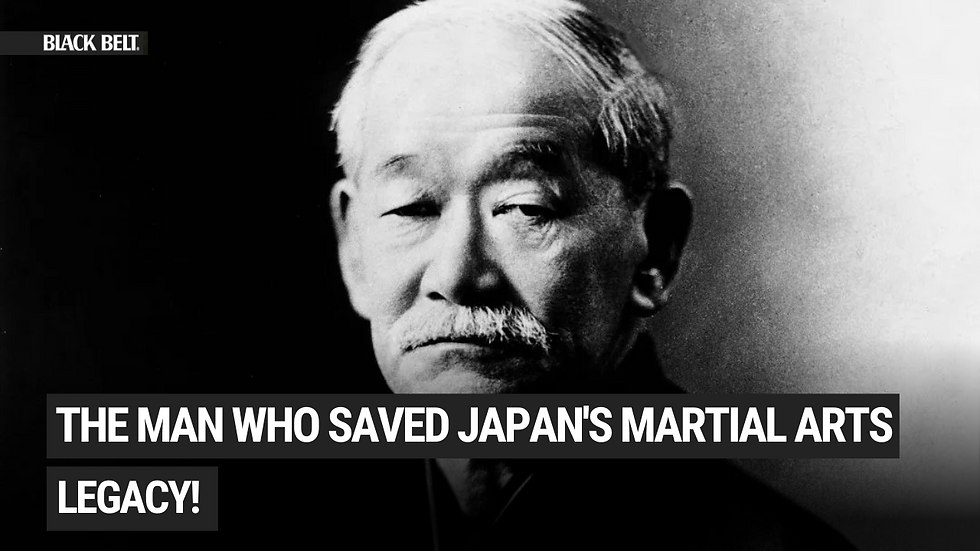
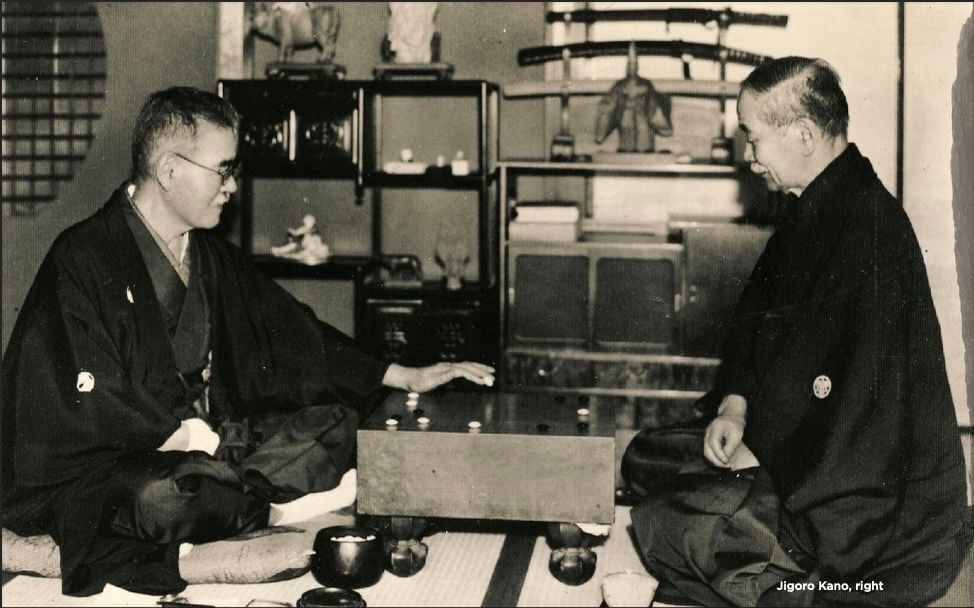
The man in question, of course, is Jigoro Kano—philosopher, statesman, educator, innovator, Judo founder, and the man who saved the martial arts of Japan from extinction. This was possible because Kano understood that the arts represent more than just means of overcoming an adversary; they are ways to foster better human beings.
Value of Games
One of the reasons the martial arts enjoy their current position in society is that Kano's command of English enabled him to glean important concepts from Great Britain and the United States. In fact, he used those concepts to mold Japan's physical education model. A crucial part of this effort was acknowledging the role that games play in society.
In Great Britain, it was long known that games helped prepare a country for conflict, and a bit of tweaking for added safety could physically train participants for the defense of the state. This line of thinking dates back to the Middle Ages, when knights engaged in sword contests and jousting.
In more recent times, the Duke of Wellington is remembered for saying, “The Battle of Waterloo was won on the playing fields of Eton."
What are some of the qualities you can find on the playing field or, in our case, in the dojo? The cultivation of the drive to prevail over an adversary or situation. The development of the capacity to strategize to enhance performance.
The knowledge that the body can be trained to meet practically any demand. No one in Japan understood this better than Kano. It's what prompted him to state, “The body is the instrument for the purpose of life, without which we have nothing."

Adaptations for Modern Society
Kano believed that the inherent positive qualities of Japanese martial arts should be preserved in the new education system. However, to do so, he had to make the martial arts palatable to the government and the public.
First, he had to make practice safe; then, he had to demonstrate those positive qualities.
With his beloved sport of Judo, Kano excluded dangerous techniques such as leg locks and strikes that could permanently damage participants who lacked control.
In this way, he was formulating the rules of conduct for sports—badly needed because the concept of organized sports was mostly foreign to Japan. It was certainly foreign to jujitsu, in which a match was expected to continue until one person was put down.
Kano was also instrumental in developing the Judo gi. Before he came along, ordinary Japanese kimonos were worn, but they tore regularly. The Judo gi most likely was born out of Kano’s preference for randori over kata and the need to deal with the stresses clothing endured.
Knowing that tougher material must exist, he turned to the thick woven happi coats that Japanese firemen wore. With the adoption of the Judo gi, there emerged a sense of uniformity and military order, both of which were accepted by the modernizing nation.
Traditionally in Japan, happi coats were worn loose. Kano set out to change that, too. Before the introduction of the belts he envisioned, the Japanese martial arts used the menkyosho system—written letters of recognition indicating students had reached a certain level of expertise.
The documents were signed and dated by the instructor. The problem was that teachers rarely offered these letters to their students, and there were no other incentives or markers distinguishing beginners from experts.
Kano divided practitioners into two levels: beginners with a white belt and advanced practitioners with a black belt. Later, he established five dan levels for black belts and divided the beginner stage into six levels called kyu, half of which were associated with a brown belt.
More Than Physical
Practitioners of other arts know Kano because of those belts; practitioners of Judo know him because of his maxims.
Three of the most popular are jiko no kansei (self-perfection), jita kyoe (mutual welfare and benefit), and seiryoku zenryo (maximum efficiency with minimum effort). These qualities fostered through Judo training are not only essential to the sport but also transferable to daily life, helping to make society a better place.
Moreover, the maxims emphasize the new purpose and goals of what was once traditional jujitsu.
Self-perfection: In Judo, this is evident whenever you try to improve a technique. You quickly learn that there are degrees of self-perfection, which are different for everyone and even for the same person at different times. Throwing a cooperating opponent is quite different from throwing a resisting opponent, and both are different from throwing a world-class athlete in the Olympics. When done to its highest form, each can be labeled as perfection; they differ because of circumstances. The important thing is to strive to attain that perfection at whatever level you aspire to reach.
Mutual welfare and benefit: You cannot learn Judo without a partner, whether the partner is cooperative or not. There is mutual welfare even when the opponent is competing against you. If you lose, there is benefit from experiencing the mistake. This parallels life, where none of us is alone; we must interact with other people all the time.
Maximum efficiency with minimum effort: This can be found in almost every Judo throw. Even against an unwilling opponent, you might find yourself saying, “That seemed like I used no effort at all.” This happens when all your body parts are in alignment at the right time while your opponent's body parts are not.
To understand the deeper meaning of these maxims requires effort, practice, willpower, discipline, and help from others. The important thing is that they demonstrate principles that apply to life and not just to Judo. As such, they help build better citizens and a better society—which was precisely what Kano envisioned.
Spread Around the World
Although we are fortunate to have been born in an age of sporting events and martial arts, this was not always the case. It wasn't until the mid to late 1800s that many of the sports we love—including baseball, football, softball, basketball, and volleyball—were created. This was also the age of physical education in America, a time when movers and shakers at universities began to convey the importance of physical culture.
In Japan, Kano not only encouraged the incorporation of Judo, Kendo, and other martial arts into the Japanese education system but also argued for the adoption of Western sports as a means of inculcating positive qualities. His efforts earned him the title of “father of modern sports” in Japan. He later became the first Asian representative to the International Olympic Committee.
We owe a debt of gratitude to Kano for saving Japan's martial arts legacy by transforming the bujutsu (martial arts) into the budo (martial ways), thus sparing all the ancient fighting systems from the Meiji chopping block. As with modern sports, the budo survived because they reinforced the positive aspects of physical activities—qualities that translate into improved lives and improved societies, rather than merely what's needed to prevail in battle.
The martial ways serve as a microcosm in which we learn and train to be better people than we would have been had we not taken the martial path. Positive qualities are developed more efficiently because there's a lower risk to the ego when mistakes are made in a game, as opposed to when mistakes are made in real life.
In the hearts of many, this is reflected in the bowing we do in Judo. Bowing is about demonstrating respect. It's done customarily in Japan when meeting or greeting others, but also as a show of appreciation.
For students of the budo, it's an acknowledgment of the gratitude they feel toward their instructor, their dojo, and sometimes even the founder of their art—a man without whose contributions the martial ways likely would not exist.