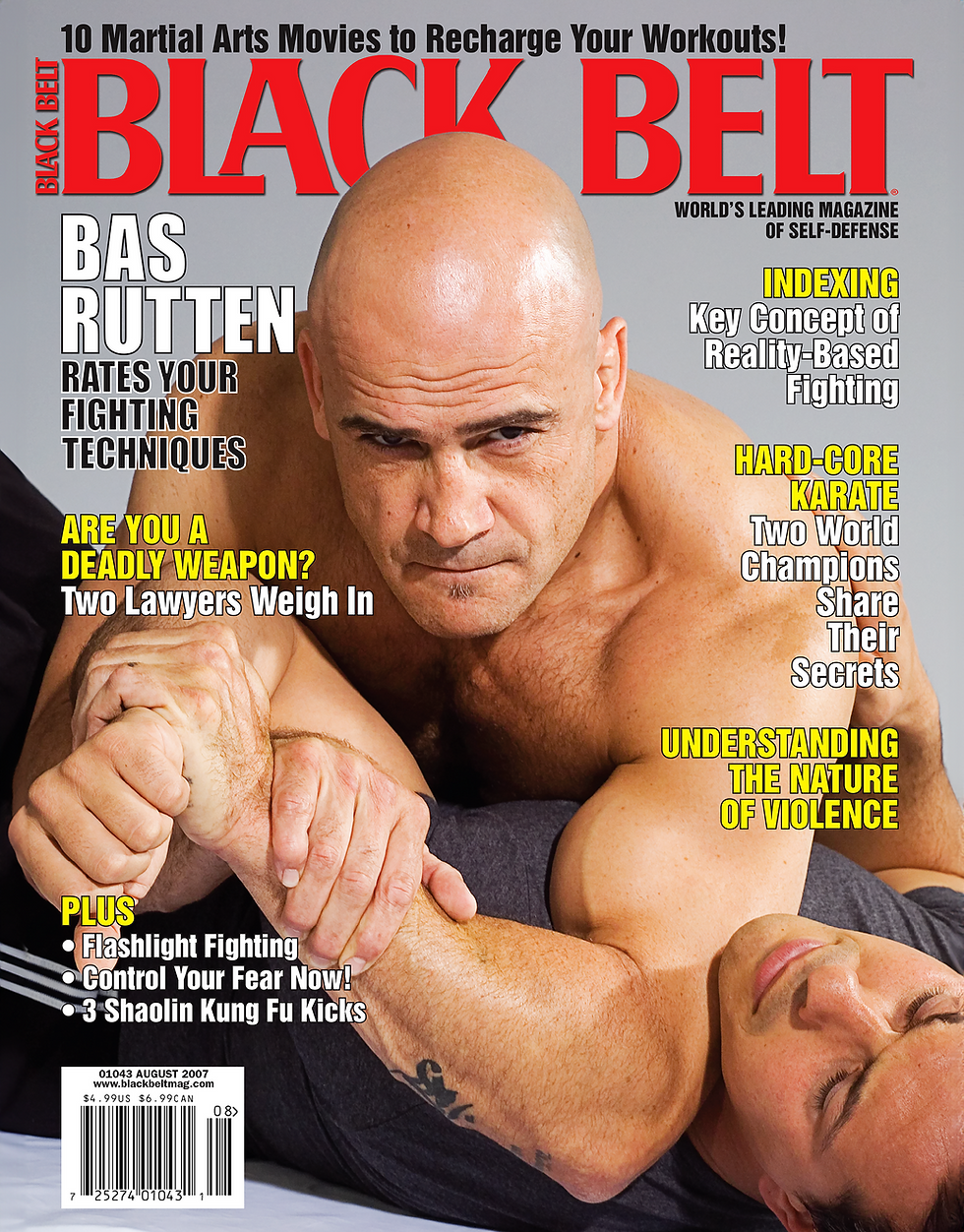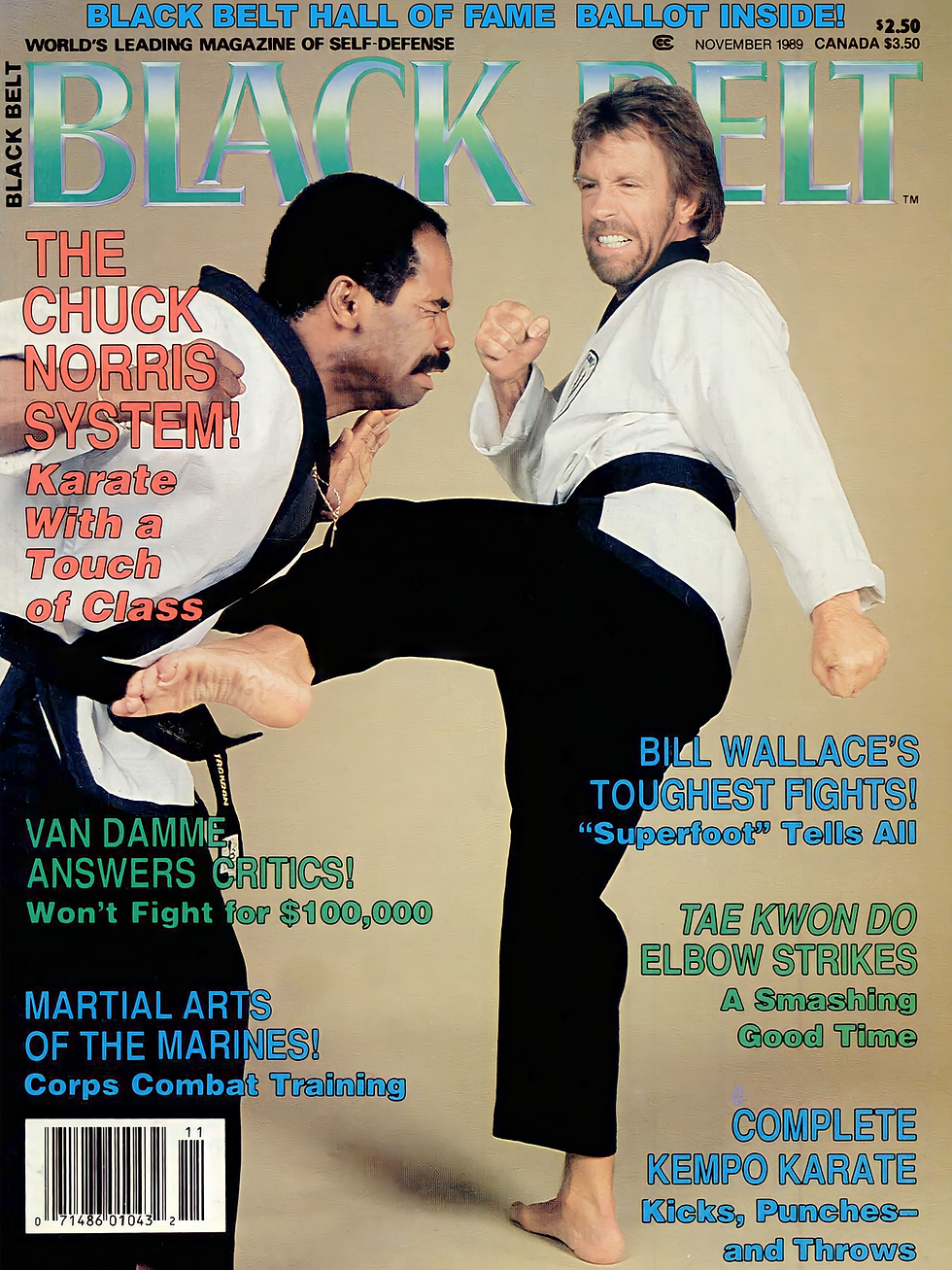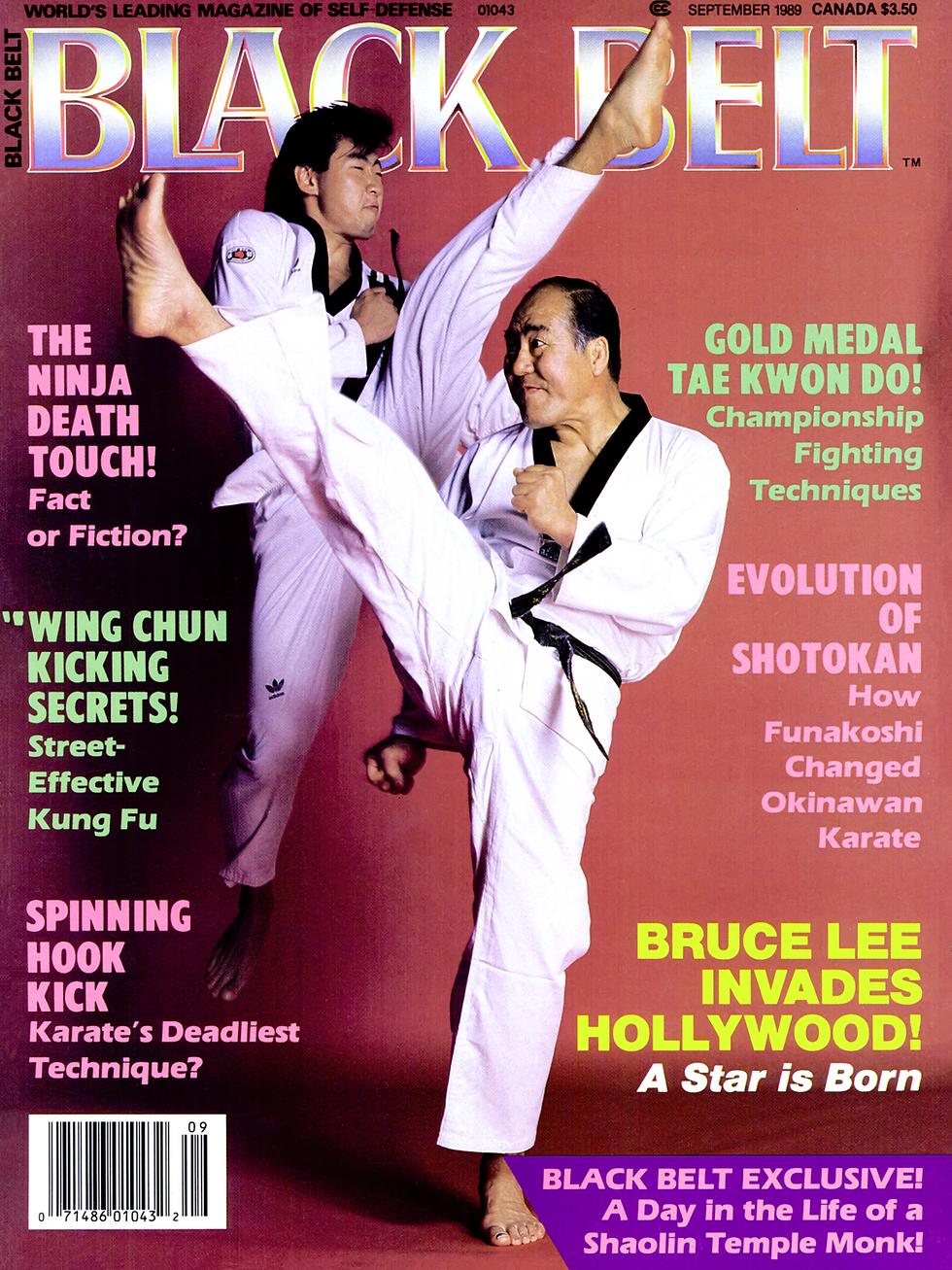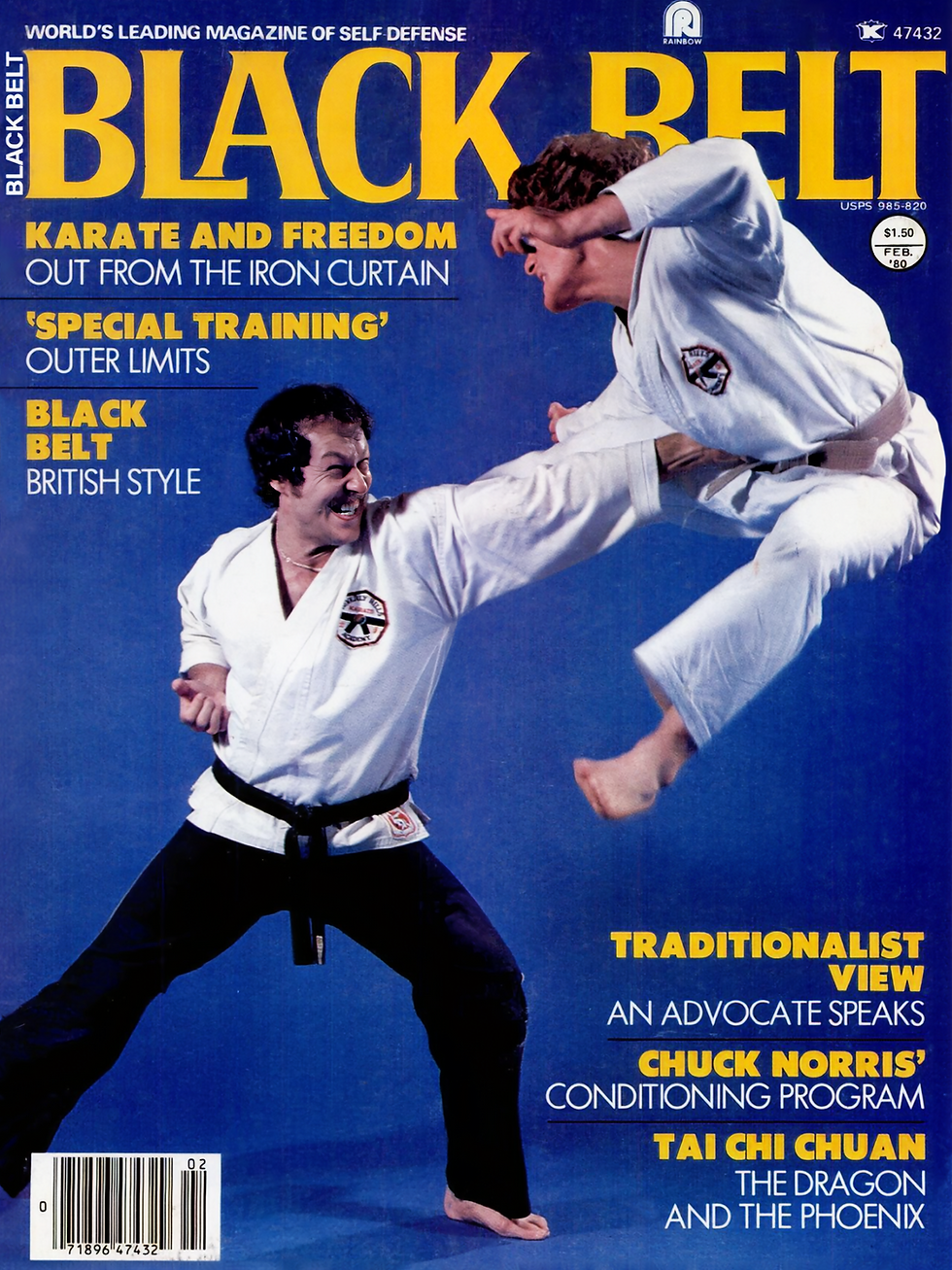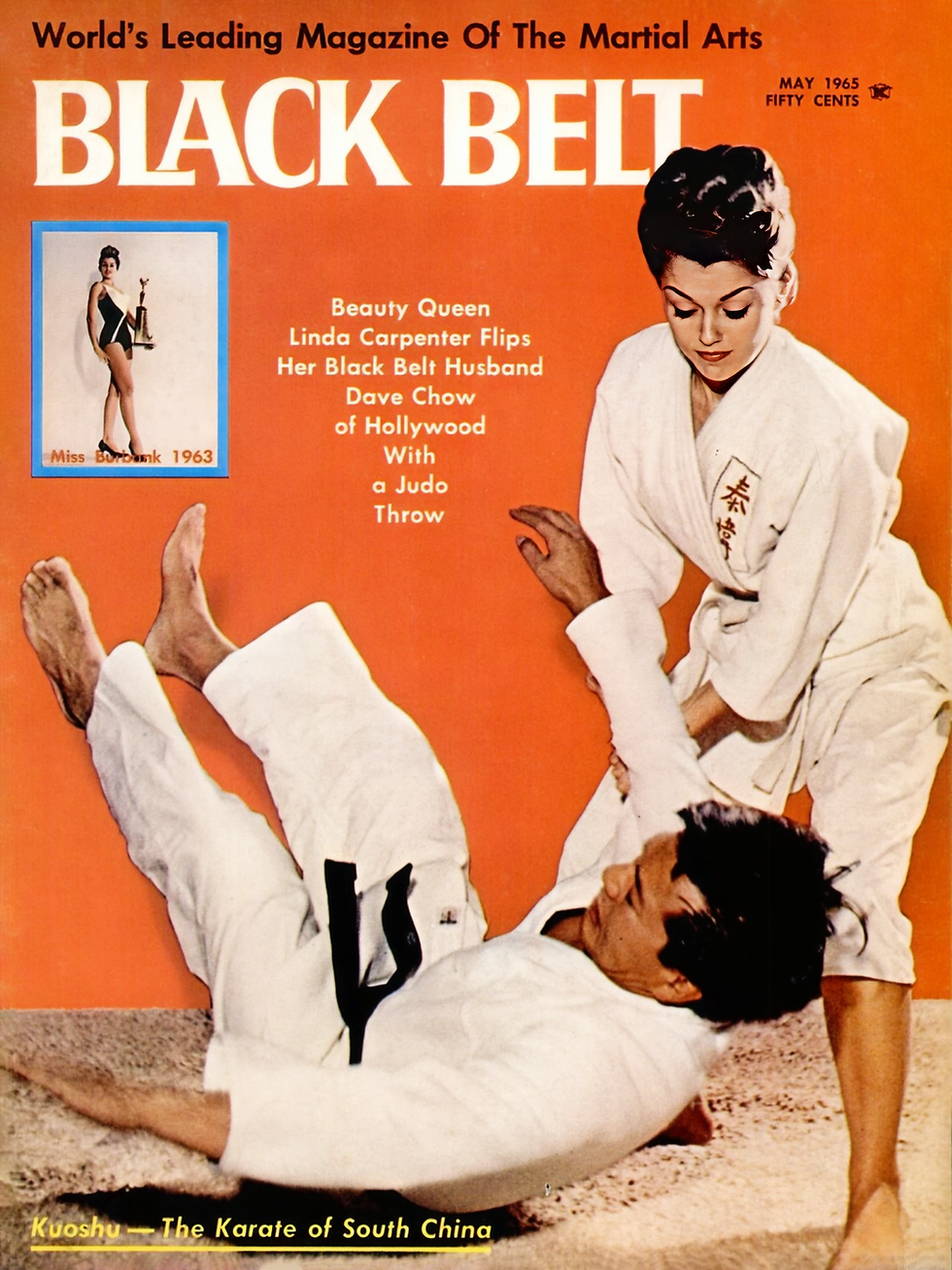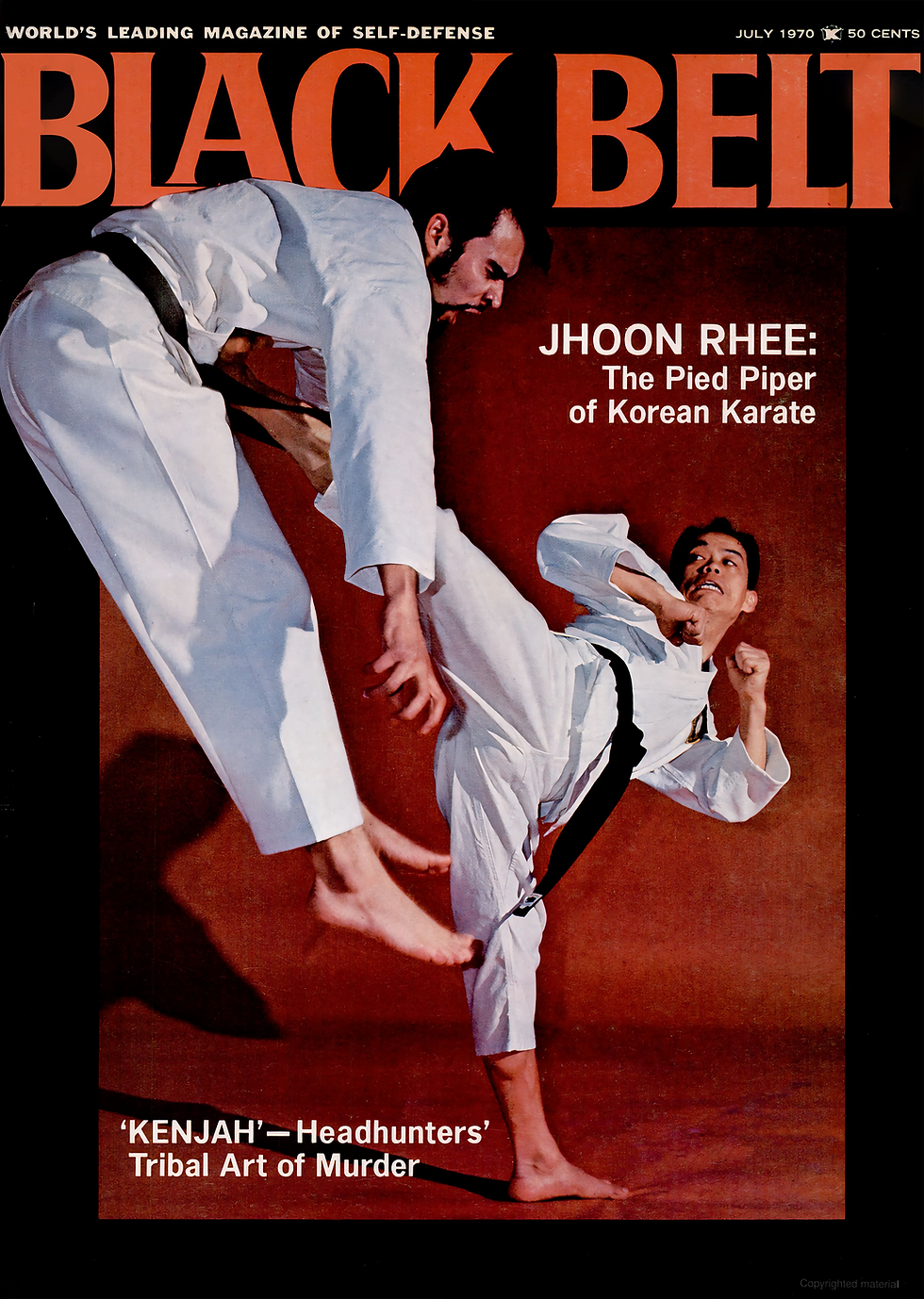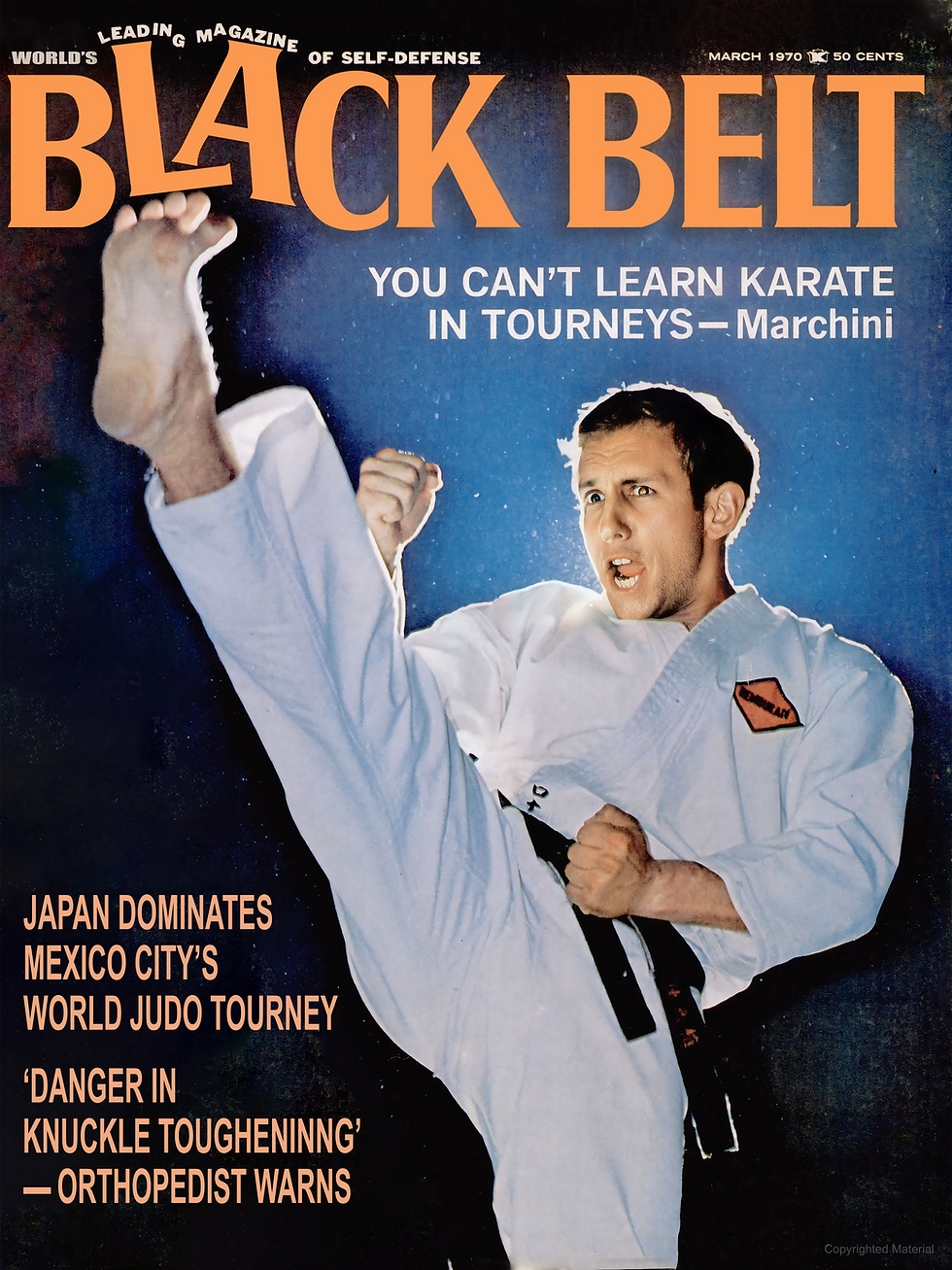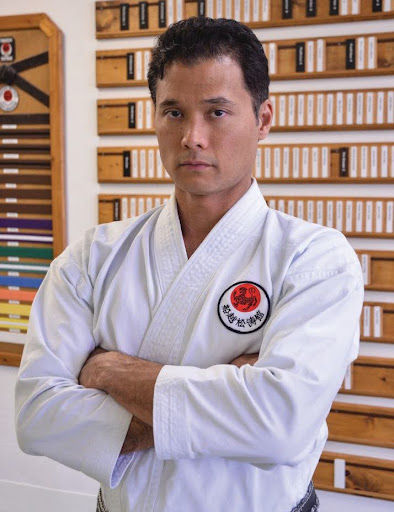

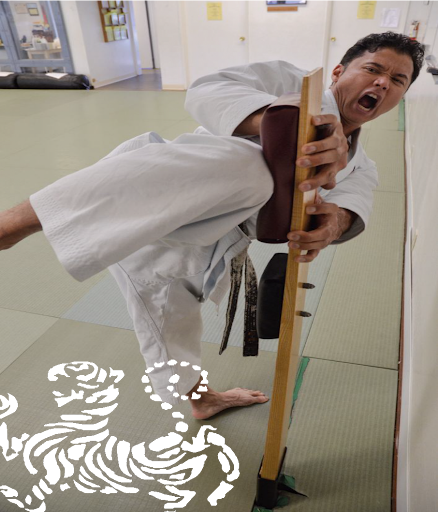
If there’s such a thing as karate DNA, the Funakoshi family must have it in spades. Kyle Funakoshi, the subject of this article, has been featured in Black Belt numerous times and appeared on the cover of our January 2010 issue. His brother Kevin Funakoshi is a master based in Texas. Their father Kenneth Funakoshi, who debuted in the magazine’s February 1965 issue when he was a first degree and then worked his way onto the cover in June 1992, is the originator of the Funakoshi Shotokan Karate Association. And then there’s Gichin Funakoshi, a distant cousin and the founder of the art. Since this interview was conducted, Kyle, 45, has become the proud father of twins who likely will enjoy that same genetic predilection for kicking and punching.
On Carrying the Shotokan Torch
“My dad is 80. Last year was his last one traveling over- seas for exams and seminars. When he was doing that, he would go for four to six months out of the year. He’s fully retired from teaching now. I’m the chief instructor of the association.”
On the Responsibility That Comes With Being a Funakoshi
“A lot of people hear the name and think, He’s probably good ... but I have to see. They ask me about the relation- ship with Gichin Funakoshi. I explain it, then say, ‘But don’t worry about that. Just come and watch the class.’ Usually, I tell them to watch our kids class because most times they’re interested in karate for their kid. They’re usually impressed with how structured it is, and they sign up. So the name doesn’t even matter. It’s just some- thing they think about when they read it online. But it’s good in a way because it stirs up interest.”
On His Early Days in the Art
“I was forced to train a minimum of three times a week. I could do other sports, but I had to train in karate. I didn’t realize how important that would be until I was in my 20s. Then I said, ‘I understand why my dad did this.’ It was for my own good.”
On How Training Back Then Differs From Training Today
“We didn’t move [from Hawaii to California] until I was 12. Training was a lot harder and more strict in Hawaii when my dad was teaching. The instructors would walk around with a stick and smack you if you made a mis- take. It was a different culture, one that was closer to the roots of traditional karate. In the ’60s and ’70s, karate stayed really traditional in Hawaii, and even in the ’80s. Now it’s a little more relaxed there.
“Nowadays, control and safety are more important. Parents don’t want their kids to get hit and have some- thing broken. Before any kids class, I demonstrate what is acceptable and what is not so we can avoid injuries, especially to the head and neck. With kids, it just takes one second, if you’re not watching them, for someone to get hit too hard. Sometimes being a teacher is like being a lifeguard and making sure nobody drowns.”
On Why Shotokan Remains Popular Not Just With Kids
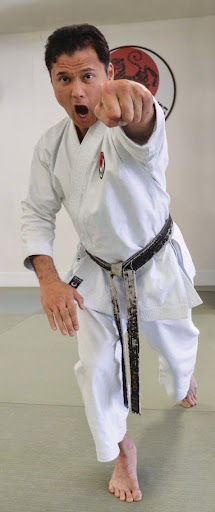
“Shotokan’s got a good balance of punches and kicks, roughly 50-50, but it’s popular because of the basic training in stances and in generating power and speed. These are the things that determine how much you can do later with more advanced techniques. If we just teach you how to do the advanced techniques without the stances needed to generate speed and internal power, it’s not going to be effective.
“Traditional shotokan guys will teach stances first, but it looks weird to outsiders because they think, Why are you doing those long, low stances? We have to explain that it’s to develop speed and power through contraction and expansion, through using your legs, hips and shoulders instead of just snapping out with your elbow. It takes more time to learn the basics correctly with shotokan, but when you do learn them, you can make your techniques shorter in a fight and still generate speed and power.”
On Grabbing the Floor With the Toes
“In shotokan, you use all your body to generate speed and power, which means using your feet to grab the floor with your toes. A lot of people punch hard, but they don’t have any traction with their toes, which keeps them from punching even harder. Everything begins from the feet, from the ground up. If you have no traction, you’re like a car in snow with no chains. You just spin.”
On Staying in Fighting Shape
“Genetics can play a part, but if you could rely just on genetics, you could eat anything and not worry about it. I’ve done that before, and I tended to gain weight in the midsection.
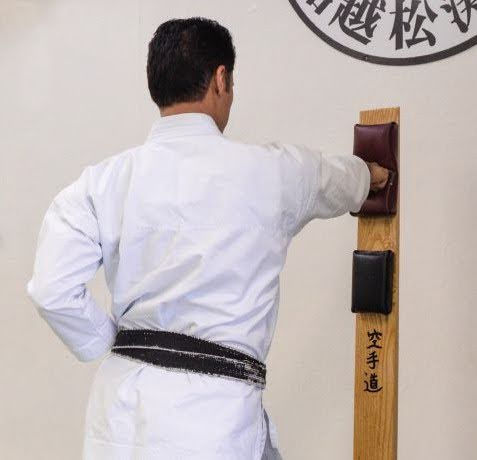
“Karate training is definitely good for staying in shape, but many people, myself included, also need to train outside the dojo. You’ve got to tailor that training to the structure of your body and what you need to strengthen. For example, I had a shoulder injury and wondered why I kept reinjuring the same shoulder. Finally, a chiropractor explained that my shoulders were turned forward, which made my back muscles weaker. Whenever I would grab an opponent in the dojo and he would resist, my back muscles weren’t strong enough to fight back. So I started working on my back muscles with [elastic-band] exercises. When the body is more stable, the punch gets faster.”
On the Benefits of Endurance Training
“In kumite, besides toughness, you need stamina. If you don’t have stamina, you’ll be taking all kinds of beatings. Let’s say you’re sparring with somebody who is tough and has good stamina. If you have good stamina, too, you can avoid the punches and kicks without gassing. Then you can put the pressure on your opponent and start throwing stuff, too.
“If it’s a controlled match where there are no armbars, chokes, leg locks or anything like that, it can easily go on for an hour. That’s good because when you’re exhausted, you learn what works and what doesn’t. With the stuff that does work, you learn how to make it more efficient — so your opponent doesn’t see it coming even though you may be dying inside when you throw it.
“This type of kumite also teaches you how to be less vulnerable. A lot of times in the longer matches, a guy will leave his leg out there after a technique. I’ll grab it and kick him in the groin lightly just to let him know he made a mistake. He’s leaving it out there because he’s tired and doesn’t have the energy to snap it back. Well, if he’s that tired, he shouldn’t do that technique because it will get him hurt more.”
On Pushing Limits in Kumite
“Another way we practice is I’ll put on pads and a face mask and tell students to throw techniques at me without worrying about control — just to see how long they last. Often, they’re so tired in two minutes because they’re trying to hit me as hard as they can. That’s their mistake: They try too hard. It’s a big dose of reality.
“Then I explain that in a real fight, if they try too hard to knock somebody out, they’re going to get tired very quickly. The lesson is to stay relaxed, even if it’s a real fight, so you can throw things efficiently.”
On Having a Good Mix in the Dojo
“Tournaments are good. They teach you about distance, timing and rhythm, as well as the role speed plays. Train- ing for tournaments is important for students who are into competition. But things can get monotonous if you only prepare for tournaments. You also have to work on the practical side of karate. What if something happens in the street? You throw a tournament-style punch or a flashy kick and just touch the attacker on the head. I teach my students street and tournament are two different things. If you can do both, it’ll make you a better fighter and you’ll be more confident.
“When a student says, ‘I wonder if I should do this in a real fight,’ I usually say, ‘Let’s pad up and try it.’ This makes them realize that not every tournament technique will work in a real fight. Having them try it is better than just telling them. That’s why I say, ‘Let’s test it. Let’s see if it hurts me.’ Most times, it doesn’t.”
On Lyoto Machida
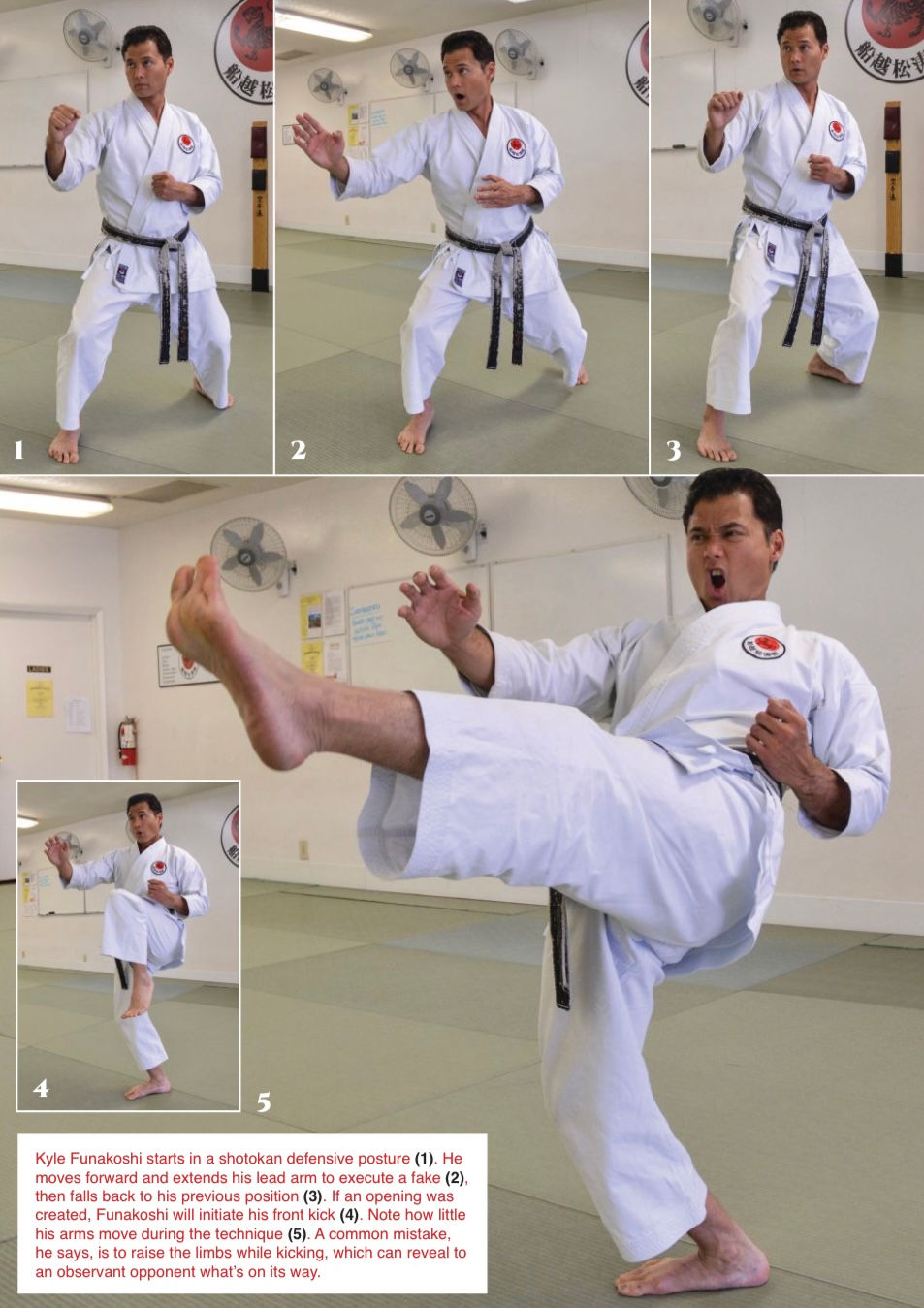
“Machida is a traditional shotokan stylist who has done very well for himself in MMA. From what I’ve seen, he does more than just shotokan. When he moves and when he throws a punch, however, he’s very shotokan-like. Other MMA guys may try to do what he does, but if they don’t have the basics, it won’t work. They train in shotokan for a short time and then try to use it, but they’re not really doing the techniques correctly — like the front kick, for example. A lot of guys attempt the kick but end up telegraphing it. Their hands go up slightly before they kick, and that’s the mistake. If you do the front kick correctly with kime, your hands don’t move. Your foot comes right up from the floor. If you’ve got good reach with your leg like Machida does, you might not even have to step in. You can reach the guy from where you are.”
On Other Elements That Make Shotokan Useful in a Fight
“They all matter — the distance, the stances that generate speed and power, the fakes — but the most important thing is how you do the techniques. If you have correct basics, you’re going to be effective. If you don’t have correct basics, you can do any technique and it’s going to be seen by your opponent. For example, with the mae geri, if your hand comes up before you kick, a smart opponent will just take a step back. But if you do it without telegraphing, he’s really got to be careful or you’ll catch him.
“In shotokan, it’s all about how you do things, how you generate power and speed, how you start the technique. It all has to come from the bottom up, from the legs to the hips to the arms. If one gear is broken, you’re going to be flailing — and telegraphing.”
On the Ability to Cover Distance Fast
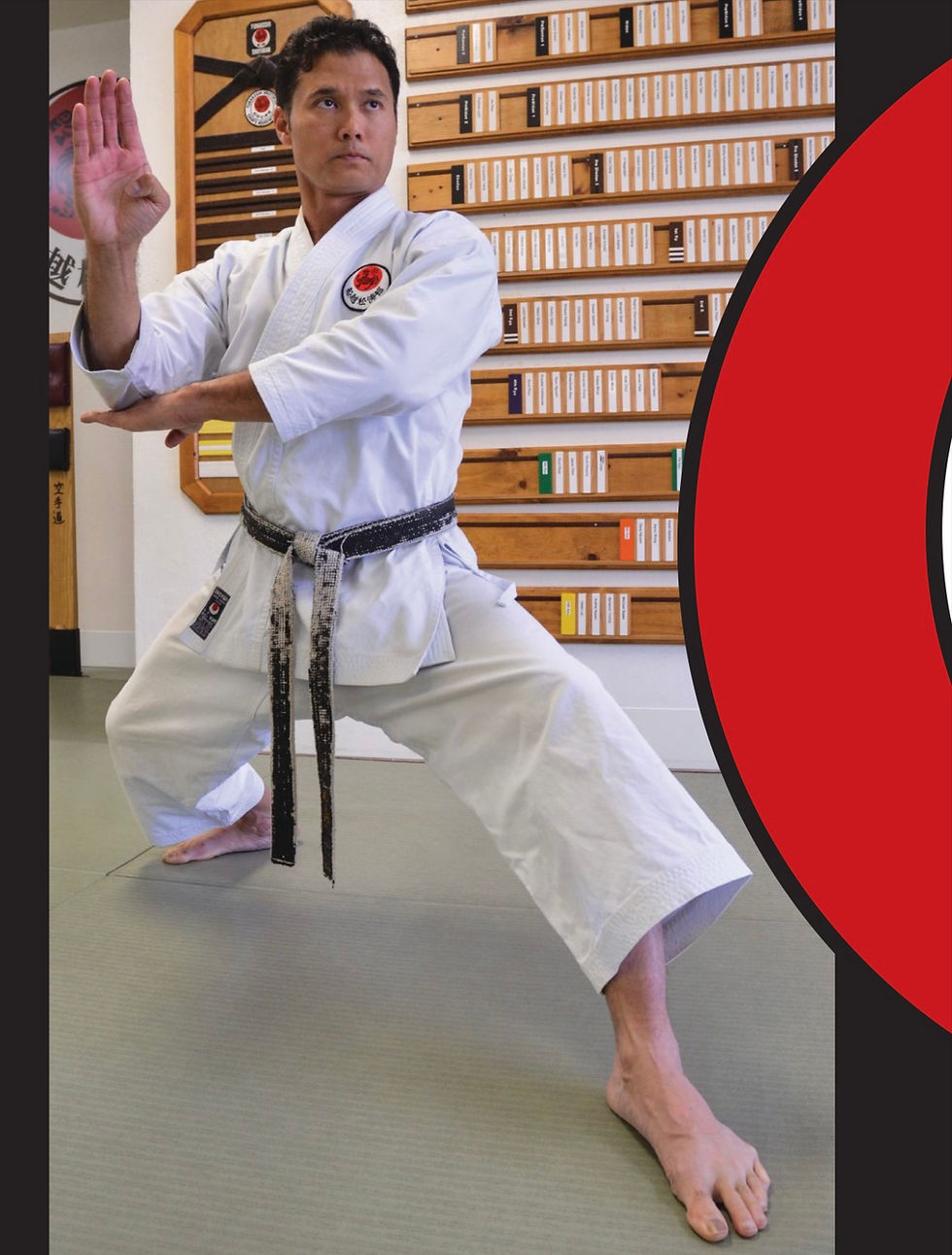
“In shotokan, it all begins with correct stances. Stances make your technique stronger. If we teach beginners only high stances, they won’t get proper leg develop- ment. They won’t learn how to push off, how to pull. Everything is a push and pull, and if they don’t learn that correctly with their stances — to push, push, punch and then pull to go into the next stance — they’re not going to have the right footwork. If they spar and they’re just pushing and dragging their feet, they’ll be working against themselves by making their feet heavier. The basic stances carry on through the fancy footwork that everyone needs for fighting.”
On Mobility in a Fight
“Distance is everything. You need to be able to go from where you are to where your opponent is in a split second without telegraphing — or your opponent will see everything coming. The key is moving quickly and in a straight line so it’s harder for him to see you.
“There’s a deep connection between stance and mobility that most people don’t understand. They ask, ‘Why do I have to do this long stance? I’m not going to fight like this.’ I tell them, ‘That’s correct. You’re not. But if you don’t do it and just go into a high stance, you’re not going to feel what you’re doing. You’re not going to have traction for the push and pull. You’re going to be stationary, or you’ll be telegraphing a lot. Those are all things you don’t want to do.
“Sometimes to get this point across, I spar with them and let them do whatever [stance] they want. They’ll try it their way and see that it doesn’t work. Then I’ll do the technique my way, and they’ll see that it does work. They say, ‘OK, I got it. I couldn’t even see that coming.’”
On the Olympics Changing the Way Karate Is Taught
“It might for some instructors, but I’m sticking with traditional karate: Teach students the basics, and tell them if they want to do tournaments or try out for the Olympics, I’ll show them the techniques. That doesn’t mean I would use the same techniques in a fight. I tell them, ‘Yes, we can prepare you for the Olympics, but that’s not our goal. Our goal is to teach traditional shotokan. Wherever you want to go from there is up to you.’”
On Whether the Funakoshi Way of Shotokan Will Continue
“Some of our older black belts ask, ‘Who’s going to take over the association when you’re gone?’ I say, ‘I don’t know.’ Then they ask, ‘Don’t you care?’ I used to say, ‘I’m not going to worry about it because I’ll be gone.’ But now I think there might be a future in shotokan for my chil- dren. They can take over — if they want to.”
Kyle Funakoshi’s website is fska.com.
This article originally appeared in a 2019 edition of Black Belt Magazine.