Updated: Mar 10

It doesn’t matter whether you practice boxing, judo, jujitsu, karate, kendo, or tai chi.
It doesn’t matter whether you choose to use a staff, a stick, or a fist. All martial arts are based on three simple rules.
What distinguishes one system from another is the way those rules are implemented and the strategies that grow out of them.
That’s why the best people in any martial discipline recognize the excellence of others whose arts, while seemingly different, are surprisingly similar in execution. They’ve all solved the same puzzle, each accenting different components of a single answer.
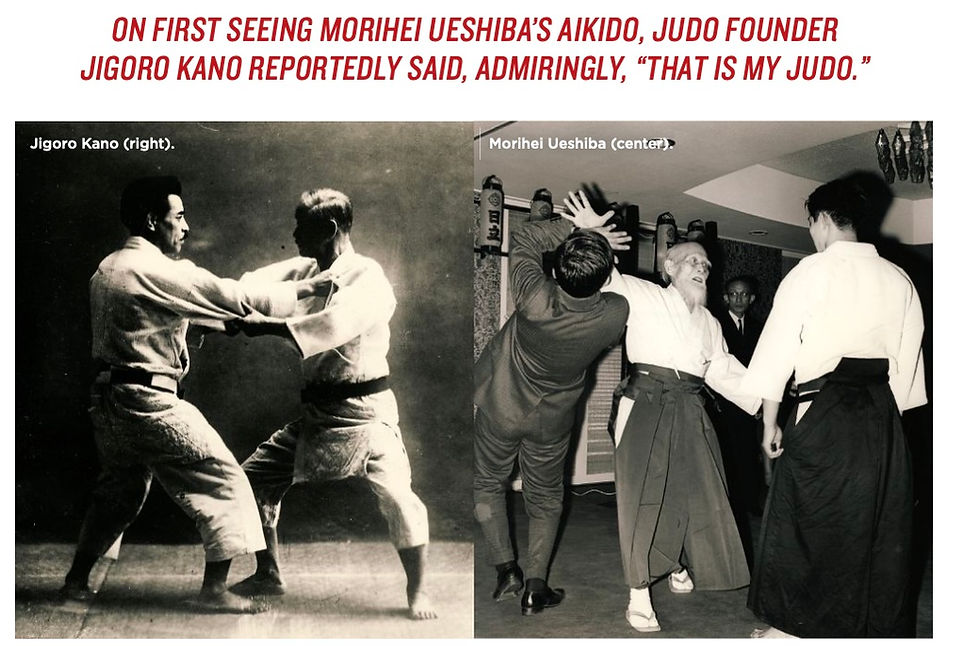
When judo founder Jigoro Kano first saw Morihei Ueshiba's aikido, he reportedly said admiringly, "That is my judo." Both masters appreciated and respected the modern karate fashioned by Gichin Funakoshi.
At a practical level, all martial arts deal with the same thing: surviving and then prevailing in a confrontation. The style a person chooses depends on body type, personality, and location. A student picks an art not simply because it fulfills a need but also because the school is nearby.
My First Lesson in Martial Arts Unity
I first learned this in the 1970s at a martial arts convention in Tennessee, where experts in Burmese bando, Chinese tai chi, and kung fu demonstrated alongside Japanese aikido, judo, karate, and kendo instructors.
The proponents of each style watched their counterparts with attention and appreciation. When I asked which was best, they laughed. The best are those who survive, the masters said, and all those who demonstrated were survivors. There was no "best" among them.
Over time, I came to understand the apparent diversity of practice and technique that masks what all practitioners share. One summer, I taught bo techniques to a Muay Thai fighter who also had an interest in Filipino stick fighting. We learned from each other because each was better at certain distances and in certain situations.
Irrespective of technique or training style, we shared a focus on solutions to the same set of directives.
Rule #1: Don’t Get Off-Balance
Being off-balance is being vulnerable, and vulnerability invites danger. In every art, footwork keeps you grounded (literally) and therefore solid on your feet. It also keeps you mobile, ready for whatever comes your way. The goal of great footwork is to enable you to move so you’re balanced and so your opponent can’t easily off-balance you.
Inherent in every attack and most defenses is the potential for off-balancing. Kick, and there’s the possibility of getting caught by a foot sweep or leg grab. Punch, and your weight shifts, opening you to a stumble.
Back away, and your attacker may move with you in an effort to cause you to trip. This is why footwork is seldom static.
Rule #2: Don’t Get Hit
It seems self-evident, but it's a hard lesson to learn. Unless you’re an ironman who doesn’t mind being pummeled, staying balanced is not enough if you stand in the way of your opponent’s attack. All blocks are methods for deflecting the arm, leg, or weapon that’s careening toward your face, torso, or wrist.
All footwork that ensures balance also permits you to reposition yourself in relation to the attack. When you’re skilled, you move just enough to avoid the attack while staying balanced.
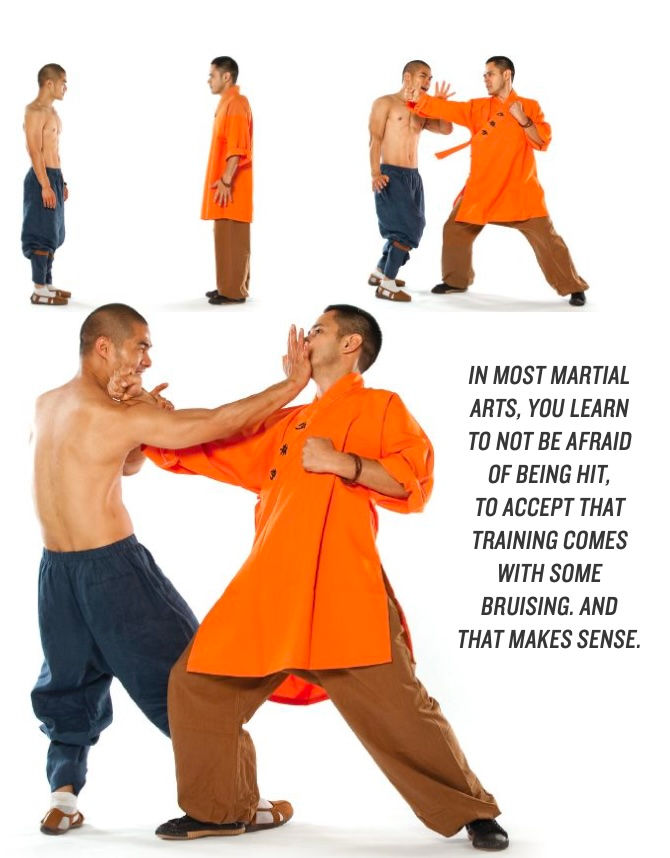
In most martial arts, you learn not to be afraid of being hit, to accept that training comes with some bruising. And that makes sense. It’s not that you want to be a superman who can absorb any strike—nice though that would be.
It’s that fear stems from repeatedly putting yourself in situations where you’re off-balance, giving your opponent the opportunity to strike. As you learn to maintain your balance while avoiding those attacks, you lose your fear.
Rule #3: Remember the Second Attack
This rule can also be understood as "remember the second attacker." It’s rarely the first strike that brings you down—it might not even be the first striker.
Fights are like ballet dances, full of multiple moves and often multiple movers. Defending against one attack only to be felled by a follow-up blow is defeat piled on victory.
This is why zanshin—the focus of the adept who doesn’t relax after executing a single technique or its counter—is so highly regarded in traditional arts. Remaining attentive and balanced is preparation for whatever or whoever comes next.
It does no good to subdue the bar brawler with a broken bottle in his hand if you ignore the friend who’s swinging a bar stool at your head.
In Concert: The Three Rules Together
These three rules can’t be separated—they always work together.
Being aware of the next attacker or the follow-up attack is, of course, a way of not being hit (Rule #2).
And not getting hit means staying balanced (Rule #1), poised in relation to the room, even though it’s littered with chairs, tables, and rugs that can steal your balance.
Knowing those things are around—and potential traps to your balance and thus survival—is what zanshin (Rule #3) is all about.
Here’s where it gets more interesting. Each rule leads to a strategy, a method of application. “Don’t get hit” is great, but it doesn’t go far enough. Only the very best can dodge an attack again and again until the attacker is so exhausted that aggression ceases. Even those who are that good will seek to end the encounter as early as possible.
So, not being hit is not enough. The strategy is to be safe and, at the same time, be in position to deliver a kick, strike, or throw in response to an attack. This is part of tai sabaki, the body movements that position the fighter safely and strategically in relation to the opponent. So the real idea here is not only “don’t get hit,” but also “be in a position to strike or throw while doing so.”
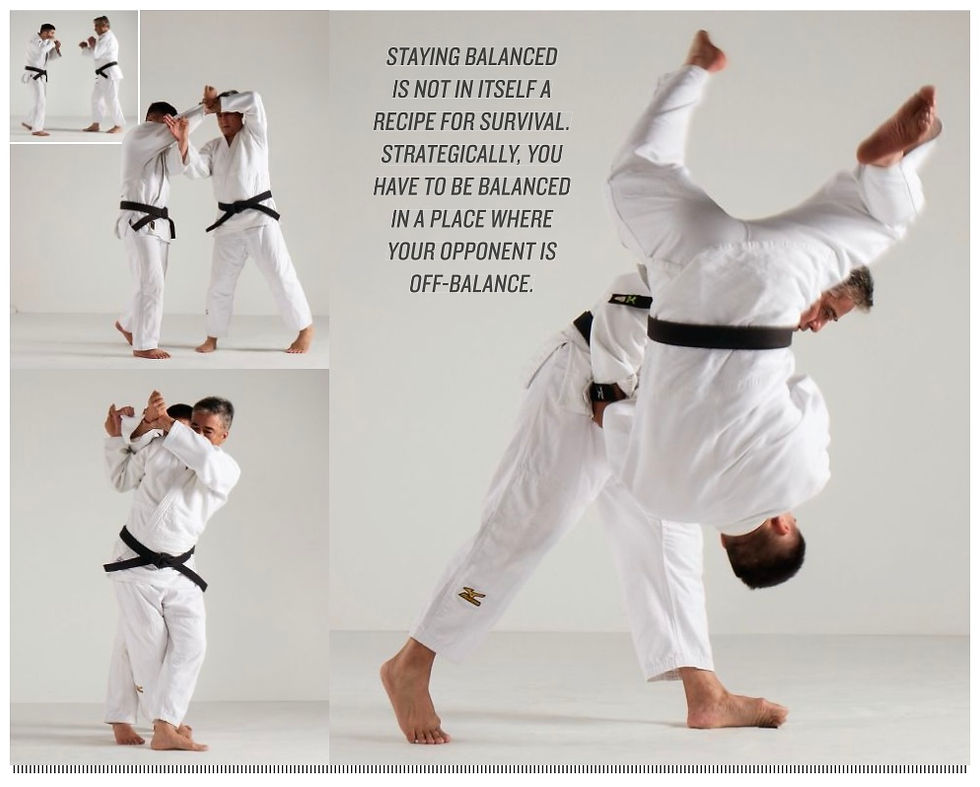
In the same vein, staying balanced is not in itself a recipe for survival. Strategically, you have to be balanced in a place where your opponent is off-balance. By ensuring your own balance, you’re ready to take your opponent's balance. Stumbling and fighting to stay on his feet, the opponent attacks but quickly grows weak, which leaves him open to a final technique from his balanced adversary.
Finally, being attentive to the follow-up attack or attacker means being in position to take advantage of whatever comes next. Moving in and to the side of a standard straight punch lets you begin off-balancing that continues if the attacker pulls his arm back for an elbow strike.
If he spins with the off-balancing, readying his other hand for a strike, you enter with a throw. And if he goes down, you don’t simply stand triumphant; you continue to move so the downed body is a barrier for anyone else coming at you.
In other words, it’s not over when it’s over. It’s over when the field is clear, and no new aggression is expected. Such a lack of certainty and predictability led wise martial artists to devise these three strategies to enhance your chances of success.
Strategy No. 1: Learn Footwork
Footwork is essential for positioning your body without losing your balance. While different martial arts may have unique movements, there are six distinct stepping patterns that all arts share.
These fall into two classes: footwork that functions when you’re in close (stepping into your opponent’s center or to their side) and footwork that brings you into close proximity. The latter is especially crucial for weapons training and martial arts like karate, where you need to close the gap quickly to land a strike or evade an incoming one.
In judo, for example, makikomi is not just about executing the throw; it’s also about stepping into your partner’s balance and making it your own. Aikido has footwork patterns like irimi and tenkan, which involve stepping around or beside your opponent to disrupt their balance while slipping a strike or initiating a throw.
Boxers have perhaps the best methods for developing footwork. Skipping rope helps with timing, while the rapid shifting of the feet provides excellent control in the fight for space.
In the Rocky films, Mickey trains Balboa to chase chickens to improve his footwork—an exercise designed to teach balance and speed in relation to someone else. “Stick and move” is not just about dodging; it’s about delivering a strike from a position of safety, moving away from a counter, and into a better position to attack again.
Strategy No. 2: Have a Mantra
Here’s a mantra for training that maximizes strategic effectiveness: “It’s not about you.” Martial arts are never just about the individual’s strength or skill.
They are about interaction—about two people working within the same environment. That’s why many Japanese texts don’t use terms like nage and uke (attacker and defender); instead, they use aite, meaning "partner."
Martial arts, at their core, are collaborative.
This lesson was taught by Mr. Miyagi in The Karate Kid. He teaches Daniel LaRusso that it’s not about fighting his opponent, but positioning and timing in relation to the other person.
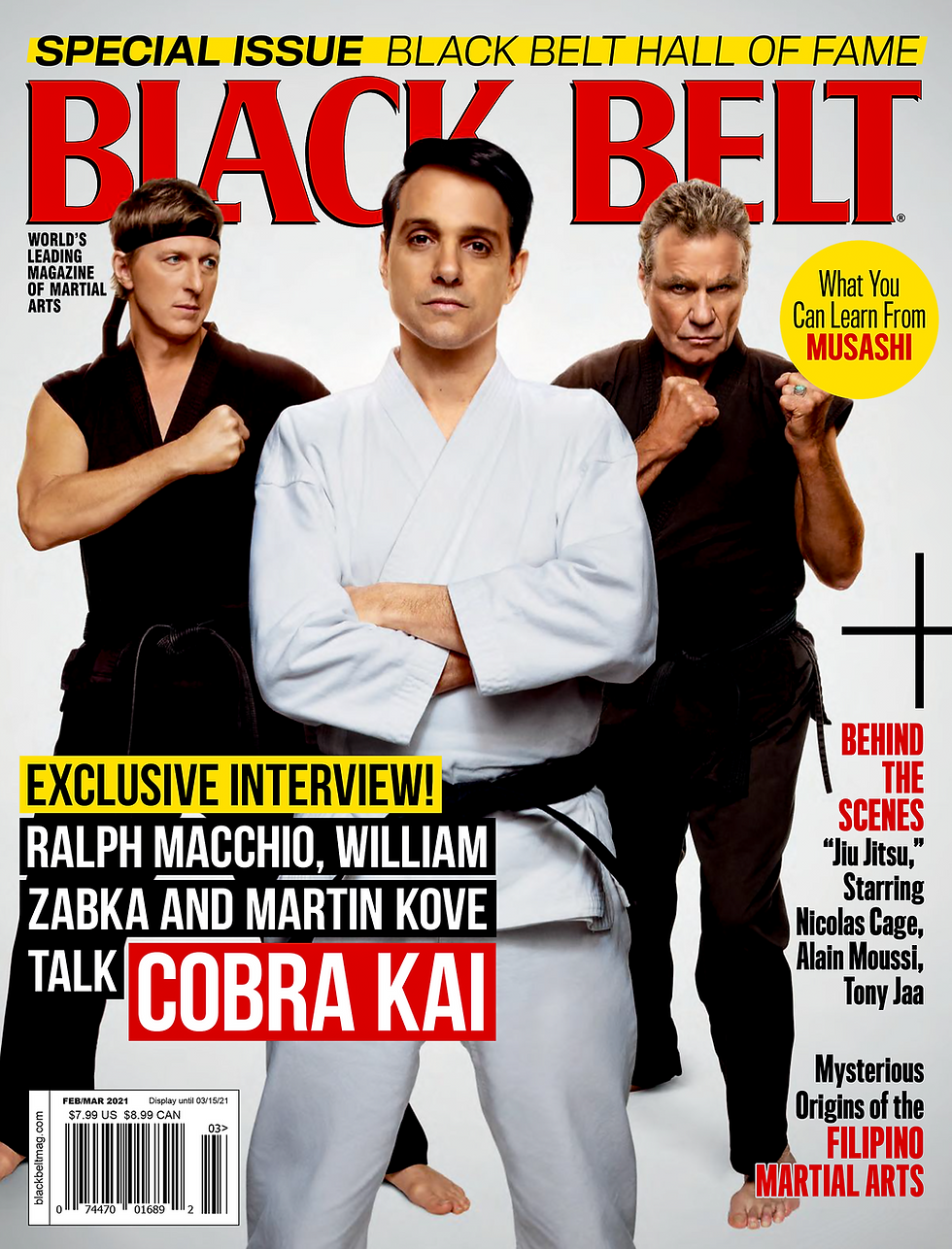
When John Kreese, the Cobra Kai instructor, challenges Miyagi, he’s focused on his own strength and confidence. But Miyagi knows that positioning is everything. He turns slightly to guide Kreese’s punch into a car window, breaking his hand in the process.
This shows that martial arts aren’t about power; they’re about using your environment and your opponent's actions to your advantage.
Strategy No. 3: Recognize the Differences — and the Similarities
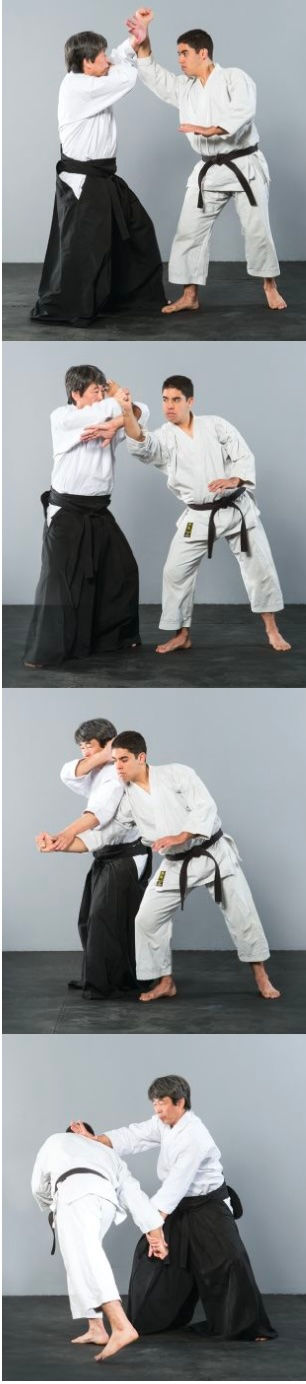
What distinguishes one martial art from another? The first thing is the distance between you and your opponent. Aikido primarily focuses on throws from middle or close distance.
Judo, on the other hand, focuses on close-in throws and groundwork. Karate and many styles of kung fu typically train at a middle distance, with emphasis on kicks and strikes. Tai chi works on off-balancing at close to middle distances.
But this is only the starting point. Once the distance is reduced, the techniques start to overlap. The karate expert may use a judo-like foot sweep, aikido throws also involve strikes up close, and tai chi practitioners may use wrist locks similar to those in aikido.
In my experience cross-training in Muay Thai, I tried to move my partner in free practice, but he told me, “Don’t try to be me; just do what you do when I do my thing.” This is a critical point: each art has its advantages depending on timing and distance, but they all require you to stay true to your art’s principles.
Understanding what binds martial arts together helps us appreciate what makes each style unique. It's not about which art is superior but about how they complement each other.
I've learned this through personal experience—two of the worst beatings I ever received were from tai chi instructors in Taiwan and Hong Kong, while some of my most memorable victories were as an aikido practitioner facing a ninjutsu student and a karate black belt.
This doesn't mean that one martial art is better than the other; it simply means that, in those moments, my practice and strategy were more suited to the match. The practice floor is where we grow, and sometimes, losing is the best way to improve.
Great schools allow this growth, while bad schools, like the Cobra Kai dojo in The Karate Kid, focus too much on strength and winning rather than practice and improvement.