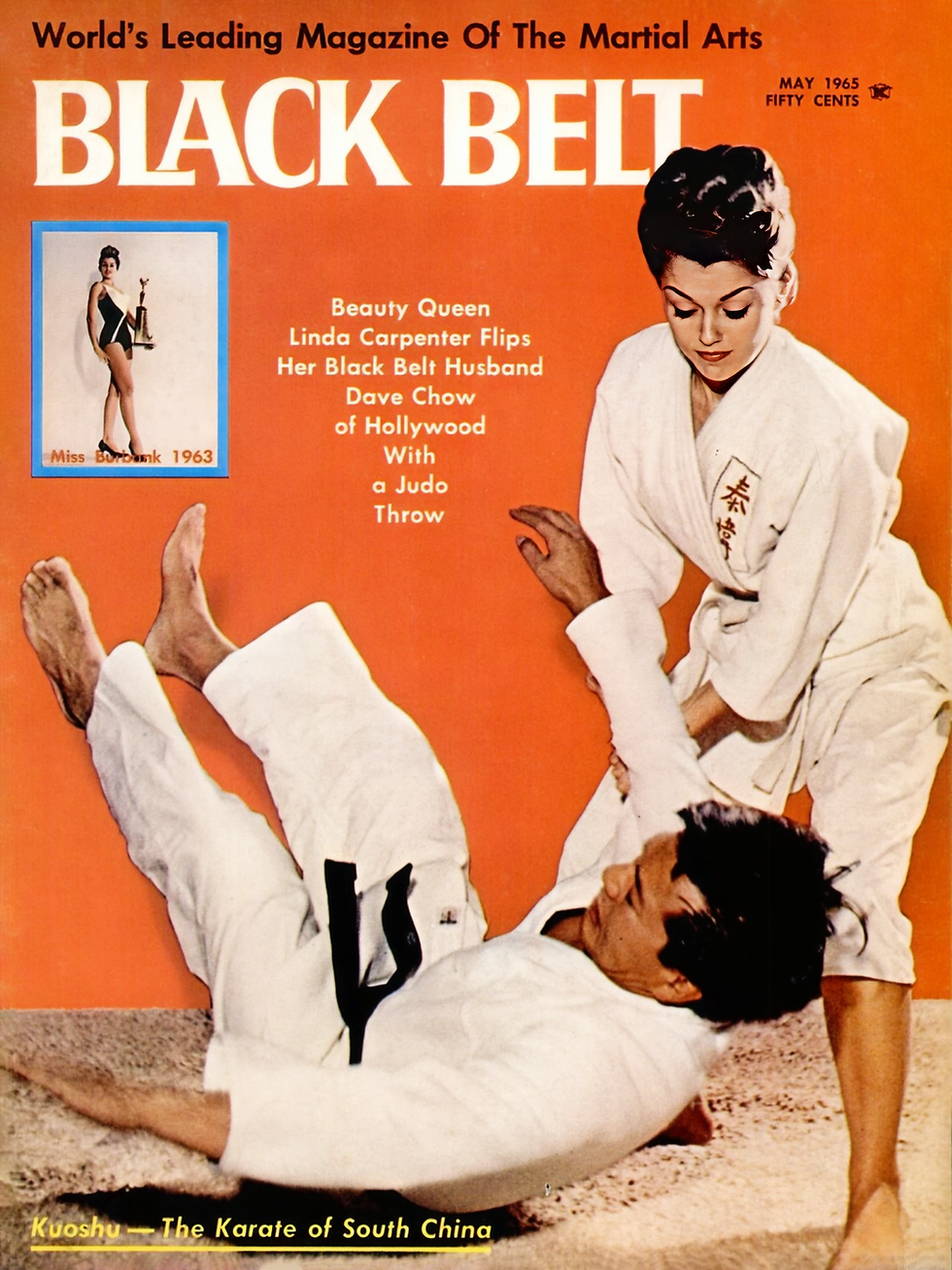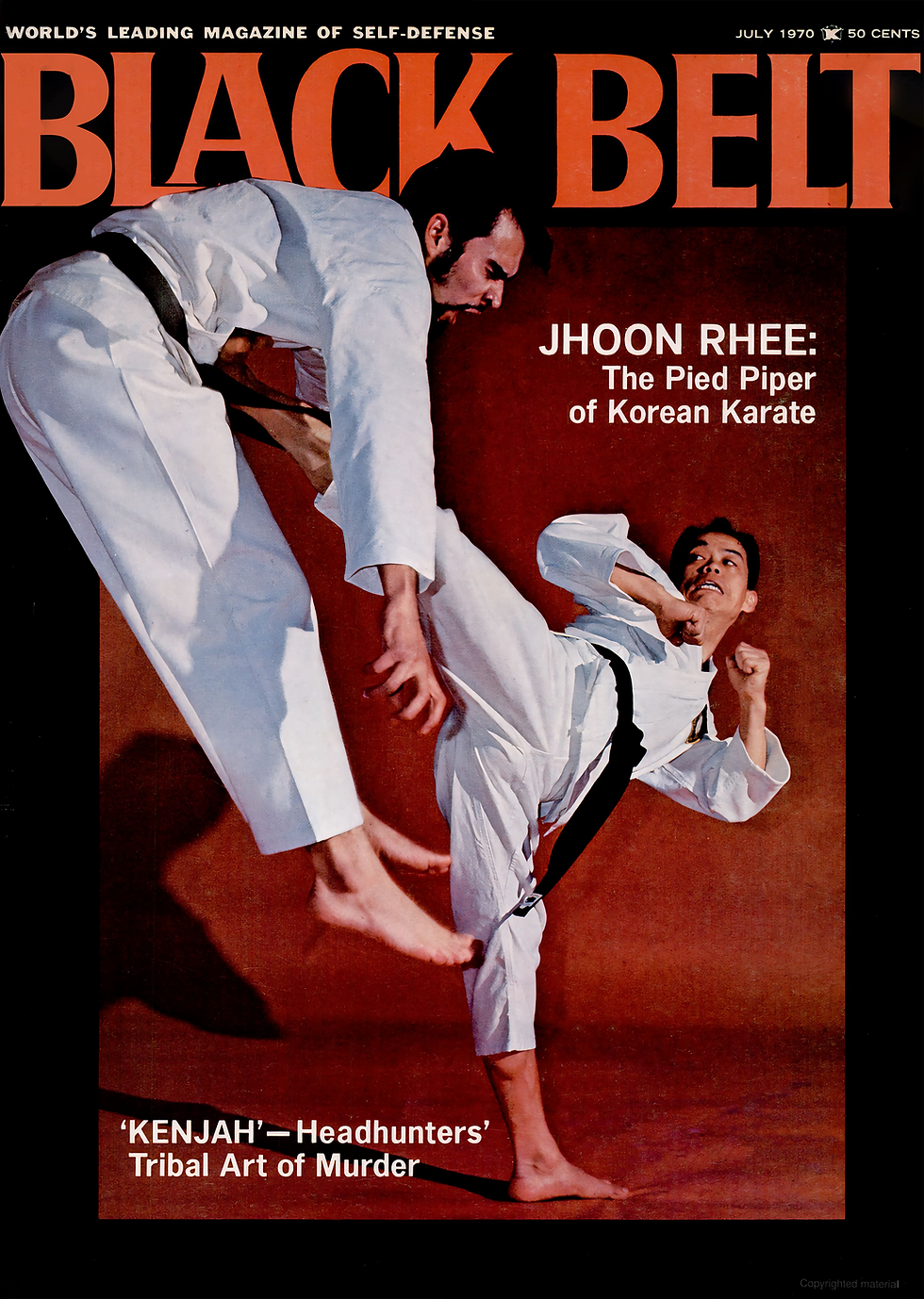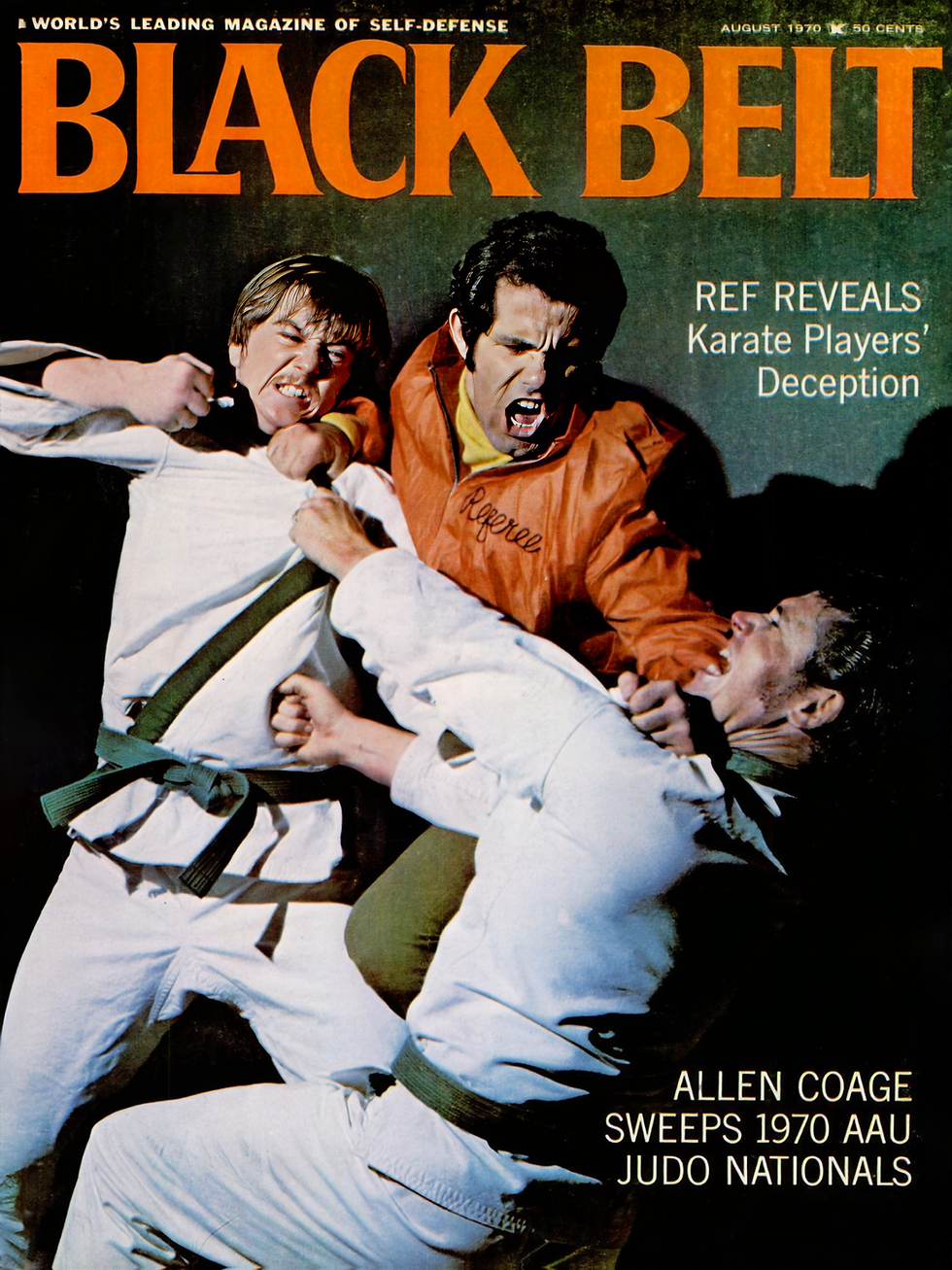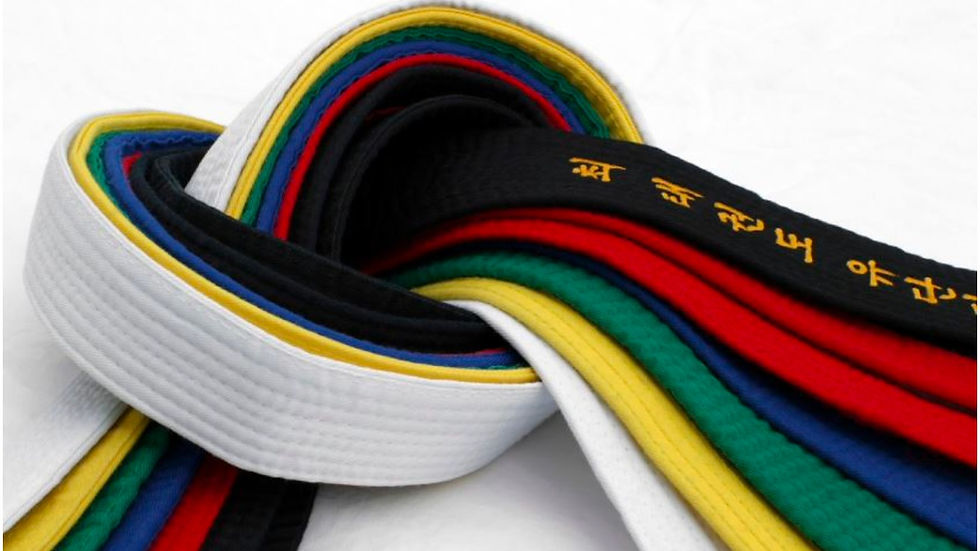
Grading- ranking in martial arts varies from skill to skill and from style to style although for all of them it defines the degree of the disciple's knowledge. The general rule is that the knowledge a master has is formed into a system and certain style in order to transfer it to his disciples. The history of ranking is very long and it has been following the appearance of particular skills, and the current ranking system (belt -kyu, Dan) which appeared shortly after World War II has spread quickly worldwide and was accepted in almost all of styles.
The belt, the Dan- what do these terms mean for martial arts?
The history of the belt is very interesting. In ancient China, the belt was , in the beginnning , used for suspending trousers, but later it was also used for inserting some valuable items or weapons for personal defence. Different colours of the belt showed the social order, clan or region the wearer belonged to. Moreover, the colour of belt could also show which style of martial arts the man practised as the colours differed from school to school. Ranking at schools (styles) in China followed the pattern- the beginner, the more advanced disciple (assistant) and the master. Such type of ranking is also present in some schools nowadays. Between the two world wars Japan used the system of ranking in which the traditional symbolics of colours was used: white for beginners and black for masters. These colours symbolized the colours of life and death. The white colour, in contrast to the western concept, is the colour of death so that the white kimono and the white belt symbolized that the disciple comes to sacrify himself and rejects his previous life and therefore accepts a more sofisticated understanding of life. When the disciple gains the master belt (in black colour) it shows that he has won the fear from death ; that's why his attitude to life and death is something natural and he accepts it without any fear.
There has been a rule that when the disciple puts on the belt once, he doesn't take it off throughout all his practice. The kimono is changed because the disciple grows and becomes stronger as well as it gets ruined by frequent trainings. But what happens with the belt? What makes the belt change the colour and what meaning does it have? Well, the belt is white in the beginning, but through long training it becomes yellowish (titled-Mudansha) from the disciple's frequent sweating. As practice was held in nature the belt would become greenish from sweat and grass and later purple brown from dust and soil while practising in the yards of a certain school. By the longtime training the belt got soaked with sweat, grass, soil, dust and even with the disciple's blood becoming dark brown i.e.dirty black (titled-Yudansha). If we have the knowledge how the colours of the belt were made and how they changed from white to black, we can understand the link between a colour and the length of the disciple's practice and development.
Different schools or styles have different belt colours to rank the disciple's development from the beginner to the master as well the time intervals necessary for passing from one level of knowledge to the higher one. However, it's common to all schools that the colour of the belt (KJU) has the meaning of ranking and grading the disciple's knowledge (create – Mikonosuke Kawaishi master of ju jucu and judo - Paris 1948, and master Gichin Funakoshi -1953).
The beginner's white colour is somewhere changed with yellow, and somewhere else with orange, while in a higher degree of knowledge, it can be replaced with green or blue, afterwards with brown ( red and purple in some styles) and finally with the master's black colour. It is also common to almost all the skills that the necessary time span between the beginner's to the master's degree of knowledge is nearly the same, about four years. For example, in karate (Shotokan, Goyu -ryu, Wado-ryu, Oyama- ryu and Shito-ryu) the necessary time interval from the white to the black belt is at least four years to maximum four and a half years. The only exception is the traditinal style Uechi-ryu which requires five years' practice from the white to the black belt. Such time interval is also needed in some traditional Kung-fu, Ju jutsu or Brazilian jiu jitsu style (with obligation competition).
In Judo the average interval from the white to the black belt is four years. Masters wear the black belt from 1st to 5th Dan, the white-red from 6th to 8th and the red one from 9th to 11th Dan. The red colour symbolizes the colour of blood, an it is considered that a master holding such a high title in his practice should have spilt lots of sweat or even "blood". Ranking in belts was introduced in some kung fu schools in 1974 (wu shu -1993) implying that there is an average time span between the beginner to the master of three and a half years. The master title Dan is called Toan (duan) in Chinese styles. In Korean styles Tae kwon do, Tang soo do, Hwa rang do and Hap ki do, it normally takes four years from the first degree- the white belt to achieve the master of the skill- the black belt.
The exception in martial arts is Savate ( the French boxing) where the ranking from the beginner to the master is not in the colour of the belt, but in the colour of the gloves; so that the beginner wears blue gloves,the competitors who are the masters of the skill have the silver ones , but the supreme knowledge is shown with masters who either wear silver or honorary platinum gloves. The time needed to reach the level of the master of the silver glove is three and a half years. Before World War II savate practitioners used to wear the belts as well as some boxers before World War I. Nowadays boxers,kick boxers, savate fighters and fighters in UFC (MMA) compete for the world champion's belt, which is somehow a tribute to tradition. Beginners in wrestling and boxing also need about 4 years of practice to achieve the master rank.
What is the meaning of DAN ranking in martial arts? (create Jigoro Kano -1886)
In JAPAN -"Jiki dan" would, in free translation, mean the personal consultation with the master, therefore, the sign Dan has the meaning of time interval which the master of martial arts , the wearer of the black belt spends in active training or knowledge transfer with the consultation of his tutor as the older and more experienced one whose knowledge he is going to inherit. It is interesting that the difference in ranking from the master of the black belt "the 1st Dan" to the top master skill of "the10th Dan" is small,so that the expected time interval between the 1st Dan and the 2nd Dan is two to three years. For the third Dan it takes two, or three years in some disciplines. After getting the third Dan you need three or four years to reach the 4th Dan. The 5th Dan implies about 17 years of continuous training and for the 6th Dan you should have 22 to 25 years' practice. The 7th Dan is obtained after 35 years of practice, and the 8th Dan requires 40 years of frequent exercise, studying and teaching the skill. The master of the skill is then about 55 years old ( there are subtle differences regarding the style). The 9th Dan is given to the masters more than 60 years old and still active in practising,studying and teaching the skill of fight. Finally, the 10th Dan is obtained by the masters whose age passes over the age of 69 presuming that they are still active in training, studying and transferring the knowledge of the martial arts. There are only 9 Dans in some Korean styles.
The 11th and the 12th Dans are exceptional and only Judo (and traditional Ju-jucu, Aikido, some traditional styles both in China and Korea) have them, but these titles of judo masters are mainly theoretical. To understand their ranking better, one should know a little about Zen philosophy. For example, the classification in twelve Dan master titles represents the idea of one year interval. In Japan philosophy , the famous Zen master Hyakujo ( Pui Chang-726-814) declared the proverb: „A day without work is a day without food". It would figuratively mean that the master should practise and progress every day, every month, all the year and permanently all his life. Moreover, the theoretical title of the master of the 12th Dan is based on Zen philosophy. It is interesting that the master wears the white belt, which is related to closing the circle ( such a circle is called samsara in Zen philosophy), and, thus, completing one cycle. In fact it is a kind of a trap of ancient masters (J.Kano?) because Zen philosophy knows neither the end nor the beginning. In other words, the more a master knows about the skill, the more he becomes aware of his lack of knowledge. That's why enlargement turns into reducement. Moreover, no master of any martial arts can say he has all the answers, which means that a cycle can't be finished because it is endless. The end is only and exclusively - the death (only J.Kano have 12th DAN).
It is also interesting that many folk forms of wrestling have a belt in the equipment so that the common technique of knocking down the rival is linked to ti the technique of catch for the belt (European-for the belt, Glima, Japanese - Sumo, etc.). Lots of wrestling masters decorate their belts in a special way. The belts in Sambo skill are the same as in Judo to the black belt, then comes the black one with the colour of the national flag, after which follow the so called international belts - in the colours of the medals: bronze, silver and gold, following on top by the gold belt with the colour of the national flag.
The belt is also worn in certain folkdance fighting skills as Brazilian Capoeira. In Capoeira, the practitioners achieve the master title cordaose (corda- lace), and they use the belt to show which region they come from or as an ornament to tie the laces on. Some old masters of martial arts in Burma ( Bando, Burman boxing and Thaing skills) tattoo the degrees of their knowledge on the body of the practitioner, as well as jn India, Thailand, Vietnam, Laos and somewhere in Malaya.
On the other hand, with the Sikhs in India, the mastership in martrial arts is shown by the turban, although not by its colour but by the size, weight and decorations on it. The belt is also worn in Japan fencing skill - Kendo (Tare) and archery- Kyudo.
The masters who have got the master title in at least three martial disciplines or sports are called the masters of mixed martial arts, and the experts among them who have published research papers in several fighting skills or sports are called the experts for mixed martial sciences. According to some sources there are about thirty such experts in the world. It is interesting that among the leading experts for mixed martial sciences,besides men,there are also a few women and disabled persons. They are mostly unknown to the general public.
Conclusion
Some experts think that the story of how colours of the belt were created by longterm training is an old myth and a kind of legend, but it has a logical and historical meaning and presents the basic idea of the change of belt colour.
DAN- the title in martial arts is connected to an old Japanese (Chinese) mind game GO, but this fact can't be proven either.
There are some masters who think the black colour might be linked with the ancient tradition of swimming teams in Japan,but this fact can't be proven.
Various belt colours for the beginners were invented by M. KAWAISHI in Paris (France) between 1935 and 1948, but their interpretation of symbolism differs from the east to the west as the understanding of symbolism does in the eastern and western culture respectively.
The real truth is that neither Dr. J.KANO and M.KAWAISHI left any precise and written instructions.
However, tradition tells us of the white belt that becomes black after longterm training, and when one deserves and gets such a belt, he doesn't change it until the belt after longterm training turns into white again, as well as the master's hair; which in fact presents the waste of the material.