
top of page

Bruce Lee and Flexibility

Bruce Lee and Flexibility

Bruce Lee and Flexibility

No matches found.

  View all results

Black Belt Mag on WhatsApp
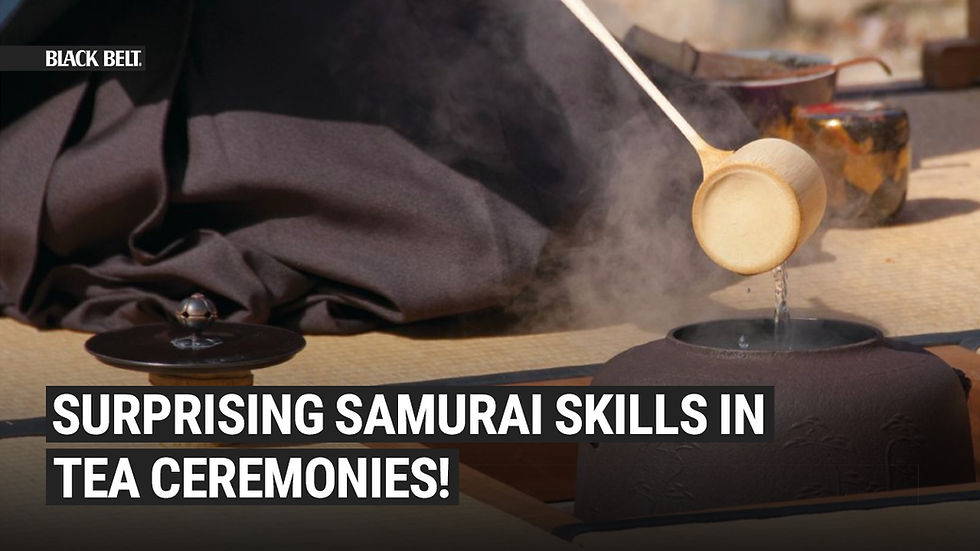
Tea ceremony with ladle pouring into a pot, creating steam. Text overlay: "Surprising Samurai Skills in Tea Ceremonies!" Black robe visible.
Black Belt Plus

There is a moment, in some rituals of the tea ceremony, that calls for the kettle to be lifted from the charcoal brazier that heats it.


When lifted, it can leave a dusting of burned charcoal on the side of the brazier, and to brush this away, the host uses a fan, called a hakobi, made from a single tail feather, usually of a hawk. The brushing movement, like everything else in the ceremony, is done according to strict form. As the hakobi is lifted with one hand, for instance, the host places a finger of the other on the far end of the feather. It’s a gesture of respect for the fan.


The fan comes in two types. If you look at a bird’s tail feathers, you’ll see that those from the left side of the tail have the spine of the feather (it’s called a rachis) slightly offset. There is more “feather” on the left side than on the right.


On the opposite side of the tail, this is reversed. So there are clearly left and right tail feathers, and there are hakobi made from them both.


The Kata of the Tea Ceremony

The kata of the tea ceremony are called temae. Meaning “hands in front,” it refers to both the motions and the act of learning them. One watches his teacher’s hands in front of him and copies the movements.


In those ceremonies that involve a hakobi, when it’s not in use, it sits at the side of the host, who is kneeling on the mat. Here’s where a distinction comes in: If the tea room is set up so the guests are to the right of the host, he will use a left-style hakobi, with the bigger part of the feather closest to the guests. If they’re on the left, he will use the opposite hakobi.


And if the hakobi is reversed, if a right hakobi is used when the guests are seated to the host’s right? If just this tiny, apparently insignificant break in form is made, it’s an indication.


It’s a sign the host is giving to his guests. It’s a message. I’m serving you tea. We’re observing social niceties. But I do not trust you. I do not know what your real intentions are.


I do not necessarily wish you harm, but know that I have reservations about our relationship.


The Martial Context of Japanese Etiquette

If you want to understand feudal Japan, you must understand that the country, from the 15th century until the 17th century, endured constant civil war. That’s where its martial arts came from. Not just fighting on the battlefield but also methods of conducting oneself in virtually every social interaction were martial in nature.


Traditional Japanese tea house with a blue-tiled roof, set amidst lush green trees and bushes in a peaceful garden.

Sliding on or off a floor cushion had a classical etiquette — and it was, at its heart, a safe way to do it, to move without exposing oneself to potential danger. Picking up a pair of chopsticks had its own etiquette.


In all but the most informal — and, therefore, trusted — environments, the chopsticks were lifted using both hands and with the palms turned outward while the chopsticks rested in them to show to others that the hands were empty of weapons.


In addition to this etiquette, social symbolism became developed to an almost fantastic degree. Communication was made through this. I was once at an exhibition of flower arranging, or ikebana, with a senior teacher of a very old ryu of the art.


As we came to one large arrangement, I heard her suck in her breath and mutter. I knew enough to pursue it. The arrangement included big strips of bamboo that had been split and curved dramatically.


“The bamboo’s torn to split it lengthwise,” she told me. “That would indicate the practitioner’s clan was going to war. It should have been sawn smoothly, not roughly split, to indicate a peaceful intent.”


Understanding Symbols and Etiquette

Much of this symbolism seems almost absurd to us today. However, you must place it in context.


When societies develop in a closed way, the sharing of symbols is easy. Japan had a closed culture. It was a closed country for hundreds of years. Every Japanese shared the same history, the same society.


Compare this to our multicultural history and society. We do not have the same volume of shared symbols; the whole concept is foreign to us. Gestures or manners that might be a sign of openness in one context could be interpreted as “pushy” in another.


If I brought flowers cut from my garden to a female neighbor, her husband might interpret it as a genuine sign of friendship — or he might be angry at my “forwardness.” But in ancient Japan, there was a mutuality of understanding and a shared perspective.


The Martial Arts Connection

I haven’t addressed the martial arts yet, but can you see the connection?


The American sits in the dojo in seiza, on his knees. His Japanese, or Japanese-trained, teacher tells him his hands are too low when they’re resting on his thighs. His shoulders are too high. His knees are too far apart. The teacher finds half a dozen corrections — just in the way he’s sitting. I was watching a video of a karate demonstration together with a Japanese budo teacher.


Children in white martial arts uniforms with yellow belts kneel on a yellow mat, hands resting in laps, suggesting focus and discipline.

As it began, the participants bowed to one another. The teacher snorted. “They can’t bow,” he said. And I knew that no matter how good the technique might be, the teacher would not take it seriously.


Again, this is difficult for us to understand, but it is not entirely foreign. If you come to a job interview wearing a checkered tie with a checkered shirt, in some companies, you will have seriously compromised your chances of getting the job.


Learning the rules, learning the symbols and their use, is part of living in society. Yes, in our society, things are much more relaxed. Good thing, I suppose. The next time you think that your teacher in the dojo is being overly critical, that he’s nitpicking your every move, remember the hakobi fan in the tea room.


And remember how in Japanese society, little things can say a lot.


More From Events
Rectangle 24

3 Historical Self Defense Methods for Becoming a More Alert Martial Artist

Rectangle 24

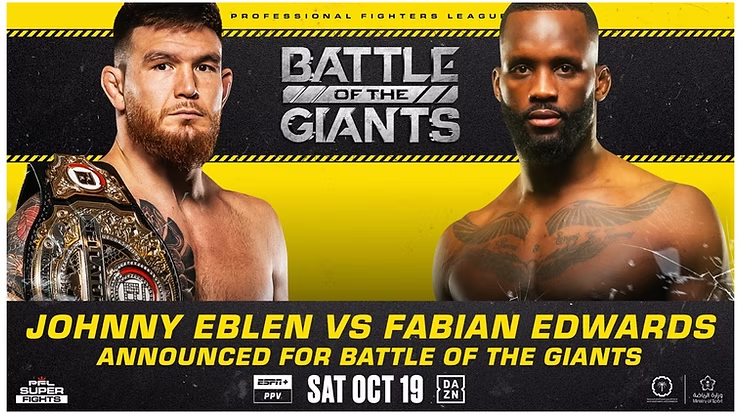
Johnny Elben vs Fabian Edwards Added to "Battle of the Giants" Main Card for October 19 on PPV

Cover Story Throwback: Colonel Nattapong Buayam

Cover Story Throwback: Colonel Nattapong Buayam

Forged in Okinawa: The Journey of Arcenio Advincula

Forged in Okinawa: The Journey of Arcenio Advincula

Inside San Da: Kicks, Punches, Throws, and Everything Between

Inside San Da: Kicks, Punches, Throws, and Everything Between

Jeet Kune Do’s Kickboxing Phase: How Joe Lewis Took Bruce Lee’s Concepts Into the Ring

Jeet Kune Do’s Kickboxing Phase: How Joe Lewis Took Bruce Lee’s Concepts Into the Ring

Bruce Lee's Gift of Freedom

Bruce Lee's Gift of Freedom

Rectangle 24

Cage Warriors 177 & Cage Warriors 178 Final Card and Broadcast Times

Rectangle 24

3 Historical Self Defense Methods for Becoming a More Alert Martial Artist

Rectangle 24

Celebrating Keith Cooke’s Birthday: Top 5 Must-Watch Movies of the Martial Arts Legend!

Rectangle 24

Updated UFC Rankings | Week of September 16, 2024

Rectangle 24

Secrets Revealed: Jean Jacques Machado on Taking Your Brazilian Jiu-Jitsu to the Next Level

Latest

Secrets Revealed: Jean Jacques Machado on Taking Your Brazilian Jiu-Jitsu to the Next Level

3 Historical Self Defense Methods for Becoming a More Alert Martial Artist

Updated UFC Rankings | Week of September 16, 2024

Johnny Elben vs Fabian Edwards Added to "Battle of the Giants" Main Card for October 19 on PPV

Celebrating Keith Cooke’s Birthday: Top 5 Must-Watch Movies of the Martial Arts Legend!

Author

Publishing Date

Read Time

Share

George Chung

Wed 22 Nov, 2024

1

MINS

Link Copied

EVENTS

SAVE ARTICLE

More From Events
Rectangle 24

3 Historical Self Defense Methods for Becoming a More Alert Martial Artist

Rectangle 24

Johnny Elben vs Fabian Edwards Added to "Battle of the Giants" Main Card for October 19 on PPV

Cover Story Throwback: Colonel Nattapong Buayam

Cover Story Throwback: Colonel Nattapong Buayam

Forged in Okinawa: The Journey of Arcenio Advincula

Forged in Okinawa: The Journey of Arcenio Advincula

Inside San Da: Kicks, Punches, Throws, and Everything Between

Inside San Da: Kicks, Punches, Throws, and Everything Between

Jeet Kune Do’s Kickboxing Phase: How Joe Lewis Took Bruce Lee’s Concepts Into the Ring

Jeet Kune Do’s Kickboxing Phase: How Joe Lewis Took Bruce Lee’s Concepts Into the Ring

Bruce Lee's Gift of Freedom

Bruce Lee's Gift of Freedom

Rectangle 24

Cage Warriors 177 & Cage Warriors 178 Final Card and Broadcast Times

Rectangle 24

3 Historical Self Defense Methods for Becoming a More Alert Martial Artist

Rectangle 24

Celebrating Keith Cooke’s Birthday: Top 5 Must-Watch Movies of the Martial Arts Legend!

Rectangle 24

Updated UFC Rankings | Week of September 16, 2024

Rectangle 24

Secrets Revealed: Jean Jacques Machado on Taking Your Brazilian Jiu-Jitsu to the Next Level

Latest

Secrets Revealed: Jean Jacques Machado on Taking Your Brazilian Jiu-Jitsu to the Next Level

3 Historical Self Defense Methods for Becoming a More Alert Martial Artist

Updated UFC Rankings | Week of September 16, 2024

Johnny Elben vs Fabian Edwards Added to "Battle of the Giants" Main Card for October 19 on PPV

Celebrating Keith Cooke’s Birthday: Top 5 Must-Watch Movies of the Martial Arts Legend!

900x150px - v1 1

MAGAZINES

Learn More

Untitled.png
Untitled.png
image
image

BLACK BELT +

MAGAZINES

2021 - 2023

0605BBC1_page-0001.jpg
image
image
image
image
image
image
image
image

2021-2025

2011-2020

2001-2010

1991-2000

1981-1990

1971-1980

1961-1970

2020 - 2011
2010 - 2001
2000 - 1991
1990 - 1981
1980 - 1971
1970 - 1961
3 - Article Page

Historic All-African Showdown, Arab MMA Legend's Return, and Undefeated Stars Collide!

image 14

Porttitor rhoncus dolor purus non enim praesent elementum. Eget dolor morbi non arcu risus quis varius. Posuere ac ut consequat semper viverra nam libero. In ornare quam viverra orci sagittis eu. Tristique risus nec feugiat in fermentum posuere urna nec. Tempus quam pellentesque nec nam aliquam sem et. Convallis a cras semper auctor neque vitae tempus quam pellentesque. Sollicitudin ac orci phasellus egestas tellus rutrum tellus pellentesque. Sed egestas egestas fringilla phasellus faucibus scelerisque eleifend donec pretium. Sit amet porttitor eget dolor morbi non arcu risus. Justo eget magna fermentum iaculis eu non diam phasellus. Sit amet luctus venenatis lectus magna fringilla. Neque vitae tempus quam pellentesque nec nam.

Tellus orci ac auctor augue mauris augue neque gravida. Tempus imperdiet nulla malesuada pellentesque elit eget gravida cum sociis. Id eu nisl nunc mi ipsum faucibus vitae aliquet. Duis convallis convallis tellus id interdum velit laoreet id. Vulputate mi sit amet mauris commodo quis. Semper viverra nam libero justo laoreet sit amet. Eget nullam non nisi est sit. Nibh cras pulvinar mattis nunc sed blandit libero. Ac felis donec et odio pellentesque diam volutpat. Quis varius quam quisque id diam vel quam elementum. Felis bibendum ut tristique et egestas quis ipsum suspendisse ultrices. Id diam vel quam elementum pulvinar etiam non. Non consectetur a erat nam at lectus urna duis convallis.

Est pellentesque elit ullamcorper dignissim. Consectetur a erat nam at. Blandit libero volutpat sed cras ornare arcu. Iaculis urna id volutpat lacus laoreet. Tincidunt ornare massa eget egestas purus viverra accumsan in. Viverra ipsum nunc aliquet bibendum enim facilisis gravida neque.

Vitae turpis massa sed elementum tempus egestas sed. Quam lacus suspendisse faucibus interdum posuere lorem ipsum. Viverra justo nec ultrices dui sapien eget. At risus viverra adipiscing at in tellus integer feugiat. Elementum eu facilisis sed odio morbi quis commodo. Arcu cursus vitae congue mauris rhoncus aenean. Auctor elit sed vulputate mi sit amet mauris commodo quis. Lectus sit amet est placerat in egestas erat imperdiet sed. Eu mi bibendum neque egestas congue quisque. Sit amet luctus venenatis lectus magna fringilla urna porttitor. Pretium vulputate sapien nec sagittis aliquam malesuada bibendum arcu. Sed ullamcorper morbi tincidunt ornare massa eget egestas purus. Pharetra vel turpis nunc eget lorem. Morbi blandit cursus risus at ultrices mi tempus imperdiet nulla. In metus vulputate eu scelerisque felis imperdiet. Elementum pulvinar etiam non quam lacus suspendisse. Sem fringilla ut morbi tincidunt augue. Id venenatis a condimentum vitae sapien. Varius quam quisque id diam vel.

Nec feugiat in fermentum posuere urna nec tincidunt praesent semper. Aliquam nulla facilisi cras fermentum. Quam elementum pulvinar etiam non quam lacus suspendisse faucibus interdum. Neque vitae tempus quam pellentesque nec. Interdum consectetur libero id faucibus nisl tincidunt eget nullam. Mattis enim ut tellus elementum sagittis. In fermentum et sollicitudin ac orci phasellus. Est sit amet facilisis magna etiam tempor orci. Lacinia at quis risus sed vulputate odio ut. Egestas egestas fringilla phasellus faucibus scelerisque eleifend. Nunc pulvinar sapien et ligula ullamcorper malesuada proin libero. Aenean vel elit scelerisque mauris pellentesque. Gravida arcu ac tortor dignissim. Ac tortor dignissim convallis aenean.

The greatest glory in living lies not in never falling, but in rising every time we fall.

Nelson Mandela

bottom of page