Updated: Aug 9, 2025


If you’re taking medical advice from someone like me, you have more serious problems than can be addressed in a column. So it is that I never offer any advice on gaining flexibility.
If you have questions about improving yours, consult a physical therapist. Unless your sensei has that kind of professional training, he has no business giving you instruction on flexibility other than to say, “This is what has worked for me.” That is what I would say. I can tell you, however, what has worked for me.
Stretching: What the Research Says
The conventional dojo warm-up calls for a variety of calisthenics, jumping jacks, push-ups and so on, mixed with stretching that seems to be directed at “loosening” joints, ligaments and muscles while increasing range of motion. There’s a great deal of research that seems to indicate that stretching before physical activity has limited value for either goal.
Some evidence suggests that the kinds of stretches we often see in the dojo can, if performed before training, actually increase the chance of a muscular or skeletal injury. Why this would be so isn’t clear. Perhaps stretching muscles or ligaments makes them more liable to being pulled.
For my own training, I confine my stretches to the floor at home, after a shower or bath. I’ve consulted physical therapists, some of them also martial artists. Their advice is fairly consistent: stretch the joint until it begins to feel “tight,” but don’t go so far as to make it hurt.
Rather than “holding” the position once I've reached my maximum, I continue very slowly, and I stretch as I exhale, then pull back slightly as I inhale. This isn’t the rapid bobbing motion you often see in the dojo. It’s slow, gradual and without any force.

So If I’m Not Stretching First… What Do I Do?
If I want to warm up for karate practice, I practice karate. That sounds trite, but it’s the best way I know. I try to move my body the same way I would in regular training; I just do it more slowly and in an exaggerated way.
Before I begin any of that, however, I bounce — the same way I would if I was skipping rope, assuming the rope was thread-thin. That’s to say, I just barely clear the ground when I bounce, my knees very slightly bent. I do this 100 times, as quickly as I can.
That’s enough for me to realize how much tension I have in my shoulders. It gives me time to relax them, to feel all the joints in my body relaxing. When I repeat these rapid bounces, I go over a checklist. I often find that my lower jaw is tightly clenched, and I have to consciously relax it. My shoulders, elbows and wrists also get the stiffness taken out.
Gradual Karate Movements
After that, I begin to make the movements of karate, beginning with the smallest ones and working my way up to the larger ones. I form fists, curling the little fingers first and then the others and ending with a clench of my thumbs. Then I go through the range of motion of my wrists, working them as if I was grabbing and pulling.
Same for the elbows — I make slow, exaggerated elbow strikes, moving them up and away as if attacking the underside of an opponent's chin. Turning, I make the same kind of big strikes as if I was hitting him on the temple. Then I do it as though I was striking the head of someone seizing me from behind.
I also gradually take a wider and wider stance. I'll begin in a normal standing posture. As I proceed, I drop lower, spreading my legs. I start to focus on the larger muscles in my thighs and hips. Again, I go so slowly that if I actually struck anyone, it would be annoying rather than dangerous. I don't put any kime, or focus, into these moves. I'm merely warming up my body, making it accustomed to the motions.
What Not to Do
I sometimes see karateka, especially young, energetic ones, immediately start making hard, focused actions when they warm up. They seem to think the more violent the motion, the better. That certainly can be true in combat, but remember that warming up isn't fighting. We're allowing our bodies to relax and flow.
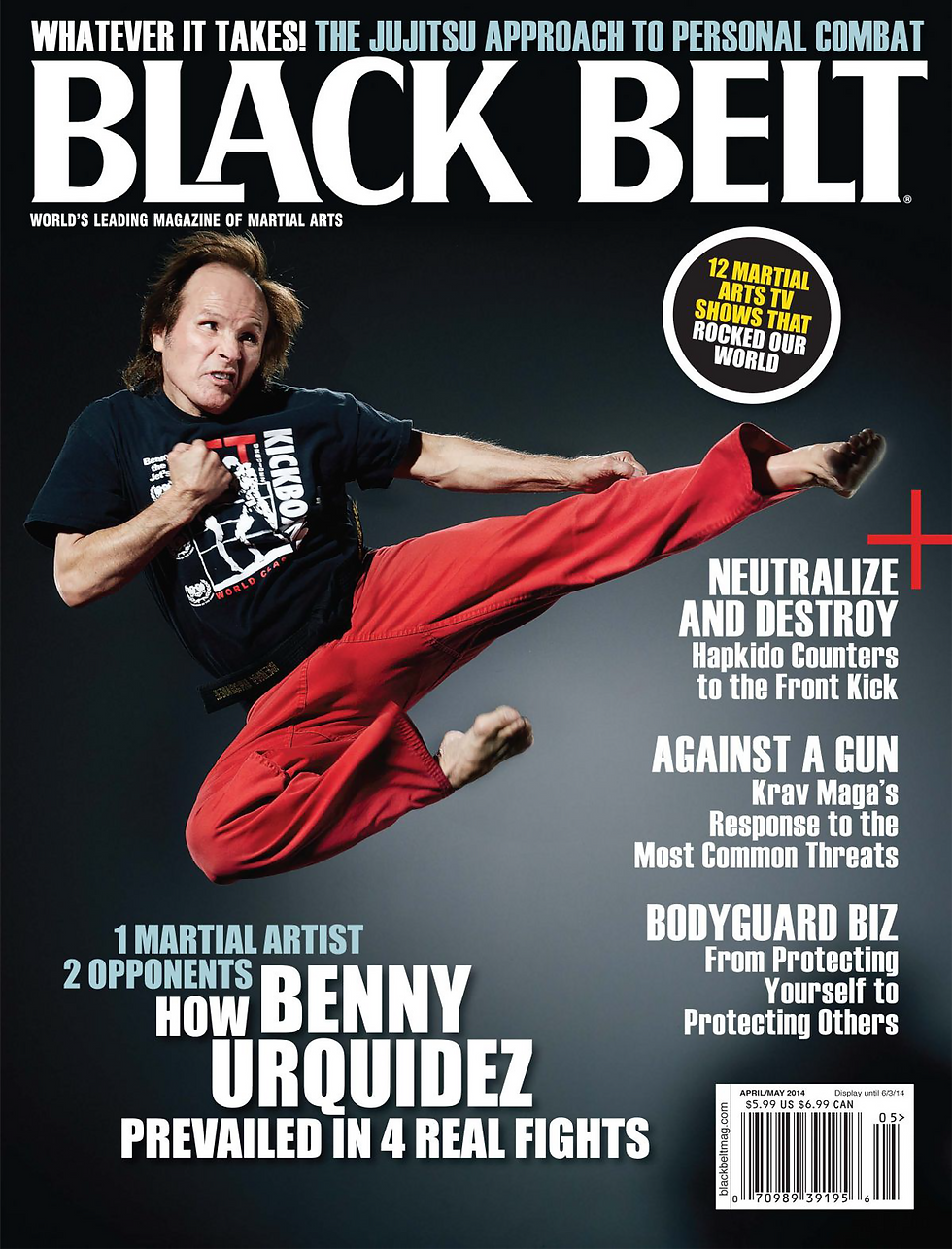
Sometimes I see less-experienced karateka who confuse posing with warming up. It's understandable — karate photos often feature a sensei with his leg beautifully extended, his foot inches from his opponent's head.
While this looks good, the power and value of karate lie in the movement that got that foot where it is and will take it back to a stable stance. That's why a warm-up that emphasizes movement is more beneficial than one that concentrates on the end product.
Finally, notice that I haven't mentioned the presence of any push-ups or sit-ups in my routine. Those are strength-building exercises, and as such, they're beneficial. However, you'll be better off if you do them during self-training and save your valuable dojo time for martial arts.