By Michael Miller
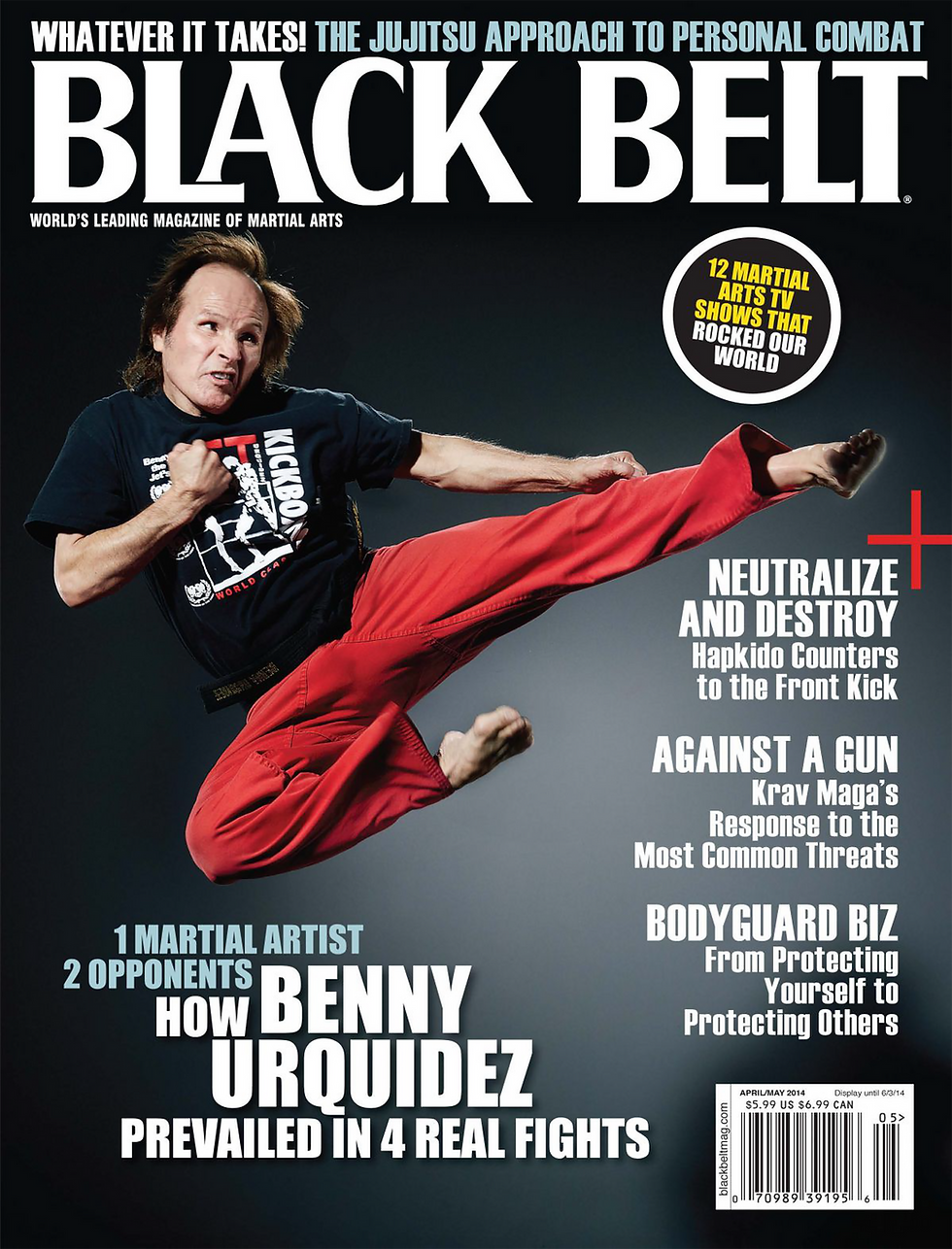
What do Bill Wallace, Don Wilson, Benny Urquidez, Bob Wall, Fumio Demura and Keith Vitali have in common? In addition to having acted in a ton of movies, these famous fighters are all champions. They used their skills to defeat opponent after opponent and rise through the ranks of martial arts stardom.
The reasons they prevailed in the ring are many, but each of them relied on a crucial skill: a strategic approach to maneuverability. Some of them stood their ground, while others hopped around like rabbits. This article will tell you who did what and why, and their reasons are sure to make you a better fighter.
Four Fighting Methods
In the martial arts world, personal combat can be divided into four main categories: point fighting, kickboxing, mixed martial arts and street fighting. Although they’re similar in many respects, each has a unique personality. For instance, in point fighting, strikes aren’t supposed to be full contact. The goal is to get in and out with a clean point. Once you score, the ref stops the action for a moment before restarting it. Kickboxing is full contact. Victory comes after a knockout, technical knockout or judges’ decision. If you participate, you’ll get hit hard, and that forces you to fight differently than you would in a point match.
MMA takes full contact to the next level by adding ground fighting and knee and elbow strikes. If you’re a pure striker, you’ll probably have trouble in an MMA bout. If you’re a pure grappler, you’ll likely have just as much trouble, albeit of a different kind.
Street fighting is the real deal. An attacker will do whatever it takes to put you down. You don’t know whether you’ll be fending off one person or five. You may face a club, a knife or a gun—and it might be in the hands of someone who’s intoxicated or high on drugs. Furthermore, there’s no mutual consent. In other words, you don’t know you’re going to fight until he jumps you.
Obviously, each type of fight requires its own training and techniques. If you’re gearing up for a point tournament, focus on starting and stopping. Learn how to pull your punches and how to strike certain areas of the body so you don’t get disqualified. If you want to be a full-contact fighter, you’ll need to hit hard during your sparring sessions and never stop after you’ve made contact. You’ll have to whip yourself into fighting shape so you don’t run out of gas in a match. Along the way, you’ll build your tolerance to pain whether you like it or not.
Being good at street defense requires the performance of plenty of reality-based drills with no rules and no time limits. Adrenal-stress training is another proven method for developing yourself mentally and physically.
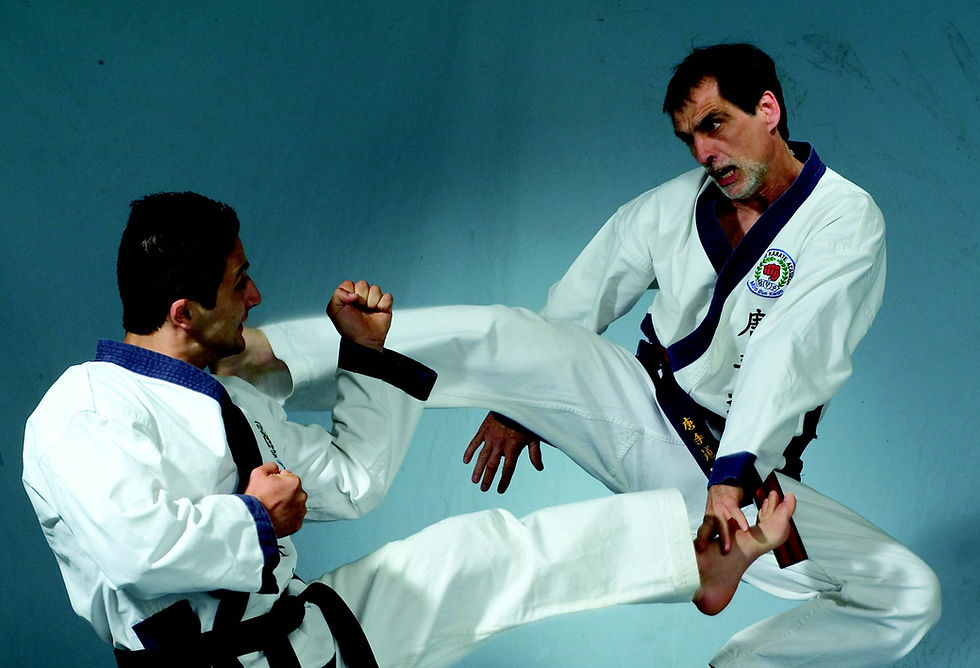
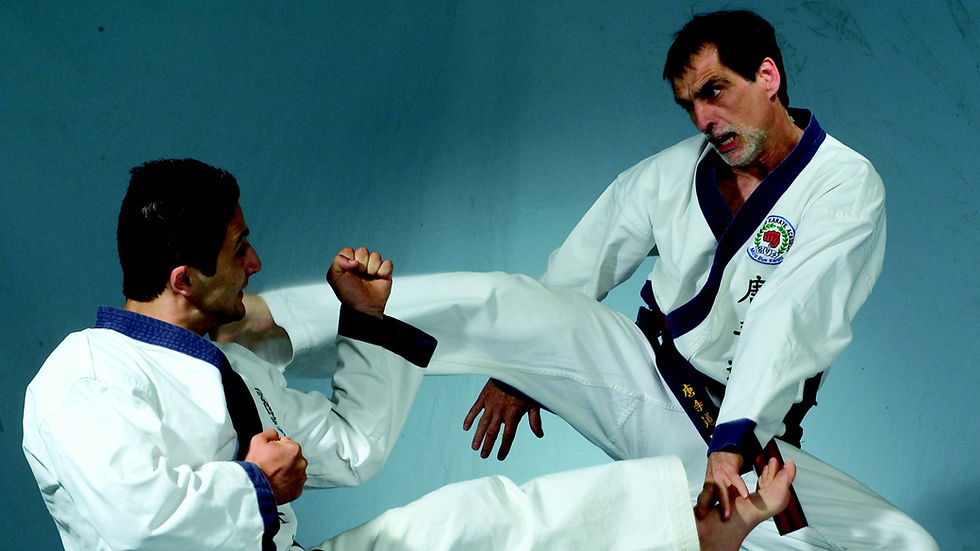
One thing all these types of combat have in common is mobility. Victory comes more easily when you move just the right amount at just the right time.
Against a Knife
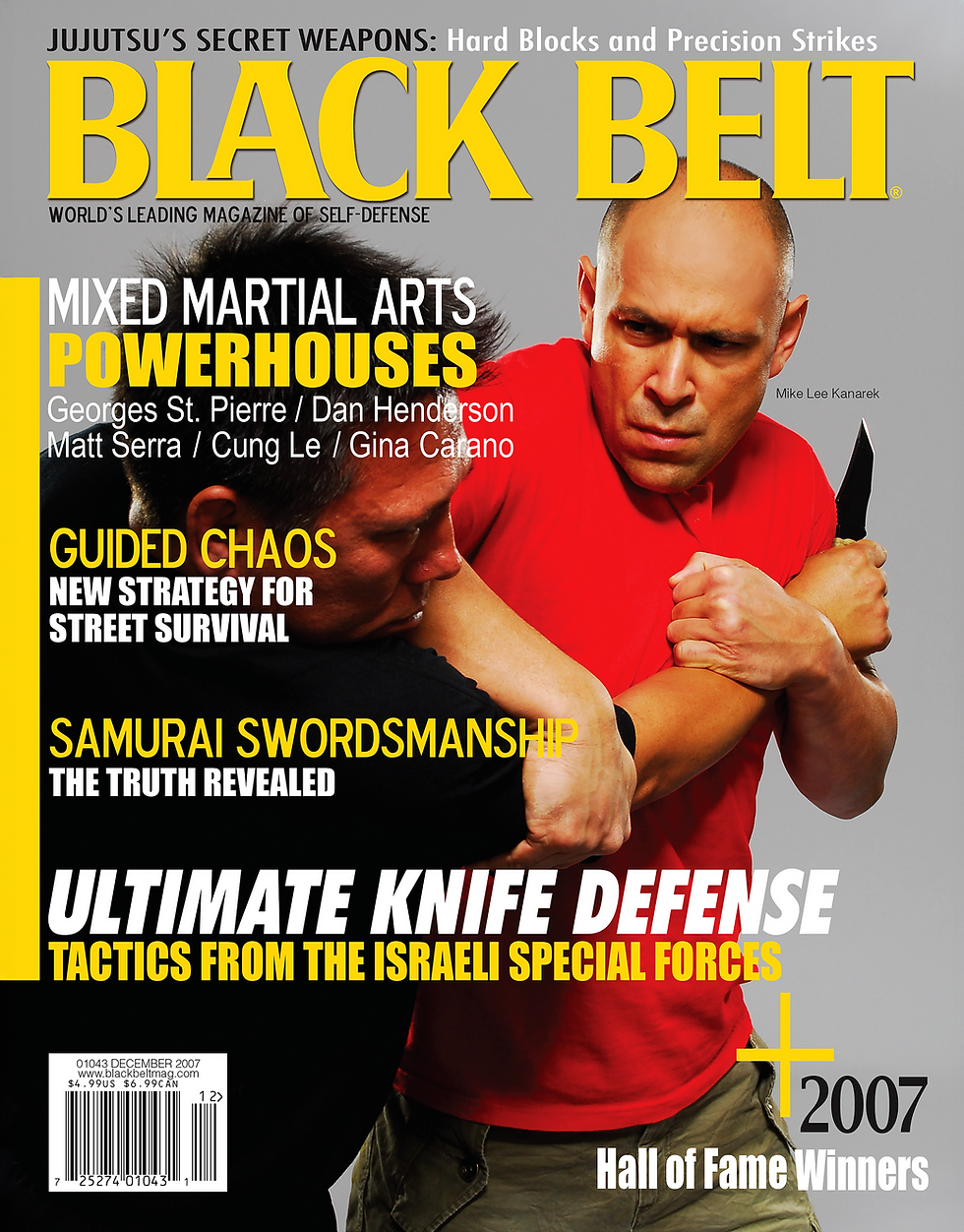
You should be mobile as you try to gain control of your attacker and his weapon. Your hands will be in motion, and your body will be maneuvering. A benefit of employing this type of defense is that it forces your opponent to commit to reach you. That will lure him in close, making it easier for you to control him.
—Joel Huncar, October 2005
Ring Wars
When the aforementioned champions fought their winning methods fit the era. The strategies and techniques that worked in the 1960s were different from the ones that worked in the 1970s and so on right up until today. Modern martial artists are fortunate in that they have more moves at their disposal than their counterparts did in the past and that their training methods are more advanced. Nevertheless, they can always learn from the past.
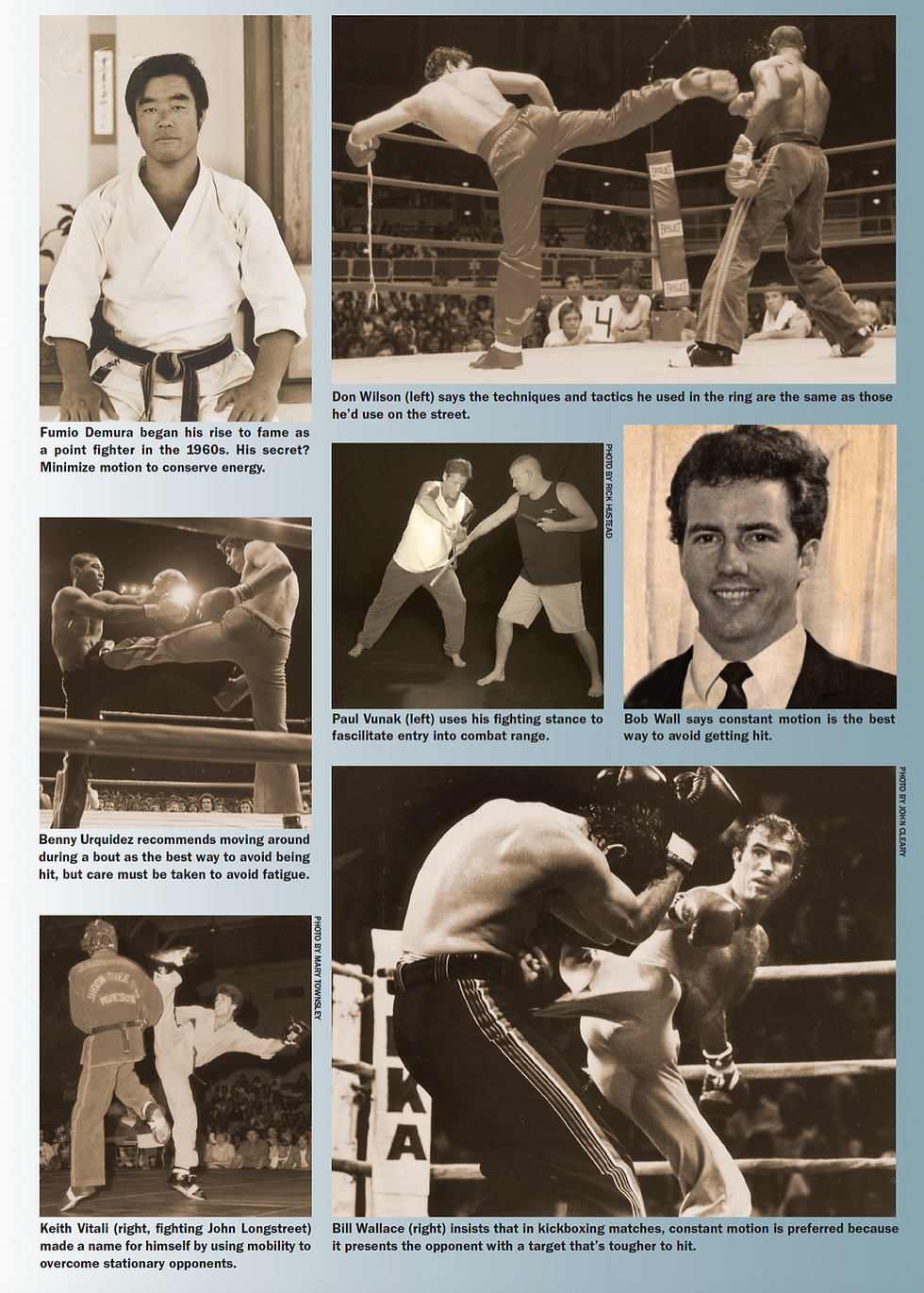
Demura competed in the 1960s as a point fighter. At that time, karate was a one-point ordeal. “When I fought, I didn’t move,” he says. Back then, if you were mobile, you lost. He and his contemporaries minimized their motion to conserve energy. Because protective gear didn’t exist, their strategies leaned toward the defensive, much more so than in today’s offensive-oriented matches.
Urquidez also fought in the 1960s, but he preferred the opposite strategy. His point fights were marked by movement. “It was all about timing,” he says. “[I used] quick-twitch moves, like sprinters do. [I was] quick on the draw.” His philosophy was simple: Never stand still unless you’re defending.
In his kickboxing bouts, however, Urquidez used a different approach. He avoided dancing around because it burned too much energy. Instead, he concentrated on using a swaying movement in front of his opponents.
“You allow him to make a move, and you make your counter,” he says. It’s OK to be mobile, he adds, but try not to waste energy doing it. To that end, he adopted a rhythmic movement that took him up and down, forward and backward, and side to side.
Wallace, who competed mostly in the 1970s, believes that the choice between standing and moving is an individual one. Neither method is markedly superior, he says. “In point fighting, I stood solid so I could drive everything in. When I was kickboxing, I liked to move because I didn’t want to be a target. When I was point fighting, I wanted to score on you really fast, and when I was kickboxing, I wanted to hurt you.”
Solid as a Rock
During the self-defense application, kung fu master Pan Qing Fu grounded himself in a forward stance as he grabbed another man’s head and gently struck it against his hardened abs. Instantly, the 200-pounder somersaulted backward and rolled on the ground. Pan’s stance didn’t change.
—Dianne Naughton, October 2001
The Reality-Fighting Point of View
Wilson’s career, which began in the late 1970s, focused on kickboxing. That made him a believer in motion—the more, the better. “I fought from a side stance and used a lot of movement,” he says. “You move first to make sure you’re not getting hit. Your first priority is to not get hurt. To [generate] power, though, you need to stop, lower your center of gravity a couple of inches and throw your kick or punch.”
For Vitali, a ring veteran of the 1970s and ’80s, victory came from bucking tradition. At a time when martial artists used little or no movement, his success stemmed from his mobility. “I called solid-base fighters ‘targets,’ ” he says. Standing still, his opponents found it nearly impossible to counter his speed and skill.
With Weapons
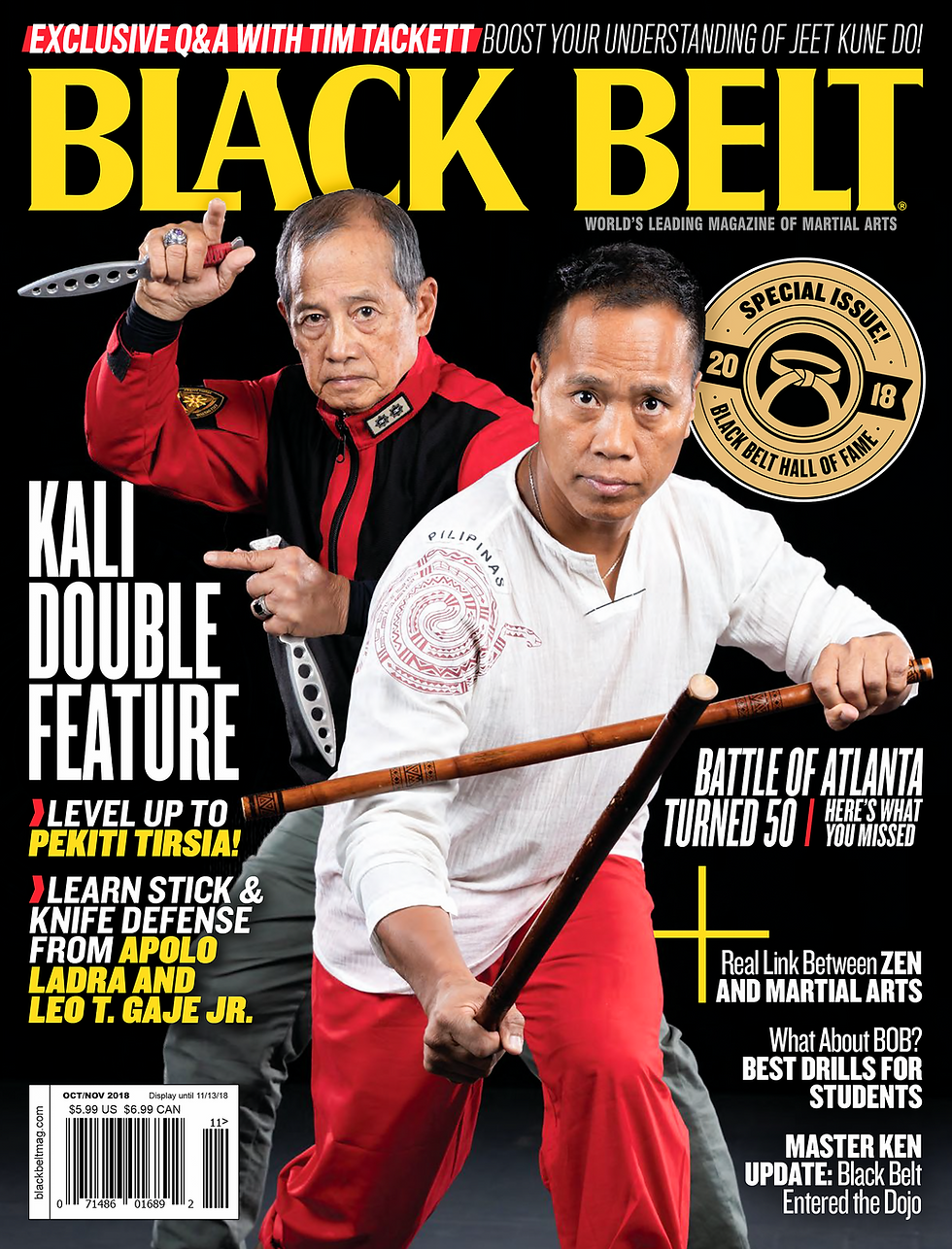
Among the things you should look for in a comprehensive stick-fighting program are tactical footwork and fighting stances that maximize mobility.
—W. Hock Hochheim, April 2003
Vitali encourages competitors, both point fighters and kickboxers, to reposition themselves constantly. “I made it to the top by fighting stand-still fighters, but by the end of my career, many fighters were moving,” he says. The change was a natural part of evolution from the 1970s to the 1980s, he adds. Wall’s heyday lasted from 1965 to 1972, during which he competed on a high-profile team that included Chuck Norris, Mike Stone, Joe Lewis and Skipper Mullins. Wall won world titles in 1970, ’71 and ’72. One of the secrets of his success was movement, he says.
“Only someone who wants to get hit is going to stand still and let somebody move around and hit them.” To this day, Wall’s fighting philosophy is simple: “You want to avoid pain. If you move around, you’ll be more able to give pain and less likely to receive pain.”
Fight Like a Wrestler … Not!
The typical wrestler’s stance is good for wrestling— and for getting punched in the face or kicked in the groin. When examined through the eyes of a martial artist, numerous problems become apparent. Therefore, a functional combat stance—one that allows you to attack with punches, kicks, clinches and takedowns, as well as defend against them—needs to be devised.
—Mark Mireles, December 2005
Street Defense
When you’re training for self-defense, the champs say it’s essential to understand that a different set of the dynamics is involved. There are no rules, rounds, referees or protective gear. Because every altercation is unique, you never know what to expect.
One thing is for certain, however: In a real fight, you need to end things quickly. You need not pace yourself as you would in a full-contact tournament. “On the streets, it’s about timing, knowledge and experience,” Demura says.
When you’re forced to fight, he adds, you should never back up. Wallace says he’d use the same techniques on the street that he used in the ring. “But I wouldn’t kick to the face,” he stipulates. Such potentially risky maneuvers leave you vulnerable to a loss of balance or a counterattack, he adds.
“There’s no difference in my philosophy when it comes to tournaments and the street,” Wilson says. “I turn to the side and rely on the side kick and lateral movement.”
Urquidez advises martial artists who are forced to defend themselves to be aggressive with full-power shots delivered from a solid stance. “When you’re rooted, there is power and strength,” he says. The key to victory, in Vitali’s view, is proper form—whether you’re engaged in a tournament match or a street fight.
“I make all my students technicians,” he says. “Once you have form, it will work on the street and in tournaments.” Anyone who believes tournament competitors are weak because they’re used to fighting under a set of rules is misguided, he adds.
Your entry is facilitated by your fighting stance.
Start by raising your elbows high like Thai boxers do. Then, when your attacker throws a punch or high kick, you can use your elbows to destroy his weapons. If he opts to execute a low-line kick, perhaps one aimed at your groin or thigh, you can use your knee to intercept the blow and damage his legs. The RAT System teaches you to envision yourself as a porcupine, hunkered down inside a protective layer of mobile elbows and knees. It doesn’t teach you to block, duck, or bob and weave. It implores you to destroy your opponent’s weapons right after he launches them. The resulting pain provides the perfect moment to enter.
—Paul Vunak, July 2006

Conclusion
Whether you stand your ground or move around, your goal in a physical altercation is the same: Don’t get hurt. With respect to mobility, the answers are less concrete. Some martial artists, including Demura, preferred not to move in point fighting, while others, including Urquidez, favored it. Both were excellent fighters in the same era. The fact that they and the others successfully employed different methods means one isn’t superior to the other. Success depends on the implementation.
Therefore, when it comes to competition, training is the key. Experiment with both methods when the stakes are low so you’ll be better prepared when the stakes are high. Then, whether you’re engaged in a championship bout or a life-or-death fight, you’ll automatically use the fighting method that’s right for you.
About the author: Michael Miller is a freelance writer and karate instructor based in Bradford, Pennsylvania. He holds a fourth-degree black belt. For more information, visit www.blackbeltmag.com and click on Community, then Black Belt Authors.
This article originally appeared in a Black Belt Magazine print edition.