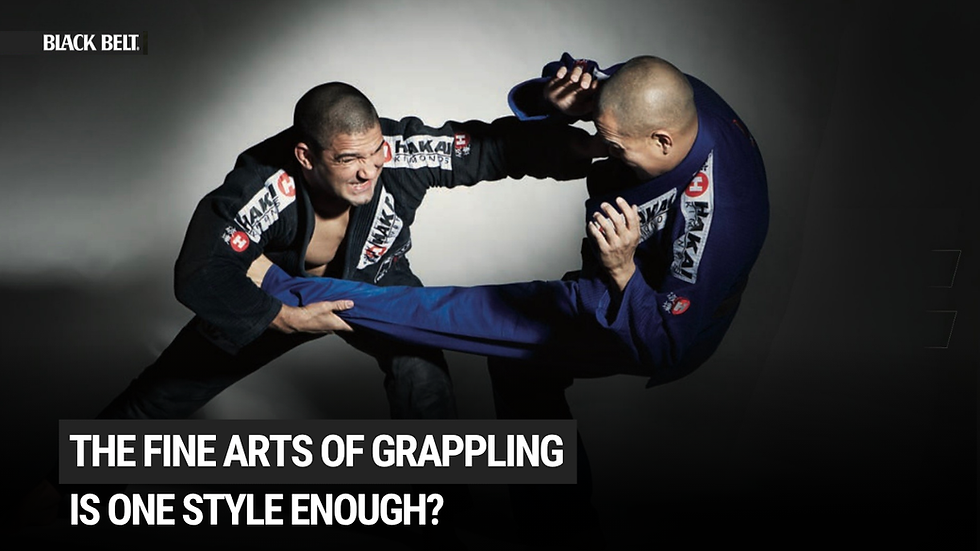
For Unbeatable Ground Skill, Why Stick With One Style?
“Marcel Louzado is one of the most remarkable people in martial arts today. He has combined various disciplines, knowing that the truth lies outside any one martial art. His mixture includes Brazilian jiu-jitsu, wrestling and judo, [which] creates a unique and deadly animal. This high-octane hybrid has attained Mr. Louzado three world titles. If the proof is in the pudding, Marcel has already consumed three bowls.”
—Paul Vunak
Marcel Louzado embarked on the martial path at age 3 with lessons in judo. Although the style is often recommended for children because of the low potential for injury, under no circumstances should that be interpreted to mean that judo isn’t effective in competition or self-defense. The art, properly known as Kodokan judo, was established in 1882 by Dr. Jigoro Kano, who studied the tenjin shinyo-ryu and kito-ryu styles of classical jujitsu until he’d learned their deepest teachings.
Kano took up the martial arts as a child because even back then it was well-known that consistent training strengthens even the frailest body. No doubt Louzado enjoyed the same benefits during his youth. Having to begin from that disadvantaged position is likely the reason Kano was inspired to transform the traditional jujitsu principle of “defeating strength through flexibility” into the judo concept of “maximum efficiency” through the proper use of physical and mental energy. The lesson was one Louzado took to heart.
The boy’s first judo coach required all his students to bone up on the history, culture and tradition of the Japanese art. That course of study generated tremendous insight and respect for judo in the mind of the youth—so much so that he was inspired to help preserve Kano’s legacy by competing in it. In 1989, when he was just 10, Louzado became a national judo champ.
IN THE BEGINNING
Kano eventually felt a need to supplement his skill base with training in other forms of combat. He continued to integrate what he considered the positive points of each one with his own ideas and inspirations. Similarly, Louzado looked to expand his horizons. At 15, with his judo skills on point—as evidenced by his four national championship titles—he started training in Brazilian jiu-jitsu with the intention of becoming a world champion.
As we all know, Brazilian jiu-jitsu originated from Kodokan judo, so the transition wasn’t particularly tough for Louzado. He immediately noted that cross-training in BJJ would help him complete his game on the ground. When he was 16, he entered his first jiu-jitsu tournament—around the same time he received his black belt in judo. When he was 17, he won his first BJJ competition and started teaching the grappling sport in São Paulo, Brazil.
IN THE STATES
If not for a foreign-exchange program that took him to Fresno, California, the teen might have been satisfied with his ground skills and stopped right there. However, his time at Hoover High School brought exposure to America’s grappling art. Louzado joined the varsity wrestling team and immediately became a standout athlete.
Upon his return to Brazil, Louzado figured that more opportunity to excel existed in the judo and jiu-jitsu worlds, so he started competing in those arts again. He took first place in the Junior National Judo Championships. In 1998 he competed in the Olympic trials for the Brazilian judo team but didn’t make the cut. In his free time, he attended college, eventually graduating with a degree in physical therapy.
At 19, he decided to make BJJ his career. In 2000 he placed third as a purple belt in the World Championships in Rio de Janeiro—and then won the Pan-American Championships in Orlando, Florida. The following year was an even better one for him: He won the “triple crown of Brazilian jiu-jitsu”—the Pan-American Championships, the World Mundial Championships Rio and the Brazilian National Championships. That achievement was capped by a ceremony in which he was awarded his black belt.
IN TRAINING
On the mat, Louzado likes to integrate the skills of all three grappling disciplines. He effortlessly switches from one to the other, often in ways observers don’t notice. Watching him, I’m reminded of the Filipino martial arts axiom “soft as cotton, hard as steel.” He can roll with anyone, and that person need not fear getting injured, but just like when you’re in a cage with a big cat, the claws can come out at any time.
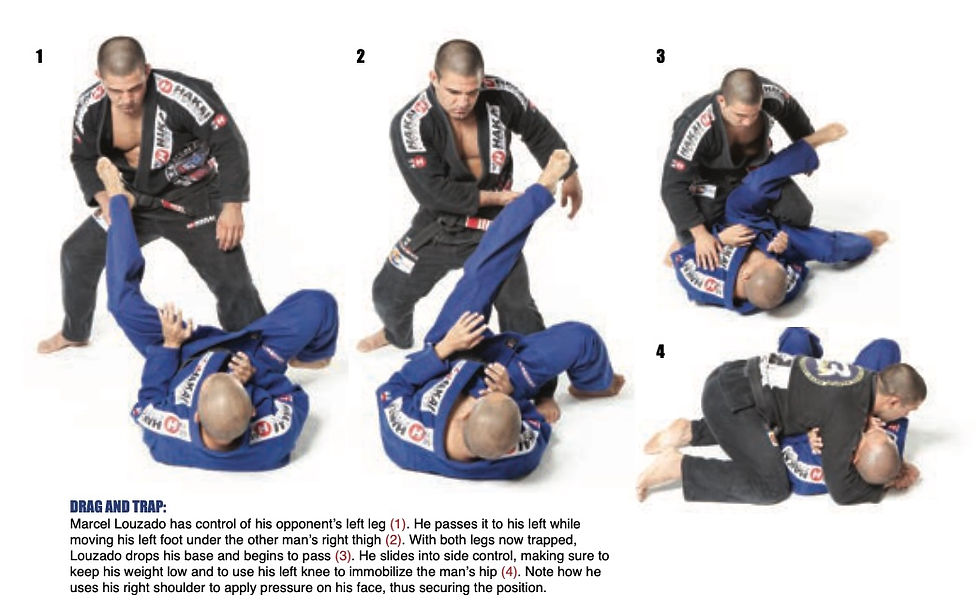
One secret of Louzado’s success is his emphasis on the transitions between the techniques. He’ll attempt a submission, and if his opponent evades it, Louzado will flow effortlessly to the next—from armbars to guillotine chokes, from foot locks to triangles. He transmits this ability to his students through lots of hands-on training. In other words, he personally rolls with all his people. Grapple with any one of them, and you can feel his influence.
Ask him to divulge another training secret, and he doesn’t hesitate: Execute your techniques step by step while focusing on precise movements. Why? Because it will make you more aware of your body—scientists call this “proprioception”—as well as more aware of your opponent’s body and where it is in relation to yours.
Once your body knows how to move, speed will come naturally, and the result will be a level of skill that won’t fail under the pressure of competition or the emotions of the street.
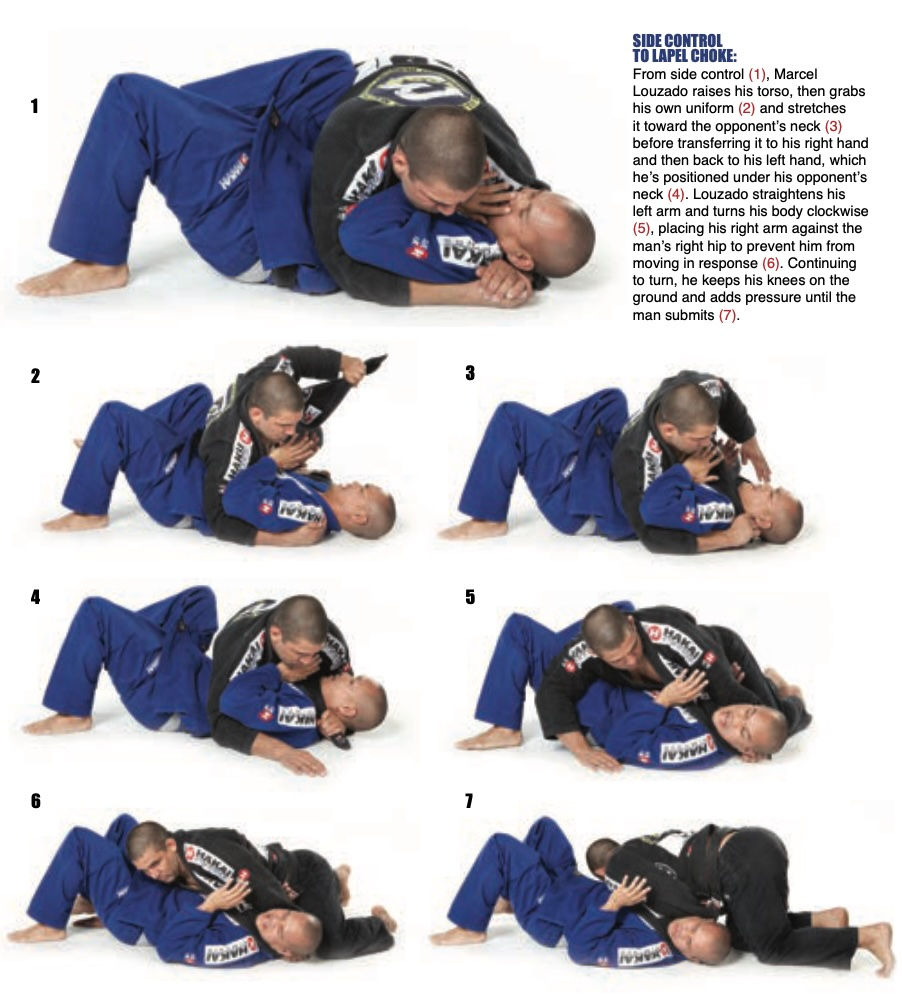
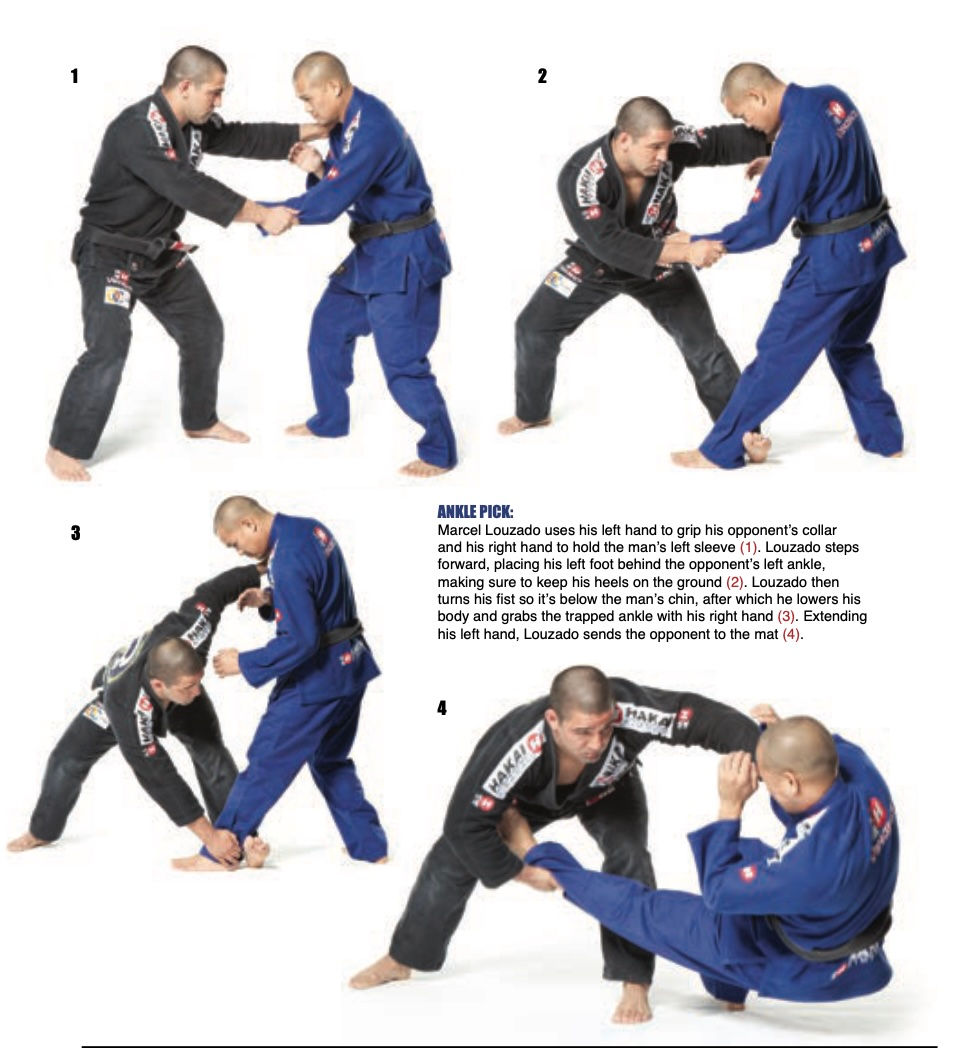
With regard to techniques, Louzado loves to use his wrestling takedowns to meet his opponent on the mat. Once there, he seeks out submissions using his judo and BJJ skill set. He never fixates on one method of fighting, however. The key to victory, he says, is being able to go from one art to the other and back again when needed.
When that’s done with proper timing, alignment, balance and mechanics, strength becomes a nonissue. Translation: You have enough energy to fight longer, ideally outlasting your opponent—which, interestingly enough, circles back to that “maximum efficiency” motto of Jigoro Kano.
Photos by Robert Reiff