Hollywood Is Kicking It Old School: The Return of Classic Martial Arts Movies
Hollywood loves a comeback.
After nearly two decades away from the big screen, Rush Hour is preparing for a comeback. Jackie Chan and Chris Tucker’s action-comedy franchise is officially moving forward with a fourth installment—proof that audiences still have an appetite for familiar characters, practical action, great martial arts and the stars who made these movies unforgettable. The third film was released in 2007, making this a return almost 20 years in the making.
Hollywood has rediscovered the value of legacy franchises. Superheroes are continually reborn. Horror icons never stay buried. Classic television shows are reimagined for new audiences. Yet many of the films that built the modern martial arts-action genre—and transformed real martial artists into international stars—remain on the sidelines.
Maybe it is finally time for martial arts cinema to have its own reboot revolution.
The best martial arts movies were never simply about fighting. They were stories of discipline, courage, redemption, identity and honor. Most importantly, they gave audiences something no digital effect can manufacture: performers who could actually do what their characters claimed they could do.
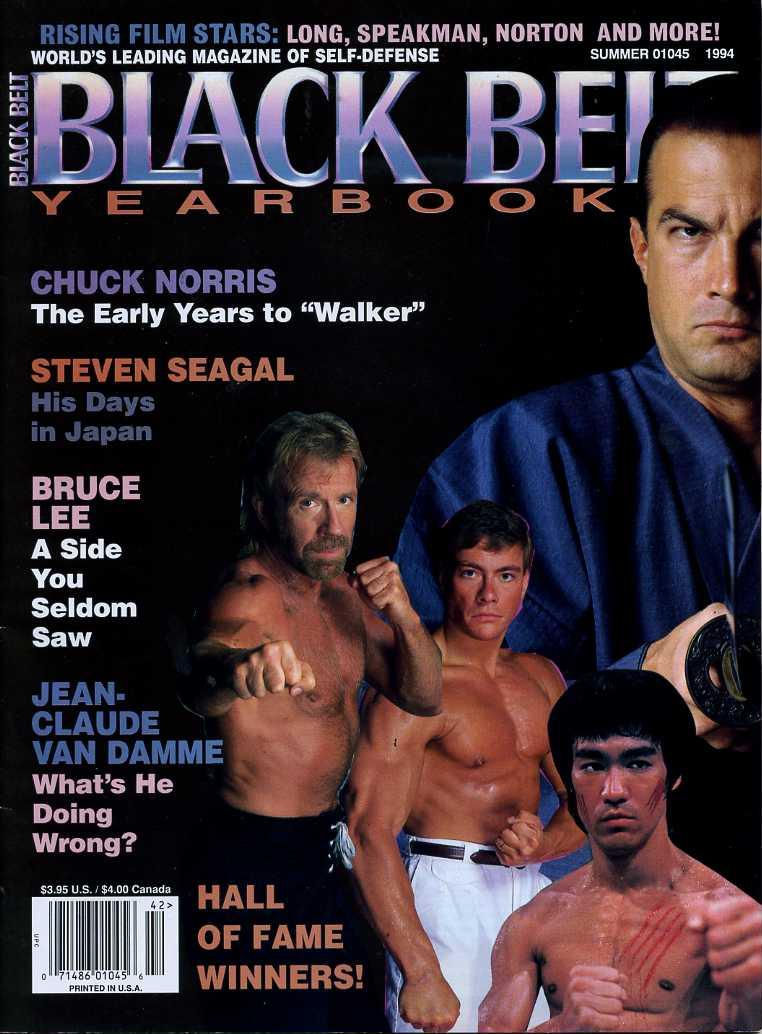
Bruce Lee, Jackie Chan, Jet Li, Jean-Claude Van Damme, Phillip Rhee, Steven Seagal, Jeff Speakman, Jim Kelly, Taimak, Cynthia Rothrock and Sho Kosugi didn’t merely play action heroes.
They brought their own martial arts identities to the screen—and, in many cases, became global stars because audiences recognized that authenticity.
As Hollywood looks towards a new year, here are 10 classic martial arts films which the Black Belt Team is ready to see enter the ring again—and the performers we believe could carry them into a new era.
1. Enter the Dragon (1973)
The Original
Released in 1973, Enter the Dragon was more than a hit movie. It was a cultural earthquake.
Bruce Lee’s charisma, speed, philosophy and physical presence introduced millions of moviegoers to a new kind of action hero. Alongside John Saxon and Jim Kelly, Lee entered a mysterious island tournament that combined martial arts, espionage and international intrigue.
The film helped make martial arts cinema a worldwide phenomenon and was selected for preservation in the United States National Film Registry.

The Reboot
This cannot simply be a scene-for-scene remake—and no actor should be asked to imitate Bruce Lee. Instead, a new Enter the Dragon should honor Lee’s philosophy by bringing together fighters from different nations and disciplines for a contemporary global tournament.
The island could now be controlled by a billionaire using combat technology, illegal gambling and human trafficking to build a criminal empire. The action should remain grounded in real martial arts, with each fighter representing a distinct system.
Who Should Star?
Andrew Koji has the intensity, athleticism and screen presence to lead the film without attempting a Bruce Lee impersonation.
Michael Jai White could continue the legacy of Jim Kelly.
Scott Adkins as Roper—come on, you have to! Adkins has spent years demonstrating the kind of technical precision, explosive kicking ability and screen-fighting experience that this ensemble demands.
Roper was originally the charming, resourceful American fighter played by John Saxon; Adkins could give that character a harder-edged fighting identity while retaining the camaraderie that made the original trio work.
Mark Dacascos as Bolo 2.0—faster, good-looking, and with all the martial arts skills needed. Dacascos has the screen presence to make a tournament enforcer memorable even before the first exchange of blows.
Rather than recreating Bolo Yeung's imposing physicality, the new version could emphasize speed, versatility and the unsettling calm of a fighter who knows exactly how dangerous he is.
2. Bloodsport (1988)
The Original
Few movies inspired more young people to enroll in martial arts schools than Bloodsport.
The 1988 tournament film turned Jean-Claude Van Damme into an international action star. Its underground Kumite, unforgettable training sequences and explosive final confrontation created a blueprint that martial arts movies—and fighting games—have followed for decades.

The Reboot
A new Bloodsport should retain the mystery and danger of an invitation-only fighting tournament while bringing the competitors into the modern era.
Imagine champions from karate, taekwondo, muay Thai, judo, Brazilian jiu-jitsu, MMA, wrestling and kung fu entering a tournament in which the rules change from round to round.
The fights should be shot wide enough for audiences to see the performers’ skill. No frantic editing. No hiding behind stunt doubles. Let the martial artists perform.
Who Should Star?
Scott Adkins should have a major place in the new Kumite—perhaps as its defending champion, a seasoned fighter whose reputation makes him the man everyone else hopes to avoid.
His portrayal of Yuri Boyka in the Undisputed films helped establish him as a modern martial arts-action favorite, and his blend of acrobatic kicks, power and fight choreography makes him an obvious fit for a tournament built around real performers.
He could also serve as the experienced rival who pushes the younger lead beyond technique and into the mental demands of competition.

Alain Moussi has the traditional martial arts background, athletic ability and action experience to lead the film. Having already stepped into a Jean-Claude Van Damme-associated franchise through the Kickboxer revival, Moussi understands the challenge of honoring a beloved martial arts movie without merely copying its original star. A
Bloodsport lead would give him room to create a fighter with his own motivations, style and identity.
Lewis Tan would bring charisma and crossover appeal, while Darren Barnet, Jade Xu, Andy Le and Lateef Crowder could round out the tournament. Each could represent a different competitive personality and approach to combat, making the supporting fighters more than a procession of opponents.
Tan's action experience, Xu's wushu background, Le's stunt-driven screen work and Crowder's capoeira would help give the Kumite the visual variety that made the original tournament so much fun. Barnet could supply a younger, dramatic counterpoint, with the production developing a fighting style suited to his character.
And there should absolutely be a role for Jean-Claude Van Damme—perhaps as the man who knows why the Kumite has returned.
3. Best of the Best (1989)
The Original
Best of the Best gave martial arts fans something different: a team movie with heart.
Phillip Rhee led a memorable cast that included Eric Roberts, James Earl Jones, Simon Rhee and Chris Penn. Beneath the competition storyline was a moving message about sacrifice, sportsmanship, brotherhood and respect.
Its emotional conclusion remains one of the genre’s most memorable moments.

The Reboot
The new film could follow a divided group of American athletes selected for a world team competition. They arrive with different fighting styles, personal agendas and social-media followings—but very little understanding of what it means to represent something larger than themselves.
The story should be about becoming a team, not merely winning a tournament.
Who Should Star?
Brandon Soo Hoo could lead a younger ensemble, joined by Ryan Potter, Taylor Lautner and Jade Xu. The attraction is not simply assembling recognizable young faces.
Each teammate should enter the competition with a different reason for fighting—ambition, family expectations, personal redemption or the need to prove that an unconventional background belongs on the world stage. That friction would give the actors something meaningful to play between matches.
Jet Li could play the head coach, taking on the role previously played by Hee Il Cho.
Alternatively, Thomas Ian Griffith, aka Terry Silver from the Karate Kid franchise, would be a commanding choice as head coach, with Phillip Rhee and Simon Rhee appearing in legacy roles that connect the new team to the original film.
For the opposing team, Bren Foster could take the lead. Foster's martial arts background and commanding physical presence make him a strong choice for an opposing captain who is formidable without being a cartoon villain.
The original film found much of its emotional power by allowing the Korean team to be human; a reboot should give Foster and his teammates comparable dignity, motivations and a point of view of their own.
Of all the movies on this list, Best of the Best may be the one most ready to become a continuing franchise.
4. Above the Law (1988)
The Original
Released in 1988, Above the Law introduced Steven Seagal to movie audiences and made aikido the centerpiece of a major American action film.
Its Chicago setting, political corruption and hard-edged police story gave the movie a gritty personality. The action felt different because the star moved differently.

The Reboot
A modern version could follow an honest detective uncovering a connection between private military contractors, political power and organized crime.
The lead should not imitate Seagal’s performance. The goal should be to do what the original did: introduce audiences to a performer with a distinctive martial arts identity.
Who Should Star?
Iko Uwais would transform the concept with silat, speed and ferocity. Casting him as an international officer working with a Chicago task force could give the story a fresh perspective.
Frank Grillo could play a veteran detective or morally ambiguous government operative, while JuJu Chan Szeto would be a strong addition as a federal investigator with her own agenda.
5. The Perfect Weapon (1991)
The Original
The Perfect Weapon placed Ed Parker’s American kenpo on center stage and gave Jeff Speakman a star-making vehicle.
Speakman brought rapid combinations, explosive movement and a genuine martial arts pedigree to the screen. James Hong and Mako added weight to a story that combined family, loyalty and organized crime.
The Reboot
The new version should preserve kenpo as its foundation while exploring the idea behind the title: Is the perfect weapon a fighting system, a trained body or a disciplined mind?
The hero could be a gifted but directionless fighter who returns home after the murder of his teacher and discovers that the school—and the surrounding community—are being threatened by a sophisticated criminal organization.

Who Should Star?
Noah Fleder, a martial artist and action actor with strong screen presence, would bring physical credibility. His work in martial arts performance and action-oriented content demonstrates an ability to communicate through movement—an essential quality for a story built around a distinctive fighting system.
Jeff Speakman should return as the mentor, bridging two generations of martial artists while bringing an authentic connection to the original film. His presence could also provide an opportunity to showcase the principles and techniques that made American Kenpo so compelling on screen.
With Fleder leading the action and Speakman passing down the knowledge, The Perfect Weapon could introduce American kenpo to an entirely new generation of moviegoers while honoring the martial arts legacy that made the original a classic.
6. Black Belt Jones (1974)
The Original
Jim Kelly had already made an unforgettable impression in Enter the Dragon, but Black Belt Jones gave him the spotlight.
Kelly brought style, humor, confidence and an entirely new energy to martial arts cinema. He was not trying to be Bruce Lee. He was unmistakably Jim Kelly—and that was the point.
The Reboot
A new Black Belt Jones should be cool, colorful and unapologetically fun.
The story could center on a martial artist defending a historic neighborhood dojo from developers, criminals and political corruption. The soundtrack, wardrobe and visual style should capture the attitude of the original without turning the film into a parody.

Who Should Star?
Michael Jai White is the natural choice if the project features an experienced Black Belt Jones passing the torch.
For a younger lead, Myles Truitt could bring charisma and dramatic potential, provided the production commits to serious martial arts training. His dramatic screen experience offers a foundation for a young Jones who can handle humor, vulnerability and the pressure of inheriting a neighborhood legacy. The film should invest in an extended training period rather than rely on editing to manufacture ability. That way, the audience can watch the character grow into the black belt he claims to be.
Wesley Snipes should also be involved—perhaps as a former rival whose history with Jones becomes essential to the new story.
7. The Last Dragon (1985)
The Original
The Last Dragon delivered an irresistible mix of martial arts, music, comedy and romance—along with one of the most gloriously unforgettable villains of the 1980s.
Taimak’s Bruce Leroy was a young hero searching for mastery and “the Glow,” while Julius Carry’s larger-than-life Sho’nuff became a cult icon. The film celebrated martial arts culture with genuine affection, energy and humor, without ever taking itself too seriously.

The Reboot
A 2027 version could unfold at the intersection of traditional martial arts, hip-hop, streaming celebrity and influencer culture.
Its hero could be a gifted but humble martial artist who values discipline and self-mastery more than followers or fame. His rival, meanwhile, commands millions of fans and believes that attention—not ability—is the ultimate form of power.
The Glow must remain, but it should represent something deeper than a special effect: confidence, purpose and the moment a martial artist discovers the power that was always within.
Who Should Star?
Shameik Moore could bring the humor, vulnerability and energy needed for a modern Bruce Leroy.
But an exciting breakout choice would be stunt performer and Black Belt managing editor Justin Lee Ford. A rising talent with authentic martial arts ability, screen presence and an insider’s understanding of the culture, Ford could bring credibility and freshness to the role. Bruce Leroy helped introduce audiences to a new kind of martial arts hero in 1985; casting an emerging performer like Ford could allow the reboot to do the same for a new generation.

Mark Dacascos could portray the master who guides him, while Taimak could appear as the keeper of the original philosophy—creating a meaningful bridge between the classic film and its next chapter.
The toughest assignment would be finding someone capable of following Julius Carry’s legendary Sho’nuff. One intriguing possibility is comedian and internet sensation Jahdai Pickett, better known as Bigg Jah. A former Division I football player and gifted comedic performer, he has the physical presence, timing and larger-than-life personality the role demands.

Because the new Sho’nuff would need size, humor, danger and enough swagger to confidently ask the most important question in martial arts cinema:
“Who’s the master?”
8. China O’Brien (1990)
The Original
Cynthia Rothrock was already known around the world for her Hong Kong action films when China O’Brien gave Western audiences a female martial arts hero who could stand at the center of her own franchise.
Rothrock did not need to be rescued. She was the fighter audiences came to see.
The Reboot
A new China O’Brien could follow a decorated police officer and martial arts champion who returns to her rural hometown and discovers that corruption has taken control of local government and law enforcement.
The new film should retain the original’s small-town Western quality while giving its hero harder, faster and more contemporary action.

Who Should Star?
Cynthia Rothrock should star not as a ceremonial cameo, but as a character who still has something to teach and at least one major fight left in her.
Amy Johnston is a great choice for a next generation. She has the martial arts background, stunt credentials and screen presence to carry the franchise.
A China O’Brien revival could become the female-led martial arts franchise audiences have been waiting for.
9. Enter the Ninja (1981)
The Original
Enter the Ninja helped ignite America’s ninja obsession and introduced many Western moviegoers to Sho Kosugi.
The masks, weapons, secret clans and mysterious codes of honor created a fantasy that would dominate martial arts cinema throughout the 1980s.
The Reboot
The ninja does not need to remain frozen in feudal Japan or 1980s action-movie mythology.
A modern ninja story could combine traditional training with surveillance, cyberwarfare and international espionage. The key would be preserving the physical skills—stealth, climbing, weapons and hand-to-hand combat—rather than turning the hero into a computer-generated superhero.

Who Should Star?
Kane Kosugi should have a major role connecting the reboot to his father’s legacy. As Sho Kosugi's son and an accomplished action performer in his own right, he offers a rare connection between the 1980s ninja boom and a contemporary generation of screen fighters.
He could play the veteran operative or clan instructor who knows the cost of preserving the old code in a world of digital surveillance. Crucially, he should be given substantial action of his own, not reduced to a nostalgic cameo.
Done correctly, Enter the Ninja could become martial arts cinema’s answer to John Wick.
Andrew Koji could play a rival warrior with a different interpretation of the ninja code. That disagreement could drive the story: one fighter sees secrecy and discipline as obligations, while the other believes survival requires changing the rules. Their conflict would give the film an emotional center beyond gadgets, masks and spectacular combat.
10. Big Trouble in Little China (1986)
The Original
John Carpenter’s Big Trouble in Little China mixed martial arts, comedy, fantasy, monsters and supernatural adventure into a movie unlike anything else of its era.
Kurt Russell’s Jack Burton believed he was the hero, even when everyone around him was more capable. Dennis Dun’s Wang Chi supplied much of the real martial arts heroism, while James Hong created an unforgettable villain in David Lo Pan.
The Reboot
A new version should not attempt to out-weird the original. It should embrace the same formula: a loud, overconfident outsider stumbles into a world he does not understand and discovers that he is actually the sidekick.
This time, however, Wang Chi should clearly be the central hero.
Who Should Star?
Simu Liu would be an ideal Wang Chi—funny, athletic and capable of carrying both action and comedy.
Shane Gillis could inherit the Jack Burton role, bringing a fresh comedic take to the original character. The joke should remain that Burton talks like the hero of the movie while constantly discovering that Wang Chi and the people around him are far better equipped to handle the danger. His bravado would work best when paired with genuine affection for the friend who keeps saving him.
Michelle Yeoh could bring authority and mysticism to a powerful new character—perhaps the guardian of an ancient pact who understands Chinatown's supernatural politics better than anyone else. Rather than making her another mysterious figure who only delivers exposition, the filmmakers should give her an agenda, a sense of humor and an opportunity to remind the audience why she remains one of action cinema's most commanding performers.
Don’t Just Remake Them—Rebuild the Star System
These movies worked because audiences believed in their heroes.
The original stars brought years of training, individual fighting styles and personal philosophies to their performances. The movies did not create everything we saw on screen. They captured qualities those martial artists already possessed.
That should be the model for the next generation.
Hollywood should search dojos, tournaments, stunt teams and professional fighting organizations for performers with the talent to become authentic martial arts stars. Acting can be developed. Screen presence can be refined. But years of discipline leave something in a performer’s movement that cannot be created overnight.
The reboot should also make room for the legends.
Jean-Claude Van Damme, Phillip Rhee, Jeff Speakman, Cynthia Rothrock, Taimak, Michael Jai White, Mark Dacascos, Kane Kosugi and other veterans should not appear merely to wave at the camera. Let them become the masters, coaches, commanders, parents and even villains who pass the torch—or refuse to surrender it.
The martial arts movie once had the power to turn champions and instructors into global superstars. It inspired audiences to find a local school, put on a uniform and begin training.
It taught generations about perseverance, respect and the courage to stand back up.
In 2027, audiences may be ready for those heroes again.
The titles are legendary. The stories remain powerful. A new generation of martial artists is waiting.
It is time to bring back the training montages, the rival schools, the secret tournaments, the unforgettable masters and the final fights that make an entire theater rise from its seats.
It is time to kick it old school.
Which classic should return first—and who deserves to become the next great martial arts movie star?