Updated: May 17, 2025
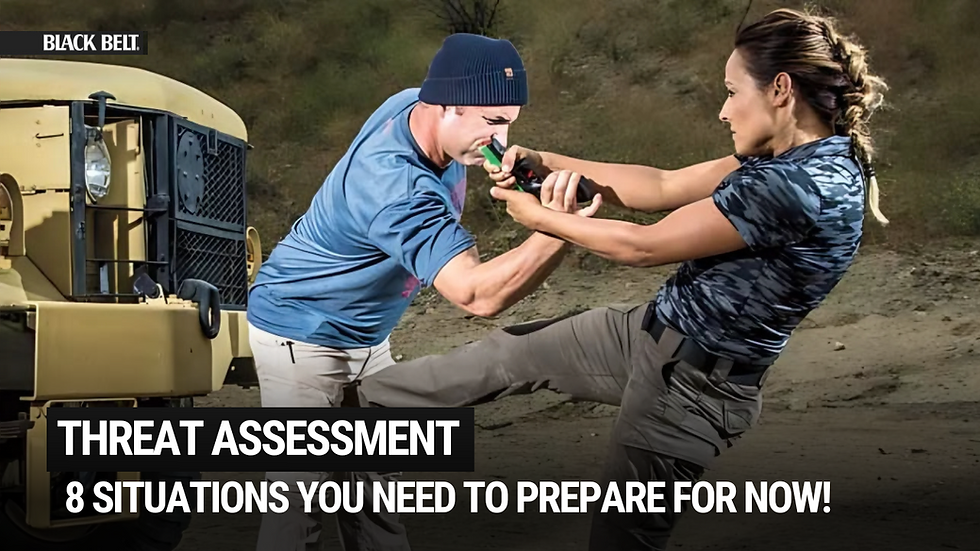

Even though most martial artists dedicate themselves to learning practical responses to modern threats, violence can take unexpected turns that shock even the best technician. To develop the kind of mental and physical resolve necessary to prevail in such encounters, you must create a variety of worst-case scenarios so you can build relevant skill sets that can be put into action quickly.
If you already engage in scenario training, you should take a hard look at the ones you currently use and examine—without style prejudice—which moves will work when there’s hard contact and full resistance. You may find that some “proven techniques” are fatally flawed when your opponent is fighting back. Obviously, you can’t go ballistic with your training partner, but you can take into account the natural reactions that would be associated with real violence.
Presented here are eight threat categories that all serious students of self-defense should prepare for.
1) Fist Attacks
In a street fight, the hand techniques most frequently seen are primary strikes delivered in basic combinations. Straight punches are the staples, and they're often backed up by a cross or hook. Punches tend to be pumped out in a piston-like fashion using the same hand or alternating hands. The danger has more to do with timing, distance, and force than it does with technique.
Obviously, there are attacks that involve uppercuts, spinning backfists, and so on, but in general, the most common fist strikes are the jab, cross, and haymaker. They may be thrown individually or in combinations, but the limb never remains extended or static. In other words, you'll need to practice against punches that are thrown and then quickly retracted.
Defending against them is not as difficult as you might think because of all the choices you have, which include altering range, evading, blocking, deflecting, and covering up. No matter which you choose, follow up with a strike or takedown to interrupt your opponent's momentum and rhythm.
A single blow can be stopped by an average martial artist, but things are more difficult when punches are thrown in combination. I call this the “flurry factor.” When defending against such a barrage, blocking each punch becomes nearly impossible. What is possible is to deflect the first, the second, and possibly the third punch and then alter the range. If you haven't committed to an effective countermeasure by that point, your foe likely will penetrate your defenses.
Always remember that discomfort can change the direction of any fight. The sudden jolt of an impact and the resulting pain can shift things — in your favor or in your attacker's.
2) Takedowns
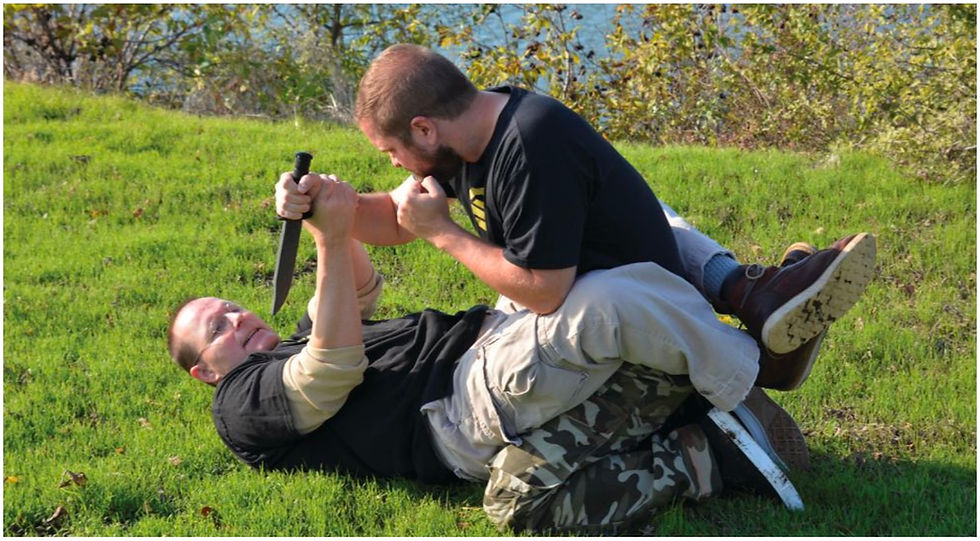
We all know how quickly one person can take another person down. This is why so many martial artists are adding MMA ground techniques to their arsenal. We also know how dangerous a ground fight can be, especially when multiple opponents or weapons are involved.
A recent national news story drove home this point when it showed video footage of a fight between two young men that ended on the ground. As onlookers cheered, a gang member emerged from the crowd and stabbed one of the men, killing him on the spot. This serves as a valuable reminder that no matter how proficient you are on the ground, you must remain alert. You also must understand which positions offer advantages to you and which do that for your opponent. If you're smart, you'll learn a few tricks that can give you the edge on the ground.
If you've studied grappling, you know the nuances of ground fighting. They include how to prevent the mount, how to execute a takedown, how to apply a submission, and how to finish with a choke. Consider bolstering that toolbox with biting, hair pulling, eye gouging, and the use of makeshift weapons such as car keys and found weapons such as rocks. Don't neglect throwing a second attacker into the training mix to see how the dynamics change.
3) Hands-on Assaults
Anytime an opponent grabs you, it's considered a “hands-on assault.” Examples include a head lock, front choke, bear hug, lapel grab, and shove. Your response to any of these should be fast, direct, and uncomplicated. A counterstrike is usually in order, and that can set up a sweep or takedown. Your adversary must not be given a chance to recover, so either inflict a shocking blow or effect a grappling technique that renders him unable to continue. Of course, these options should be used only when there's no chance of defusing the aggression.
Sometimes you can prevent a hands-on assault simply by deflecting or resisting in a natural way. It’s for situations in which that’s not possible that you’ll need to train. First, learn the most common assaults and practice proven methods for dealing with them. Next, get comfortable with two or three defensive options that work effectively against each threat. Make sure your chosen countermeasures work on people who are noncompliant.
4) Multiple Opponents
Many street encounters involve multiple attackers. Because the average martial artist isn't used to fighting more than one person at a time, the martial artist can be easily overpowered. It might be because the defender turns his back on his enemies. It might be because he goes to the ground. The lesson to be learned is that you need to stay on your feet and not turn your back on any opponent. As soon as possible, use the element of surprise to take out the person who stands between you and your best exit.
One method I teach for battling multiple opponents is “aligning.” It involves continually positioning yourself so your attackers are in a line. That way, you don't have to face them all at once. For example, if you can maneuver so enemy B is behind enemy A, it forces B to come around his own man to get to you.
With practice, this tactic can work against three or more people. It's best achieved by first executing a surprise attack against one adversary and using his body as a temporary barrier between yourself and the others. As they begin to flank you, the man who’s now the nearest is struck hard and used as a shield.
For whatever reason, a mass attack usually de-escalates after the first two or three opponents are defeated. In other words, if you're facing six people, you may end up fighting only two of the boldest. Of course, when facing multiple attackers, you should always try using verbal techniques to keep the situation from spiraling out of control in the first place, but that doesn't always work.
5) Third Party in Danger
At one time or another, you may need to come to the aid of someone who's in danger. Numerous situations might warrant such an intervention — it could be an ordinary mugging on the street or a terrorism-related crime.
In most cases, you'll approach from the assailant's blind side and use the element of surprise. That could entail taking him down by pulling his hair or jacket while kicking or kneeing the back of his knee, executing a “septum takedown” in which you apply pressure under his nose with your hand, or seizing control of the weapon while he’s focused on his hostage.
People will often refrain from intervening in a violent incident involving others because they fear being hurt or killed. And that's fine because, as they say, the better part of valor is discretion. However, knowing what action to take is crucial for those situations when restraint isn’t an option.
6) Bludgeons
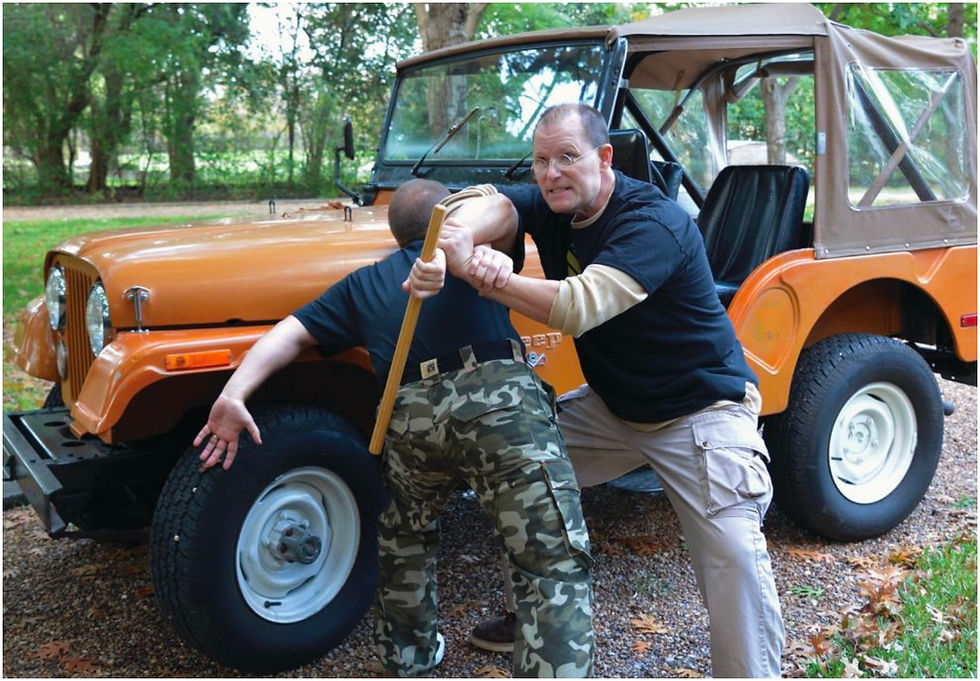
From a defensive perspective, you need to know how to stop a stick attack and, when possible, disarm the attacker. From an offensive perspective, you also should know how to use a stick — it can be a great equalizer. That means learning how to strike vital areas and learning how to use one to apply pressure to a body part or amplify leverage.
To accomplish the former, it's best if you know how to position yourself to deflect the danger. Of course, you also need to know how to enter, control the weapon and effect a disarm. To accomplish the latter, you'll need to polish your ability to maneuver into or out of several stances that have you holding the stick in a manner that doesn’t allow your enemy to snatch it out of your hand. Next, you'll need to work on striking the knees, collarbone and other prime targets that happen to be available. Example: Your opponent is holding a knife, and you have a stick. You’ll want to target his weapon hand.
Higher-level stick fighting revolves around manipulating your opponent’s body using pressure and leverage. By sandwiching body parts between the stick and your own body, you can inflict substantial pain, perhaps enough to momentarily debilitate him. Such “wedge locks” can target bones, joints and nerves.
7) Edged Weapons
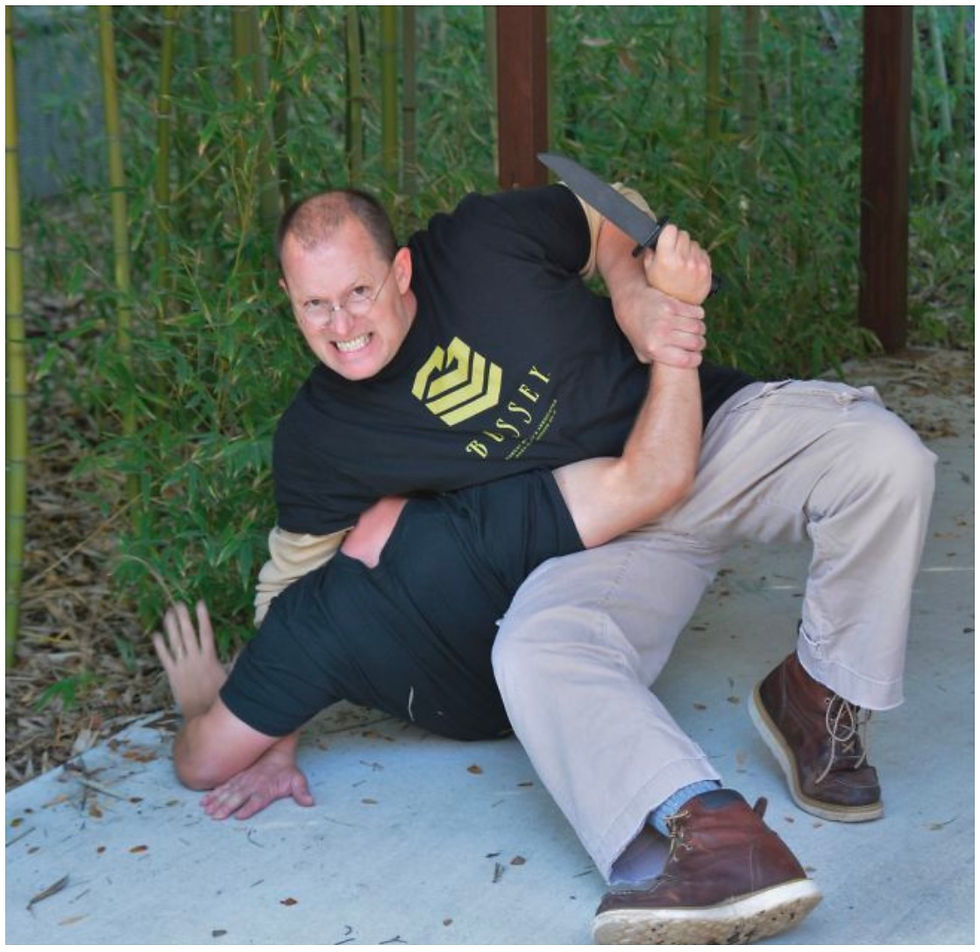
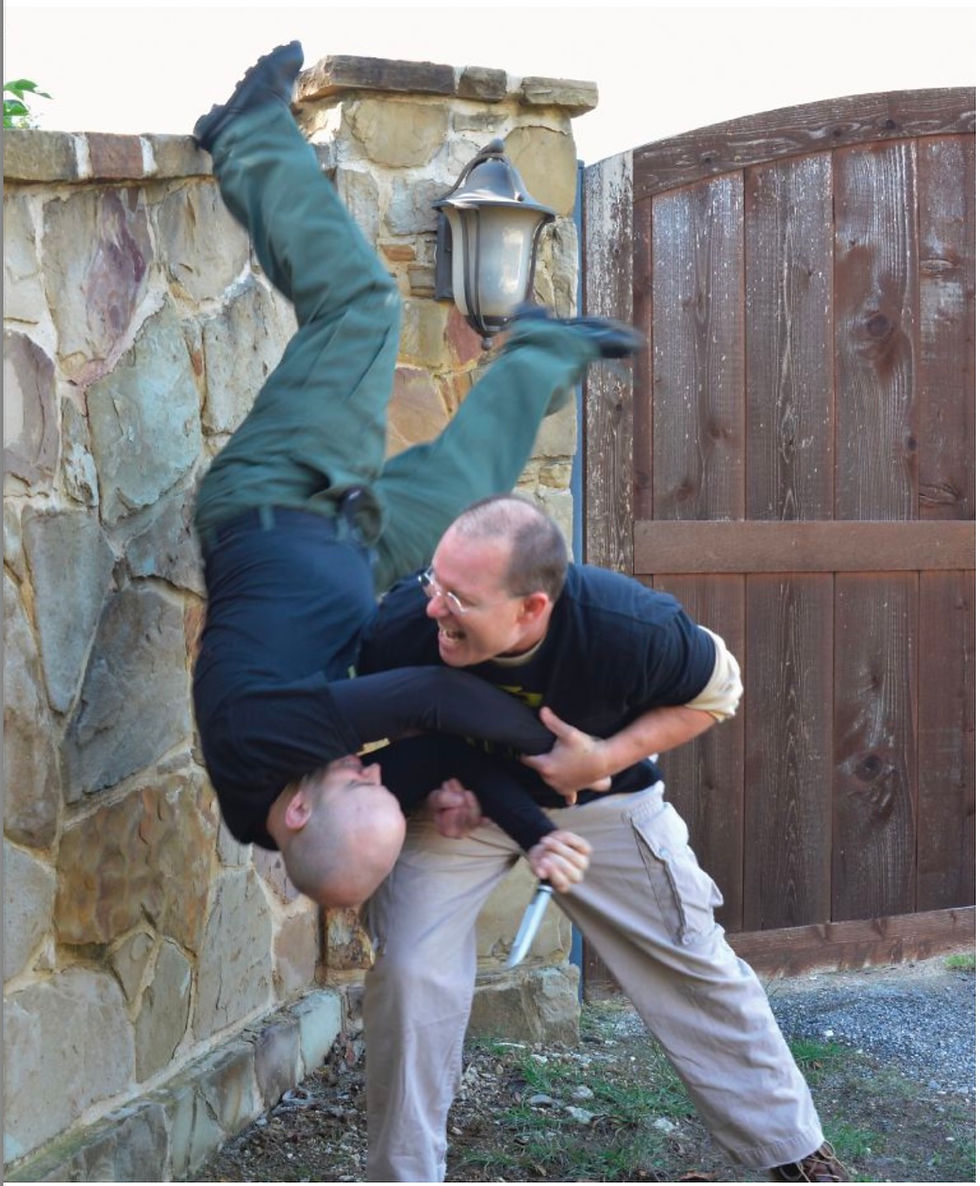
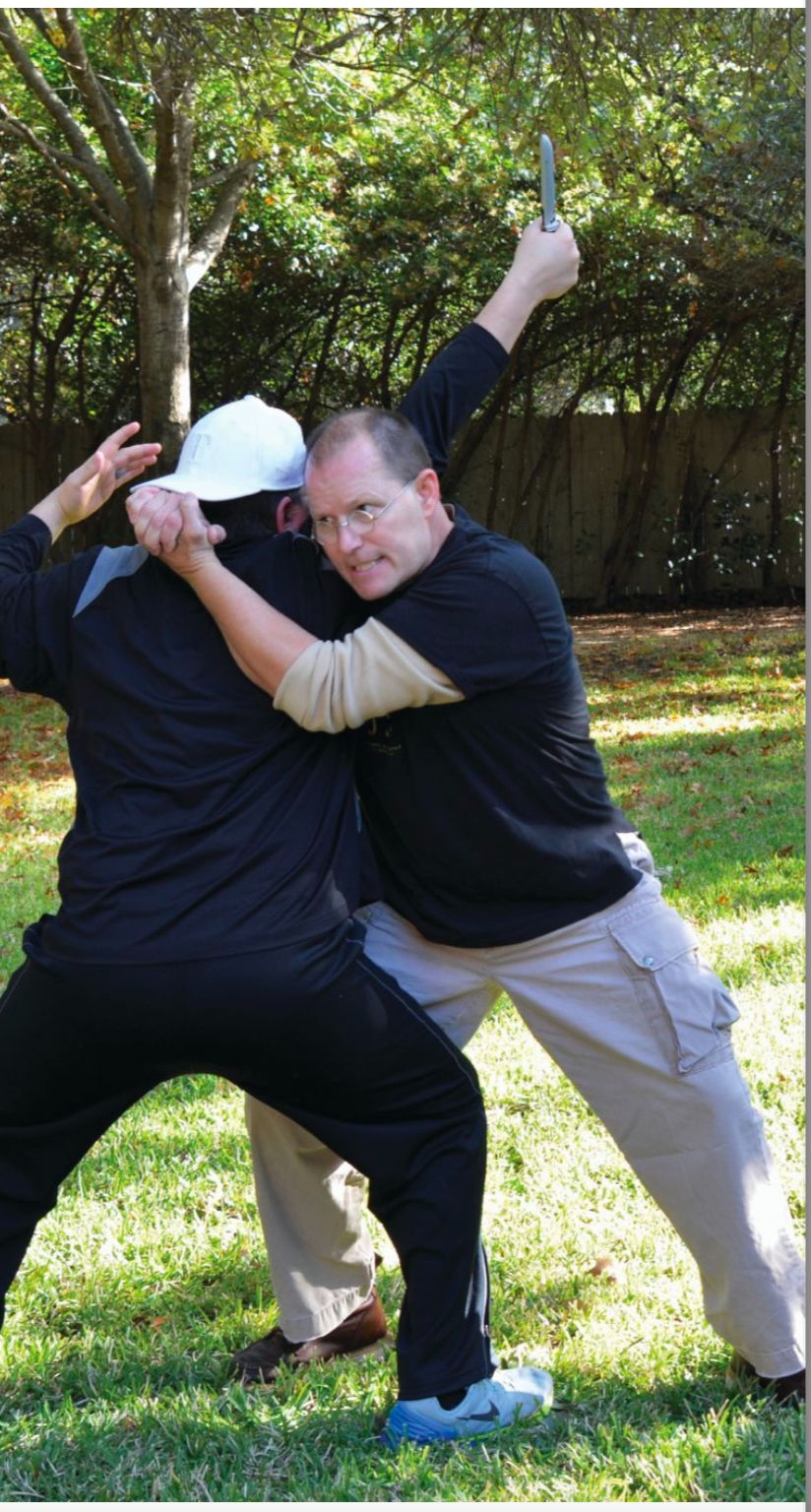
Blades are dangerous because even an untrained person can cut you to the bone with a single slash. Likewise, a person can inflict a deep stab wound with very little power and no real technique. No matter how big or strong you are, a minimally trained person with a blade can bring you down with a single movement of his arm.
Unfortunately, defensive techniques that work in theory don’t always work in reality when resistance and bad intent are part of the equation. This is why range is crucial in knife defense. Stay out of range whenever possible. When you need to get close enough to control the weapon and disarm the person, maintain awareness of the blade at all times. Evasive maneuvers such as leaning away and hollowing out can thwart blade-to-body contact but only momentarily.
When the assailant is savvy enough to use stabs and slashes in quick combinations, he can defeat even someone who’s skilled at self-defense. One key to stopping this kind of attack is countering with one or two quick strikes and then altering the range by moving outside or inside his attack. Moving outside is easier. Moving inside requires courage and the ability to smother his attempts to counter your entry. From there, a takedown or disarm must be done quickly and followed by a submission or a knockout.
8) Firearms
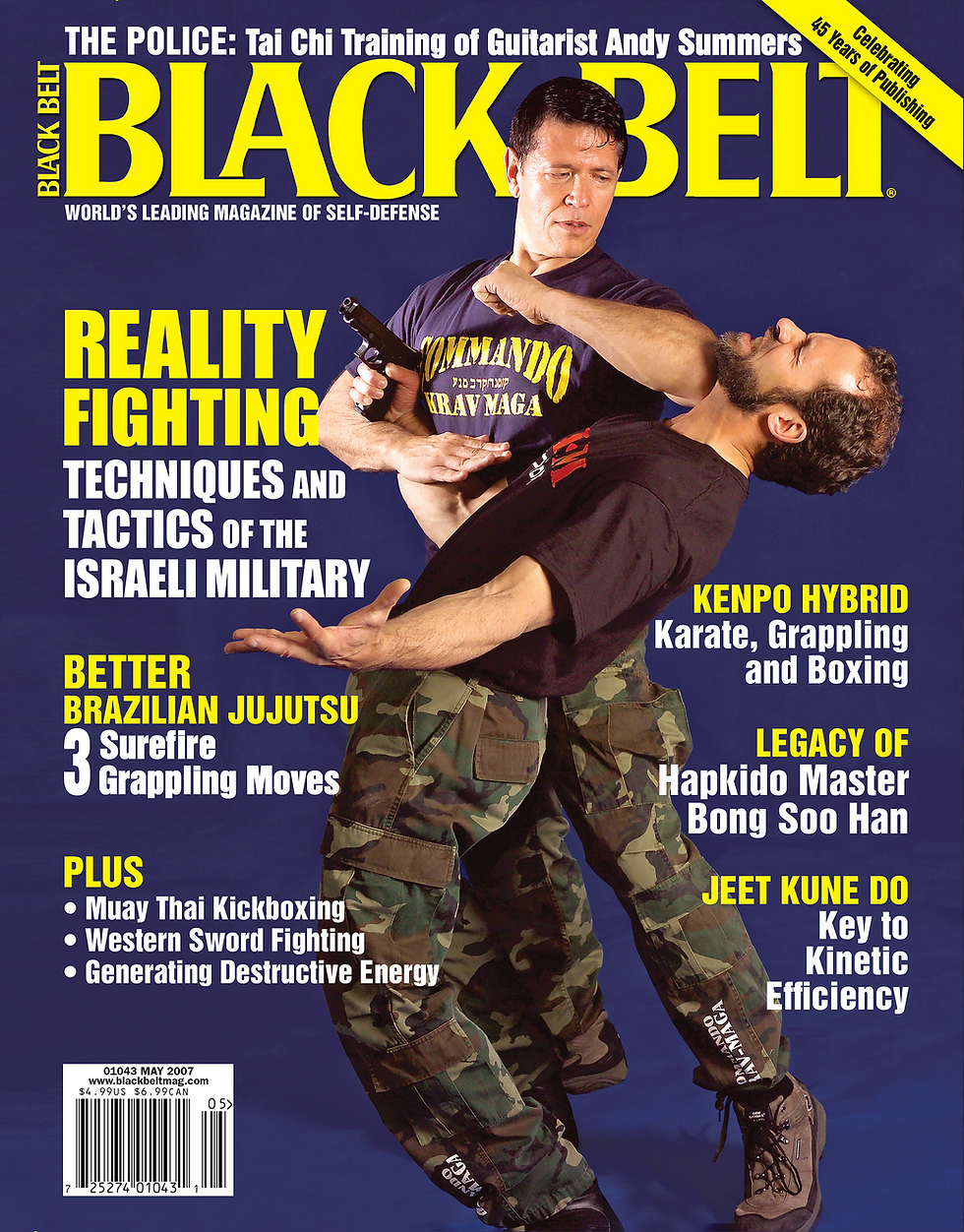
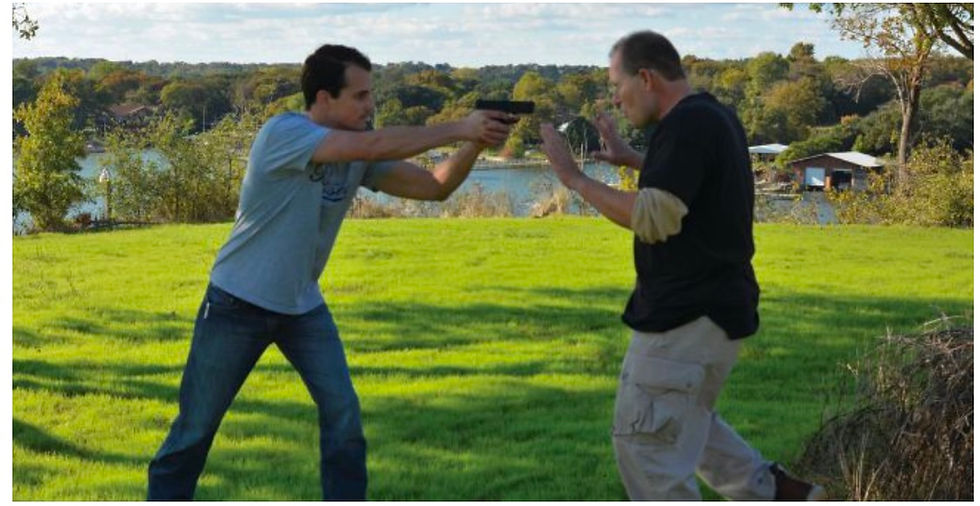
Disarming a gunman is a risky proposition, one that should be attempted only if a life is on the line. It is possible, however, to take a gun away from an assailant when conditions are favorable and your technique and timing are spot on.
Distance is paramount in gun defense. Simply put, you must be close enough to get your hands on the enemy before he can shoot. He won’t let you take his weapon, so it’s essential that you’re prepared to deal with the inevitable retraction of the weapon arm. That means practicing gun disarms while working against resistance. The best moves are those that follow the retracting limb of the assailant and seek to “consume” him before stripping the weapon from his grasp.
Technically, it’s preferable to work against the thumb of the hand that’s gripping the firearm. If you need proof of concept, try to hold something securely without using your thumb. You'll find out just how weak the human hand can be.
Preparing for what typically occurs in self-defense situations such as the ones described above will make you better-equipped to deal with any threat you face. It will minimize your response time. It will teach you to stay true to the code of readiness, which ultimately brings you closer to taking action. This reduces the chance that you’ll panic because you’ll be operating under circumstances similar to the scenarios that you’ve prepared for.